Software
Houzz Logo Print
lcohen_gw

Most successful size/type maple to start with?

20 years ago

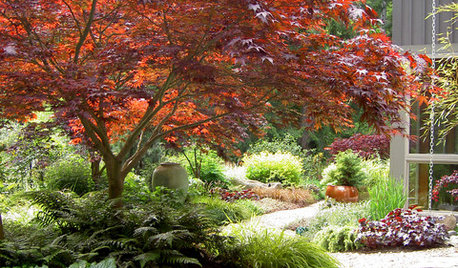
Looking to plant a bloodgood in Zone 5/6 as part of my front garden. Wondering what size is the most successful to start with? and one grown from seeds/cuttings? Thanks everyone!

lOU

Comments (11)

  • 20 years ago

    Most anyone in this forum will tell you that a grafted tree is best and the only true way of knowing what you are getting...their are other high tech ways of propagating but most use grafting ...Most JM's don't root well and many nuseries don't carry them because the mortality rate is high for some reson even on older plants.And seeds and seedlings are not neccessarily true to thier parent !!
    As far as age it depends on what you want to spend and the time you have to raise it up . I have said before and I still believe that in "non- perfect" jm growing areas you're better off with a larger 3+ year old tree with an established root system ...yah you'll pay more but my theory is it will have a much better chance of survival during the stressful parts of both summer and winter...It's just a theory but it seems like a logical one...David

  • 20 years ago

    Get the largest one you can afford! Actually, I have found that smaller trees get over the shock of transplanting quicker and sometimes overtake larger trees after a few years. If you buy a maple grown in a pot, assuming it is healthy and not rootbound, that shouldn't matter. Trees grown in containers seem to transplant much easier that balled-in-burlap ones.

    One advantage of planting a larger tree is that you can already see what kind of shape, form and color it has. However, if you buy a larger tree, make sure you water it well during dry spells until it becomes established. Japanese maples are relatively easy to transplant because of their fine root systems.

  • 20 years ago

    Please don't plant a Bloodgood, they are every where and that's all I ever see as I ride to work every morning. There are so many other suitable red maples to choose form like the replacement for Bloodgood, Emperor One or maybe you might like Boskoop Glory. Emperor One grows very well, and is the most reliable red maple but I like Fireglow because I am in the South and it is getting deeper each year as we are breaking records every year for being the hottest summer on record. There are some green leaf trees that do well in Zone five, one of the best for this cooler climate is Acer japonicum 'Vitifolium'.

    I have popped in a link provided by the RHS on the most common problem found in Acers.

    Here is a link that might be useful: Leaf Burn

  • 20 years ago

    Hi David,

    With all due respect I have to contradict you regarding the grafted versus cutting grown maples. Like any other woody ornamental, Japanese maples can be grown successfully from cuttings and they do quite well on their own roots...you just have to know how. More care and time is initially involved with cutting grown maples. The *only* reason nurseries graft maples as opposed to growing them from cuttings is turnaround. They can produce a sizable, sellable plant quicker and that's the bottom line.

    Most people assume that a grafted maple's roots are always more healthy than one that's cutting grown. Not true. Healthy roots are healthy roots whether they be the understock's or tree's own. Bonsaists routinely air layer Japanese maples as a way of propagating (as well as cuttings). They would not invest all that time and effort (we're talking years, decades even) training and pruning if they thought the tree wouldn't do well on its own roots. I have seen trees that have suffered because of an unhealthy understock.

    Now, by no means am I knocking grafted trees or telling people not to buy grafted maples. On the other hand I do take issue when people say maples can not be grown from cuttings or that cutting grown maples have a higher mortality rate in the field.

    Layne

  • 20 years ago

    Layne ...you may or may not be right ...all I know is one large nursery I had contact with had a really bad experience with rooted JM's ( almost all they had purchased died w/in a years time) and several other growers have told me they wait on any rooted stock two years to make SURE... Just telling you what I've been told by more than a few folks ...If you have had good luck with them fine...personally when I hear stuff like this I shy away ...but maybe all of these folks are wrong ...who am I to say...personally with all the good grafted stuff out there why take a chance ...but it's not my money...so make your own choice...David

  • 20 years ago

    Layne..I would like to restate some my previous post ...it came off a bit snotty...which wasn't my point ... You seem to have alot of knowledge on the subject and although i am not an expert ( and I DON'T play one on TV ;>) ) I am somewhat knowldgeable although the info i put forth is more ancedotal...and word of mouth. I would say one of your statements makes sense ...that layering and other methods are time consuming and trickier...So I guess if you know who did the work and they know what they are doing it should be fine...but this is most often NOT the case . I would also agree the root stock of a grafted JM is very important as is the quality of the graft which in alot of cases is not great ( the graft quality) and all being equal theorectically your method ...if done properly should yield results ...it's the "properly" that I'd be worried about. And if most growers are going for quantity ( they are trying to make a buck ,unless they are simply into charity which I doubt) then grafting as you have said would obviously be faster and most likely safer and therefore yield better results.David

  • 20 years ago

    I want to start off by saying I am a total novice. I just have a question about grafting vs. rooted. I seems like the fruit industry has tons of different root stocks to control all sorts of variables like size, hardiness, disease resistance, etc, and that with Japanese Maples they are grafted onto seedlings with mostly unknown characteristics. It seems like there is a certain amount of chance you are taking with unknown qualities of the rootstock considering the variability of Japanese Maples. Is there a certain amount of quality control in the industry regarding understock, or do they just pic any vigorous and healthy stock to use for grafting? Does they graft dwarf Japanese Maples to dwarf rootstock? Do they get their seedlings from parent trees that have exhibited good disease resistance, hardiness, etc (must be to some extent as they are old enough to set seed)? Maybe I am totally wrong, as I said I am a total novice, just bored at work so I figured I would ask. Also, why donÂt I ever see seedlings of Acer Japonicum cultivars for sale? ArenÂt they supposed to be more stable, so a seedling from and Aconitifolium should look pretty similar to its parent, at least more consistently than a Palmatum cultivar? IÂd buy those for a few bucks on EBay if somebody sold them.

  • 20 years ago

    Man, I must have been bored at work. Sorry for the ramblings without much of a question anywhere to be found.

  • 20 years ago

    Hi David,

    Cuttings are trickier than grafting in terms of care. Air layering is quite simple, however impractical on a commercial basis as a stock plant will only yield a few layerings. One thing nice about layering is that you can wind up with a nice sized plant because you can air layer more mature wood.

    Unlike grafts which can be done in the winter and sold the following spring, cuttings can not be sold prematurely. It's good that the nursery you spoke to about cuttings waits at least 2 years. In fact I wish grafted maples would be sold after 1 year. There are several online sellers that get their grafted maples that were done this winter and they're selling them this spring. I feel this is much too early. The maples should be grown on for at least a year...maybe two before they're sold.

    This weekend I went to a nursery and found a few cutting grown Kotohime. This weekend I may go back and buy one. :-)

    Also, if Richard(?) is out there: The procedure you mentioned for air rooting is the same for air layering...the proper terminology is "air layer". I've been having problems with the computer I normally use and can't remember all that you asked about earlier.

    Layne

  • 20 years ago

    Layne I agree folks are selling 1 year old grafted JM's that are actually in their first year and TINY ... not proper to sell a baby that may not make it.
    One other thing we didn't discuss in comparing grafted to cutting or layered JM's...and it's an important one in this world of hucksters and con atists on and off line . with a grafted jm you know ...if it's labeled properly... you are getting what you ordered cause you can see the graft ...but on cuttings and layered stuff unless you know of a way ( I don't)... how you could tell if it was as rooted or layered as stated or seed grown thus you are at some risk of NOT getting what you ordered ...Now if you know and trust the grower this is a mute point but I think in the world of internet purchases and even brick and mortor establishments who buy their jm stock from others, it is a valid fear and a plus on the side for buying grafted stuff. David

  • 20 years ago

    Hi David,

    I used to think that the sign of a graft scar was proof that the tree you were buying was true. But this sadly is not always the case. There are maples that grow more or less true to form from seed and there are growers out there that have grafted these seedlings onto rootstock and sold them as grafted cultivars. This is usually prevailent with the more popular nursery standard maples like Bloodgood and Sango kaku. There is a demand for these and some growers have sold grafted seedlings of these maples. It's sad to say that it's difficult to find a true Bloodgood or Sango kaku. I've seen grafted trees labeled as Bloodgood that have "weak" color or don't hold their color well, have different leaf shape, etc. And I've seen Sango kaku that have a more subdued bark color in winter even with good sun exposure. Mr. Shep who writes from time to time always says "buy the tree not the label/name". If you go to a nursery and see a tree you really like, but aren't quite sure what it may be go ahead and buy it and enjoy it. I've done this myself. But, if you're out for a specific cultivar do some research and study the tree first before buying it. If more people did this there would be less people buying Bloodgoods that aren't true clonal offspring. It's really sad that this cultivar is as diluted as it is.

    Now I'm not saying that because you found a grafted seedling that may not look quite true that the grower is trying to con you. I suspect some growers' stock plants needed replacing for one reason or another and did not suspect that the tree they were replacing it with wasn't exactly true to form. Other times trees are mislabeled. Sometimes this is an honest mistake, but sometimes it's downright laughable! I've seen green dissectums labeled Bloodgood.

    Sometimes there is bit of confusion with trees that have come in from Japan. For instance, what the Japanese call Kocho nishiki (kocho means butterfly and nishiki means brocade) is often labeled as Butterfly here in the US and Europe. But, there is also another form of Butterfly (Oregon) that looks quite different. One reputable grower that I know of sells both forms and has them both labeled as Butterfly.

    Regarding telling a cutting from an air layer: it's actually not too difficult. When you repot a fairly young tree that you think is cutting or air layered carefully wash away the soil around the roots. If the tree was air layered you'll see a stump below where the roots come out. This stump will have been girdled either by having the bark removed or with wire wrapped around it. Roots will not grow below this point.

    Layne

Sponsored
Peabody Landscape Group
Average rating: 3.5 out of 5 stars8 Reviews
Franklin County's Reliable Landscape Design & Contracting