Software
Houzz Logo Print
alisond

Shou Sugi Ban

13 years ago
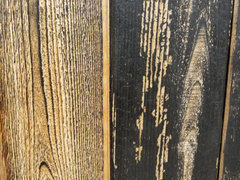
has anyone done shou sugi ban and if so is it necessary to put a product on the wood after burning... I am hearing mixed reviews... I would assume some sort of penetrating stain over a film based stain but is it really needed? After all burnt trees in the woods stay looking the same for a really long time!!!

Comments (19)

  • PRO
    13 years ago
    Just looked and you are Canadian. How did you find out about this process? I lived in Japan for a year. This process (as I'm certain you must know) gives you the most amazing grain and colors. What's fabulous is you get to experiment and come up with your own end result.
  • PRO
    13 years ago
    last modified: 13 years ago
    shou-sugi-ban (焼杉板) is a amazing technique , I even watched the Video ,Karen, How was your stint in Japan ?
    I was amazed by the size and infrastructure of Tokyo,and the Hard working Japanese people .
  • 13 years ago
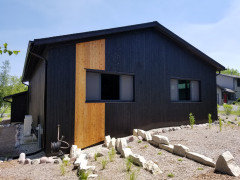
    I am in Canada and I found this technique on the Internet and loved the look. I am always liking that look that sets things apart and creates unique space. I spend a lot of times in and around homes and wanted something different for mine. People who see the wood burnt are blown away by its beauty as am I. I can't wait to get it up. I am pairing it with clear fir fascia and corners with a galvalume entrance. It's going to be amazing. I will spend my weekend burning wood. I am getting very efficient at it!
  • PRO
    13 years ago
    Vikrant, it was the most amazing time of my life. I want to go back someday, though I doubt it could ever top my first experience. It was from that experience I began my journey of creativity and searching. I learned so much from their aesthetic and I apply those principles to most everything I do. When I was in Washington, D.C. I was able to design a home in Japan for the head of the IMF, and that was only because of my time in their country. It's always amazing to me how everything we learn in our lives somehow dovetails from time to time and wraps itself into a new experience.
  • PRO
    13 years ago
    Alison, what a totally fabulous project! Do you have an inspiration picture from which you are working or will this be an amalgamation of what you have seen?
  • PRO
    13 years ago
    According to this article, you can seal with an oil. Can't wait to see your "after" pics!
    https://www.houzz.com/magazine/yakisugi-ita-is-setting-the-siding-world-on-fire-stsetivw-vs~2323908
  • 13 years ago
    I don't have a picture (it would probably give me some comfort if I did haha) it is just a mix of what speaks to me and we will see what happens... I will totally post pictures! Thanks ct designs... I have read articles that support oil and some that don't but neither really give solid evidence of one over the other so I am wondering if people apply oil just because they think they should or if it's really necessary... My thinking is that this is a method used in Japan for a really long time and none of the things I see there supports oil... UGH... I have spoken with my paint rep too and he, having never come across this method of finishing, is also uncertain. Like really, how many people say "hey, i'm burning my house... how should I protect it?" Seems a little counter-intuitive.
  • PRO
    13 years ago
    Well I've never done this so this is not an educated opinion, I'm just wondering if the Japanese didn't use oil because of climate differences. I think the oil would probably give some sheen up front and then get more interesting as it ages. So "if I was burning my house I might use oil" haha.
  • 13 years ago
    thanks ct... good thought... I will look up the weather comparisons, I am on Vancouver Island and I think our weather is pretty similar to Japan overall but certainly worth looking into... I am going to do some test patches on some scrap wood and see... the sheen would certainly give depth... my biggest concern is that a lot of wood here gets treated with sikkens and then it breaks down and if is not caught quickly the wood gets damaged... so maintenance becomes an issue (to the tune of recoating every 2 years) BUT I don't want the sun side fading and being effected adversely and I wont know if the burnt wood will be effected until such a thing happens and I am not sure the neighbours (or my insurance company) would be very accepting of me getting a tiger torch and a ladder out and reburning my house in 3 years!!! but it would make a great you tube video!!!
  • PRO
    13 years ago
    I was actually just thinking of something like mineral oil or tung oil. The sikkens sounds like a lot of maintenance. This article says to use a Brazilian nut oil and reapply every year. http://pursuingwabi.com/2007/11/05/shou-sugi-ban/
    Made for this
    http://www.traviscreekwoodproducts.com/shou-sugi-ban-wood.html
    Although I'm sure you've already seen a lot of this stuff.
    And I can see the headline now "Woman on ladder with blowtorch catches house, yard, self on fire"
    :)
  • 13 years ago
    Sorry I didn't mean I would use sikkens... but it is a penetrating and would probably behave here like all penetrating oils... with the ocean and the rain and the sun... and every year to recoat... UGH.. I paint for a living.. my house would totally get done last!

    LOVE the headline... I will let you know if it happens and give you the scoop on the story!!!
  • PRO
    13 years ago
    Oh ok. I live in a different climate so not really sure.

    What is that old saying about the cobbler's children have no shoes?

    Looking forward to seeing your progress, happy burning, and please be careful, don't want to see you on the news.
  • PRO
    13 years ago
    @Karen , all these inputs thank Karen , shou-sugi-ban (焼杉板) sounds exciting we can't wait to see the progress .
  • 7 years ago

    Hi Alison - how did your shou sugi ban turn out? Did you end up using some type of oil finish or going natural?

    I'm about to have a medium char installed for siding on the exterior entryway of my home, and am being told that the wood needs to be open to the elements w/o a finish - but am seeing conflicting info about this everywhere. I'm in Colorado and it's east facing so gets a lot of direct morning sun. If you could tell me how yours turned out I would greatly appreciate it!

  • 6 years ago

    We initially tried tung oil after burning, but it didn't hold up well.


    Since redoing it with Auson black pine tar, it's held up much better, and without hiding the texture of the char layer.


    https://kimchiandkraut.net/2019/09/21/installing-charred-cedar-siding/


  • 5 years ago

    A mix of Sage restorations tar and linseed oil worked great on our house siding!

  • 7 months ago

    You answered your question in your ask. IF this method preserves than there is no need for another preserving chemical. My issue with this is the soot that will forever be present. So if you don't want anything and everything that come in contact with it black than you have to use a sealant of some sort. Just like the rusted look--it's not user friendly.

  • 7 months ago

    Hi Arcy,
    That line of query is probably the most frequent.

    First with no finish:
    It is true that the surface of char is fairly soft, and right after charring there is a lot of potential transfer when touched. Much of that will stabilize over time, with rain and exposure. In my home and in our experience there is never enough soot to cause any noticeable wash off on to other surfaces (such as you often see dust washing off a windowsill staining below). Parts of my structures are over unfinished cedar decks.

    High traffic surfaces likely to take abuse should be considered. For example, a child dragging a stick across the siding will likely mark it. But once the surface has rested there should be very little that will transfer to a normal touch.

    Preventative solutions:
    In higher traffic areas, or where you are concerned about wear, we recommend a Tung Oil finish, it does help stabilize the soot (especially in the first year). Remember that most homes have little total siding area that is reachable or likely to be touched. Near the entrances, below 6’ is most common. Landscaping and other barriers typically protect much of a house. Second floors are self protecting.

    Design solutions:
    Because my house has a large porch with Adirondack chairs and a lot of activity I chose to treat the back of the porch as unburned oiled Cedar to avoid chair scuffs.
    Adjacent to the back door (where we come and go most) is typical untreated charred cedar - we haven’t had any issues in two years.

    When I contrast this to the care that more common painted siding requires, these precautions seem minor.

    I hope this helps!
    Steve
    www.northwestshousugiban.com

    .