Software
Houzz Logo Print
adriantwpmi

soil test results

19 years ago

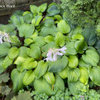
I have my soil test results and would like to know if it is optimum for growing hosta:

Soil pH 6.7

Lime index 72

Phosphorus 57 ppm

Potassium 44 ppm

Magnesium 164 ppm

Calcium 913 ppm

Should I add potassium to my soil? Best source?

Thanks in advance

Dave

Comments (12)

  • 19 years ago
    last modified: 11 years ago

    If the area grew anything before you got the soil test then throw the test away.

    The ph could be lower but it is fine and you can't change it in any significant way.

    I'm serious, don't add anything!

    Dig a minimum hole, stick the plant in the hole and mulch 2-4 inches and mulch each fall with lawnmower ground up leaves, hardwood mulch, municipal yardwaste compost, tree trimmings. Don't worry about any of the fear tactics or worries. Mulch does not attract slugs, it will not rot anything. Donot pull back the mulch in the spring to see the new eyes unless you want the hosta to jump out just in time to get spring freeze damage.

    Having done almost nothing search AACT (Aerated Activated Compost Tea) do that which will increase the organisms in your soil and help turn all this organic matter into humus. Get a bit of forest duff to be sure you have fungi in the soil, very important, if the soil was growing ok then the fungi may be there.

    It is that simple and I can explain all this in detail if you like.

  • 19 years ago
    last modified: 11 years ago

    I don't know what the numbers need to be, so if I were you, I'd contact your state extension office and ask them if there's anything you need to do.

    Deanna

  • 19 years ago
    last modified: 11 years ago

    You may find this piece from Prof Tim Smalley UGA re mulch interesting.

    Butch
    Your questions on the use of organic matter to improve soils has been the focus of most of my academic life. I have studied the effect of organic matter on the growth of trees, shrubs, and annuals. I have not studied organic matter effects on hosta, but I think that I can extrapolate. I was asked a similar question as part of a panel at a recent garden symposium in Blairsville. Will Corley, the retired guru of organic matter, sat on the panel with me and agreed with my answer. Adding organic matter to planting holes (vs large beds.) Research in Minnesota, Florida, and Georgia has indicated no benefit. Trees and shrub beds. I do not recommend adding organic matter to landscape beds of trees and shrubs. The organic matter breaks down so rapidly that, in a few years, the level of organic matter in the soil is the same as it was before you added the organic matter. I have conducted many studies with red maple trees and viburnums to show that there is not benefit. The best practice is to disturb as much soil as possible and limit traffic on the soil afterward. And to mulch the surface. Annuals, I recommend amending the soil with organic matter. The organic matter may not increase the growth of the plants, but it will facilitate tilling the soil the next year or season when you replant the annuals. Of course, all organic matter is not created equally, and organic matter containing nutrients will increase growth. However, most bark products, our most common amendment, will decrease growth unless you use fertilizer. The microbes in the soil rob nitrogen from the plants, as they break down the wood contaminants in most bark products. Chicken litter products and mushroom compost are great. In all the studies that I have done, tilling the soil and adding water and fertilizer has produced annual beds that match any of the amended beds. But my students know the next year which beds had organic matter added to them, as they till so easily. Perennials. I recommend using organic matter to facilitate redigging the beds and dividing the plants in three to five years. If you don't plan to redig the bed, I don't think that amendments are worth the cost or effort. I know that some landscapes have award-winning perennials beds without amending the soil. Again, if you add an organic matter that includes nutrients, the plant will benefit from the nutrients. I like the statement about planting on the surface. In wet soils like we have, planting on the surface and covering with mulch may be the best idea. The roots don't stay as wet, and they are less prone to disease problems. I have watched extraordinary soils develop under woody mulch or even just logs or pieces of firewood. The best soil that I ever saw in my yard was underneath a woodpile of sweet gum. Organisms worked the organic matter into the soil. However, when the pile disappeared, the wonderful soil began to disappear as the source of organic matter had been removed. The lesson is to place the organic matter on the surface, don't mix it into the soil. Be sure that you continuously add organic mulch, but do not overdo it as you might suffocate the roots. I believe that a plant "creeps" then "leaps" because it is getting its root system established. When its root system starts tapping more water and nutrients, it can support more growth. Many woody plants rely on carbohydrates stored during the previous year and on buds produced during the previous year for the current year's growth. When the plant can continue photosynthesizing as it has the roots to not be limited by water stress, then it can store the carbohydrates and produce the buds for next year's growth. Your email posed a great question. I think that I will carry your question into the upcoming oral exam of my Ph.D. student and see how he answers it. Please let me know if you have any questions.
    His further response:
    Quote:
    You have my permission to share my reply. In essence, the benefits of one-time additions of organic matter to the soil are short lived, particularly in the Southeast. Continuously (yearly or seasonally) adding organic matter, like to annual beds and vegetable gardens, can have marked effects on the friability of the soil and the ability of the soil to hold nutrients. Many people have questioned some of my recommendations as almost heresy, and often they provide an anecdotal example of the benefit of incorporating organic matter. I always ask them if they ran a comparison or a controlled study (not using organic matter) and invariably they have not. I draw my conclusion from controlled studies that I have conducted (in piedmont clay and coastal sand) and from studies that I have read about, which were conducted by my scientific colleagues. Also, remember that if there are nutrients in the amendment, the plant can benefit from the nutrients. Enjoy your gardening. Tim

  • 19 years ago
    last modified: 11 years ago

    I agree with EO....It seems to me lots of gardeners worry about numbers when in fact people have been growing fabulous gardens for a very long time doing nothing more than compost and mulch.
    Linda C

  • 19 years ago
    last modified: 11 years ago

    "It seems to me lots of gardeners worry about numbers when in fact people have been growing fabulous gardens for a very long time doing nothing more than compost and mulch."
    Linda C

    My paradigm is this, start with the natural process see that you do nothing to interfere with the natural process then add or take away when a problem is noted AND understood.

    The problem with soil test is; they are done mainly for row cropping and extension agents are steeped in advising farmers. Farmers must manipulate the soil to grow something like corn and grow it to the maximum. It would seem to carry over to our landscape but it really doesn't. When we plow or even non-till practices used still sort of kills the soil then makes it grow corn with addition of large amounts of nitrogen for example. I talked to University Professor who laughed at extension agents regards landscape gardening, many simply do not know sustainable gardening well, I would seek advice from a forester rather than an extension agent.

    Large infusions of nitrogen may cause a short term growth with hosta but hosta have a 365 process that adding nitrogen at one point may interfere with the soil so the plant doesn't make good roots for next year. Or, even makes the hosta susceptible to disease or pest.

    Fungi live in, around and on hosta roots and send hyphae out into to the soil to get phosphorus bringing it back to the plant in a form that the plant can use. To add phosphorus can kill the fungi AND not deliver phosphorus in a form the plant can use. The fungi will find and deliver all the P the plant needs even if a soil test says that P is low.

    If you add organic matter as mulch the mulch will breakdown and create humus the single most important part of sustainable growing. If after a period of mulching there seem to be problems then add things like alfalfa or corn meal and varied organic matter such as table scrap compost, manures. Small amounts of nitrogen on the mulch may hasten the composting of the organic matter improving the soil sooner.

  • 19 years ago
    last modified: 11 years ago

    Plant them. Water them. Let them be. They will grow.

  • 19 years ago
    last modified: 11 years ago

    You know what is missing from all this are the availability of humic acids, what about them, with out these acids nothing works. If they are in short supply plants get weaker if they are in abundance plant are more abundant.

    This is especially true of food crops, with regard to nutritional content. Rather I should say it is explosively true of all food crops. There is nothing new about that fact.

    Ester why do you go over these acids, I can not type as well as you that is for sure.

  • 19 years ago
    last modified: 11 years ago

    deshima, are you asking why I don't mention humic acid (tannins, lignins, fulvic acids) and their importance or value? They are mainly formed by decaying vegetation and bind cations necessary to exchange minerals so the plants can access them. I don't make much of a point of this almost necessary component of soil for growing because it is hard to provide humic acid directly yet sheet composting (mulching) allows the soil organisms to create humus. According to Dr Sara Wright fungi may be the main producers of humus, therefore providing a proper environment for fungi growth is very valuable to overall soil health. Calcium is very important for good healthy growth but it cannot be accessed without good CAC, Cation Exchange Capacity which humus provides. Most of my arguments address growing the soil so the soil will grow the plants.

    Is that your point?

  • 19 years ago
    last modified: 11 years ago

    Humic acids are a complex mixture of partially "decomposed" and
    otherwise transformed organic materials. The chemistry of their
    formation is quite complex, and freshwater humic acids can come from a
    variety of cources, most of which are on land (decomposing terrestrial
    vegetation.) These substances wash into lakes and rivers, undergoing
    further transofrmations along the way, and ultimately into the ocean.
    Most but certainly not all of the marine humic acids also ultimately
    have their origin on land. Almost all of the lignins found in marine
    environments originate on land.

    There are several subclasses of humic acids, (tannins, lignins,
    fulvic acids) which are partially "resolvable" based on some fairly
    simple physicochemical criteria, but the criteria for these separations
    is primarily the convenience of the methods used, and to some degree
    elucidating their origins, as opposed to their functional impact on
    aquatic ecosystems, so I won't go into the different classes or how they
    are distinguished. They all tint the water yellow and they all bind cations.

  • 19 years ago
    last modified: 11 years ago

    All share these characteristics:

    A substantial fraction of the mass of the humic acids is in carboxylic
    acid functional groups, which endow these molecules with the ability to
    chelate positively charged multivalent ions (Mg++, Ca++, Fe++, most other
    "trace elements" of value to plants, as well as other ions that have no
    positive biological role, such as Cd++ and Pb++.) This chelation of ions
    is probably the most important role of huic acids with respect to living
    systems. By chelating the ions, they faciliate the uptake of these ions
    by several mechanisms, one of which is prevneting their precipitation,
    another seems to be a direct and positive influence on their
    bioavailablity. Many organisms can expliot dissolved organics to some
    degree if they are present, and humic acids may be taken up by this
    mechanism. Another paradoxical effect of humic acids is the
    detoxification of heavy metals. One might expect them to be made More,
    not less toxic by humic acids, but the studies that I've seen seem to
    indicate a detoxifying effect.

  • 19 years ago
    last modified: 11 years ago

    Plant them. Water them. Let them be. They will grow.

  • 19 years ago
    last modified: 11 years ago

    hostamanfred Good homework!

    Are you familiar with bog septic systems? They are capable of cleaning up toxic waste; the decomposition process can tie up certain heavy metals and render them harmless. Reed bed systems as the first part leading to other beds finally cleaning some pretty nasty water leaving it pretty clean.

    One statement made was one could poop in one end and drink out of the other if the system is properly sized. This led me to doing the bog system. I was going to do the bog to deal with gray water regardless and then see what would grow and found the hosta grew like weeds and daylilies also grew very well.

    I left out the other trace elements just to shorten the report but they are important also. My message is mixed organic matter will have all the elements needed for good growth because they did in fact grow, then sheet composting will allow the organisms to return them to the soil and in a way the plants can access.

    Then a healthy soil will develop nitrogen-fixing bacteria and one has all that is needed for healthy growth.

    Now back to the soil testing, it is a waste of time unless one has clear indication of a problem since we must feed the soil anyway. Often a real soil problem must be worked around with things like raised beds since adding things like sulfer may not work anyway.