Software
Houzz Logo Print
mwilk42

Beneficials

15 years ago

How about everyone posting what plants they like to use to attract beneficials?

I am always in the market for something new.

mo

Comments (11)

  • 15 years ago
    last modified: 11 years ago

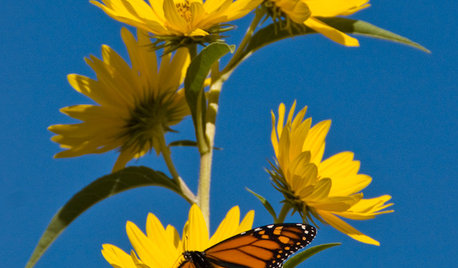
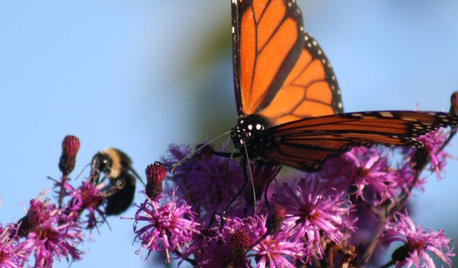
    Hi, Mo! There was a recent thread regarding plants to attract bees in particular. I'll see if I can find it. I grow lots of things for the beneficials, including larval host plants for the butterflies. Butterflies are generally very specific about which plants they use to lay their eggs on, for their caterpillars to eat. Particularly the Monarch butterfly. They will only use milkweeds, mainly plants in the Asclepias genera. I'll try to list some that I grow.

    Asclepias incarnata - aka Swamp Milkweed (pink blooms, but cultivars have white blooms), will grow in most any soils

    Asclepias curassavica - Tropical Milkweed - (mostly red and yellow blooms) an annual here, can be directly sown or started indoors, but loves heat, blooms beautifully, and is not only a host for the Monarch and Queen butterflies, but most all butterflies and bees love it for nectaring or pollen collecting as well

    Asclepias purpurescens - Purple Milkweed (purplish red)

    Asclepias viridis - Green Milkweed (greenish white blooms)

    Asclepias speciosa - Showy Milkweed (pink blooms)

    Asclepia tuberosa - Butterfly Weed (orange blooms)

    All milkweeds listed are native to USA, except for Tropical Milkweed, which is native to Mexico.

    Flowers frequently used in my garden by beneficials include:

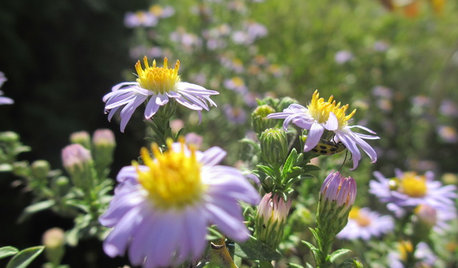
    Asters (fall blooming) (some are natives) (best as plants)

    Tithonia (Mexican Sunflower) (direct sow seeds or start indoors)

    Helianthus maximillianii (perennial sunflower, tall, native) (seeds or plants)

    Cosmos (sow seed direct)

    Zinnias (direct sow or start indoors)

    Salvias (start indoors, next year's plants may self sow depending on species)

    Lantana (best as purchased plants, few are hardy in Oklahoma, except for "Ham and Eggs", "Miss Huff"

    Senna hebecarpa - Wild Senna (native) (wintersow or purchase plants)

    Liatris - Blazing Star (native) (can buy corms of L. spicata at HD, Lowes, Walmart)

    Monarda - Bee Balm (native) (wintersow seeds, purchase plants)

    Cleome - Spider flower, can direct sow now

    Vernonia fasciculata - Ironweed (native) (wintersow or purchase plants)

    Eupatorium maculata - Joe Pye Weed (native) (wintersow or purchase plants)

    Buddleias - Butterfly Bush (come in many colors) (wintersow but these are hybrids so may not grow true; best to purchase plants)

    Honeysuckles (species sempervirens and cultivars best, hummingbirds love) (purchase vines)

    Phlox - tall, summer (purchase plants)

    Dianthus - aka Pinks (wintersow; purchase plants)

    Fennel - flowers attract beneficials, foliage is eaten by larvae of the Black Swallowtail butterfly (wintersow, direct sow spring, purchase plants in Herb section)

    Dill - same as Fennel

    Zizia aptera - Heartleaf Alexander - same as Fennel, Dill (wintersow or purchase plants)

    Passiflora incarnata, Passion Vine, native, foliage is eaten by larvae of the Gulf Fritillary butterfly and Variegated Fritillary butterfly (purchase vines)

    Passiflora caerulea, Passion Vine, same as incarnata, except Variegated Fritillaries do not use as host (purchase vines)

    Spigelia marilandica - Indian Pink - native, red, tubular flowers attract hummingbirds (purchase plants)

    Pentas, especially red flowering (purchase plants)

    Coniclinum coelistinum - mistflower - can be rampant - fall blooming, purple (wintersow; purchase plants)

    Datura inoxia - night flying sphinx moths, honeybees - native is white blooming (wintersow, start indoors)

    Ipomoae alba - Moonflower - attracts night flying sphinx moths, blooms at night, beautiful vine (direct sow or start indoors)

    Desmanthus illinoiensus - Illinois Bundleflower - native, bumblebees love this plant (wintersow)

    Lobelia cardinalis - Cardinal flower - native, red blooms in early fall, hummers love it (wintersow; purchase plants)

    Herbs - most flowers of herbs attract beneficials like bees, small butterflies. Lavendar is especially good for attracting bees and butterflies. (start indoors; wintersow perennials and hardy annuals; purchase plants; Lavendar difficult from seed)

    Agastache foeniculum - Anise Hyssop - bees love it (wintersow; purchase plants)

    Amorpha canescens - native Lead Plant - nitrogen fixing legume - bees - also larval host plant for Dogface sulphur butterfly and Silver Spotted Skipper butterfly (wintersow)

    Verbena bonariensis - good filler plant that attracts lots of beneficials (wintersow)

    Verbesina encelioides - Crownbeard - attracts lots of -beneficials - native (wintersow; direct sow)

    These are plants that attract beneficials in my yard. I hope this helps you out a bit.

    Susan

  • 15 years ago
    last modified: 11 years ago

    Susan, your post just about wore me out. I don't know how some of you people remember all this stuff. I need a map to find my way home.

  • 15 years ago
    last modified: 11 years ago

    Sorry, Telow. I was just trying to give a bit more info than we sometimes do, including sowing info, and what beneficials are especially attracted to certain plants IME. It does get somewhat difficult to read long drawn out posts, doesn't it? Most of the time, I find myself just skipping over them because it is usually more information than I want. I will try in the future to use brevity when posting, because I know how annoying it can be.

    Susan

  • 15 years ago
    last modified: 11 years ago

    Susan,
    I thank you for your long detailed post. I find this forum easier to ask questions than some of the other forums. Some of the plants I already do, and some I would like to do, and some I had not considered. I also appreciate the planting (or buying) info. I do some wintersowing, and I like the method, have pretty good luck with it. I also don't live near a lot of places I can buy plants,so I am grateful for the info. I have some wild italian fennel seeds that I am excited to try this year. I have butterfly milkweed and buterfly bush inwintersown jugs now. I also have parsley, dill and basil that I do every year. had a lot of butterflies but am always trying to have more. I have done some reading on the butterfly forum, but mostly they are way over my head. what tpe of fenneldoyou have?

  • 15 years ago
    last modified: 11 years ago

    the picture on the butterfly forum recently of theJoe Pye weed was beautiful. I am wintersowing some this year. hope it works out.
    i had billions of bees on my clover last year.
    mo

  • 15 years ago
    last modified: 11 years ago

    Susan, I was just funnin you as Andy Grifith would say. Really, I'm impressed. One can never have too much information.I'm always amazed at the amount of knowledge on this forum. You keep tellin' it like it is.

  • 15 years ago
    last modified: 11 years ago

    Thank you so much, both of you! I never know if I am getting too long-winded - well, actually I do - it just seems like I can't shut up when it comes to talking about beneficials and planting for them. I don't know much about veggies and such, but I do have enough knowledge about natives and flowers to do some damage, lol!

    Mo, I had a ton of bees last year, which was very encouraging, what with the Colony Collapse Disorder in Honey Bees. I had more last year than in years previous.

    Also, with the plight of the Monarchs, e.g., destruction of habitat in the US, impact of BT corn, continuing illegal logging operations in Mexico overwintering sites, that threaten their numbers each year, I became a member of Monarch Watch's Waystation project. I grow different milkweeds and raise the caterpillars, releasing the adult Monarchs each year.

    Who knows what will be next on the "watch" list for insects, but I do my small part to provide them food, larval host plants, and a safe, pesticide free sanctuary.

    I grow two types of fennel - Bronze, and bulb fennel. Both overwinter here, but I consider them short-lived perennials. I try to add new "blood" every 2 or 3 years. I also grow Rue, another herb, which the Black Swallowtails lay eggs on as well as the Giant Swallowtails, and the Zizia aptera.

    Fennel is the first choice for the Black Swallowtais, then Rue, then Zizia. If the 1st two plants are eaten down by the cats, then they will go to the Zizia. All, except Rue, are in the Apiaceae family, which includes Cilantro, Parsley, Carrots, etc.

    One of my favorite native seed sources online is Prairie Moon Nursery. All of their seeds are $2.00/packet. Everwilde Farm is another source that I use. If PM doesn't have it, Everwilde Farm may.

    Susan

  • 15 years ago
    last modified: 11 years ago

    I plant a wide variety of plants to attract not only beneficial insects, but also all wildlife, including birds (including hummingbirds) and lizards. Our yards and gardens are ecosystems and they function best when well-populated.

    Most of the plants I plant to attract beneficial insects are in the border that surrounds the garden on three sides (the fourth side is a woodland with edge plants of its own like Joe Pye Weed, boneset and western ironweed).

    I call it a border but it really is not designed for aesthetics--it is merely a hodgepodge of plants and herbs planted to attract beneficial insects and pollinators of all kinds, bees, butterflies and moths, and hummingbirds. These are the plants in my borders and my mixed shrub/flower beds most years:

    larkspur
    evening primrose
    Corn poppies
    Oriental poppies
    Opium poppies
    California poppies
    Catnip (attracts beneficials most after it flowers, but attracts cats all the time)
    Johnny Jump-ups (viola)
    Petunias (mostly the Laura Bush purple and pink)
    Catmint (attracts beneficials but only two of my cats like it, and Yellow Cat doesn't just like it, he loves it)
    Statice
    Sweet alyssum
    Calendula
    Yarrow (both native and cultivated forms)
    Borage (blue-flowered ones and white-flowered ones)
    Four O'Clocks
    Flowering tobacco (nicotianas)---many kinds
    Pincushion flower (scabiosa)
    Mexican sunflower (tithonia)
    Annual sunflower
    Perennial sunflower (Maxmilian's sunflower)
    lemon balm
    parsley
    dill
    cilantro
    Texas Hummingbird Sage
    Clary Sage
    Salvias of many other kinds
    Alliums (flowering onions, both the purely ornamental kind and a few culinary onions left in the ground each year so it will flower the following year)
    Coreopsis
    Fennel
    Mints (invasive, so I plant them along the fenceline where they can slug it out with the bermuda grass, and have a barrier in the soil to keep them from taking over the whole border)
    Tansy
    Feverfew
    Chives (if allowed to flower in early spring, they attract tons of beneficials, and mine usually bloom beginning in late Feb. or early Mar. when other blooms are sparse)
    milkweed
    veronica
    Western Ironweed
    Beautyberry
    Rosemary
    lavender
    shasta daisies
    iris
    daffodils
    dutch hyacinths
    purple coneflower
    white coneflower
    Tall verbena (verbena bonariensis)
    gladiolas
    hollyhock
    French hollyhock (Malva sylvestris 'Zebrina')

    These climb portions of the garden fence:
    morning glories
    black-eyed susan vines
    hyacinth bean vine
    cypress vine
    moonvine
    coral honeysuckle

    Our pastures and meadows are full of wildflowers and other plants that attract many beneficials. Some of them were here when we moved here, and I planted the others by sowing wildflower seed mixes the first couple of years:

    turk's cap lily
    spring beauty
    Texas bluebonnet
    rain lilies
    green milkweed
    blanketflower
    blue-eyed grass
    poppy mallow
    wine cup
    prairie celestial
    partridge pea
    swamp mallow
    butterfly weed
    purple groundcherry
    Louisiana phlox (Phlox divaricata)
    prickly poppy
    rudbeckia hirra
    Indian paintbrush
    corn poppy
    wild onion and wild garlic
    horsemint
    autumn sage
    liatris
    Mexican hat
    Golden wave (coreopsis tinctoria)
    dayflower (Commelina)
    mistflower (on the creek banks)
    Texas frogfruit
    Meadow pinks
    blackfoot daisy
    prairie penstemon
    pink evening primrose
    prickly pear cactus
    ox-eye daisy
    goldenrod
    wild foxglove
    Mexican petunia
    Engleman daisy
    blackfoot daisy
    greenthread daisy
    heath aster (blooms in fall)
    Huisache daisy
    compass plant
    purple phacelia

    We also choose and select trees, shrubs and vines that attract beneficials and wildlife. On that list are these:

    Perennial Vines:
    Wisteria
    American Crossvine (for the hummers)
    Trumpet creeper (orange-flowered and yellow-flowered versions)
    Passionflower vine
    Sweet autumn clematis
    coral honeysuckle
    Virginia creeper

    Trees:
    Desert Willow (not a desert plant and not a willow either, Chilopsis linearis)
    Chastetree
    Chinaberry (the flowers are very attractive to wildlife)
    Suman (flowers attract wildlife)
    Fruit trees (when fruit trees like plums, peaches, apricots and cherries are in bloom, you'll have bees everywhere in great profusion)
    Oklahoma Redbud
    Mexican Plum
    Willows (attract many kinds of beneficials and some butterfleis)

    Shrubs: (choose shrubs with berries and they'll attract tiny beneficials, including bees, in spring and birds in the winter)
    possumhaw holly
    southern wax myrtle
    Burford holly
    Rusty blackhaw viburnum
    Buttonbush (on the edge of the swamp where we also planted swamp mallow)

    Groundcovers can attract beneficials if they bloom or produce berries, and also provide cover for insects that lay their eggs on the ground, in the ground or close to the ground).

    The groundcovers we have that are most popular with beneficial insects are ajuga and purple wintercreeper.

    Groundcovers that grow in the woods that wildlife enjoy include:
    partridge berry
    coral berry

    Native Oklahoma plums grow along some of our fencelines and attract beneficials.

    Don't forget that native grasses often help attract and feed wildlife too, especially if you leave the grasses standing in winter for the birds that like tiny grass seeds. We have these in various places. Some grow out in sunny pastures, others grow on the shadier edges where woodland meets pasture, and some grow only on pond banks or in the swamp:

    little bluestem
    big bluestem
    lovegrass
    muhly grass
    green spangletop
    bushy bluestem
    Indian grass
    curly mesquite grass
    foxtail grass
    eastern gammagrass
    inland sea oats
    sideoats grama
    switchgrass

    Water Plants

    If you have any sort of a body of water, the plants that grow in the water and around the water are attractive to wildlife.

    In our lily pond, the water lily foliage provides cover for the fish and frogs in the pond, and of course the frogs like to sit on the lily pads.

    Pickerel Weed is a tall flowering water plant that is attractive to bees and other beneficials.

    Cat-tails, as annoying and invasive as they all, provide winter food for many birds. In general, though, the birds at our place only eat the cat-tail seeds during snowy, icy weather when the grass seedheads they prefer are covering by snow or coated in ice.

    We also, when clearing the woodland, left every plant that wildlife like, even if they are plants humans are not especially fond of, like greenbrier and poison ivy, both of which provide berries for the birds in winter.

    I could go on forever, but I need to go plant peas.

    Dawn

  • 15 years ago
    last modified: 11 years ago

    Dawn,
    Thank you for taking the time to write such a detailed list. I will refer to it from time to time. Some I hadn't even thought of. I would like to have a wax myrtle but am unsure if it my area would be good for it. I have not got the desert willow yet but it is on my list. Do your cypress vines reseed? I have some to wintersow but am waiting a bit later just in case. Had tried it before and they did not do well for me, so thought I might have them out to early.
    Susan, thanks for listing the two sources. I get Prarie Moon catalog but did not know about Everwilde.

    Thanks again.
    Mo

  • 15 years ago
    last modified: 11 years ago

    Mo,

    You're welcome.

    You might be almost too cold there for southern wax myrtle. Mine suffer periodic freeze damage in the coldest temperatures, but rebound quickly and I'm right at the dividing line between zone 7b and 7a.

    Cypress reseeds heavily for me. I don't mind it because the wild things enjoy it so much, but if you're a "neat and tidy" gardener who prefers order, you might find it reseeds so heavily that it is annoying. I am more of a "jumbled jungle" type gardener where a bit of chaos is welcome, so I don't mind all the volunteers. I just yank them out when they pop up where I don't want them, and leave there to grow on in areas where they are welcome.

    Dawn

  • 15 years ago
    last modified: 11 years ago

    Mo, you're very welcome! I have used Prairie Moon for several years. They have a much more extensive inventory than some of the other smaller companies and I have good luck with their seed. Same for Everwilde Farm.

    I will also add that another way to attract butterflies and the day-flying (diurnal) moths like the cute little Snowberry Clearwing and the gorgeous white striped Nessus Sphinx is putting out rotting fruit. Some butterflies will only feed on rotting fruit, dung, or rather fresh manure, like the Hackberry and Tawny Emperors, Mourning Cloak (spring and fall; they aestivate during summer), Red Spotted Purples, Red Admirals, and Question Marks. I use a suet feeder - you can get for around $2 at Walmart - and put the fruit in it and hang it fairly close to my hummingbird feeder. Hummingbirds strictly use sugar water for energy, but in reality, they are carnivores! The fruit also attracts tiny fruit flies and the hummers get a meal, too. My feeders are a hub of activity in the summer. I have had up to 25 butterflies hanging on the suet feeder with a rotten banana in it!

    The Snowberry Clearwing moth (Hemaris diffinis) looks like a large bumblebee. But, if you watch it, it hovers at flowers and feeder like a hummingbird, hence the common name of "hummingbird moth". A bumblebee actually has to have contact with the flower to get the pollen, but the hummingbird moths do not. They have a very long proboscis to sip the nectar from that acts like a thin straw.

    I have a couple of Honeysuckle bushes, and the Snowberry Clearwings use it as a larval host plant. They are very cute little caterpillars. One day I was out in the garden checking plants near the vine, and I heard a buzzing noise. Couldn't figure out what it was or where it was coming from. Kept staring at the ground around me, and finally saw the little moth climbing up a grass stem. He had just emerged from his cocoon in the soil! What a delight. I picked him up and put him on my trellis and took lots of photoes!

    Susan

    Here is a link that might be useful: Snowberry Clearwing Moth Life Cycle