Software
Houzz Logo Print
brucebanyaihsta

Hard work for happy hosta

12 years ago
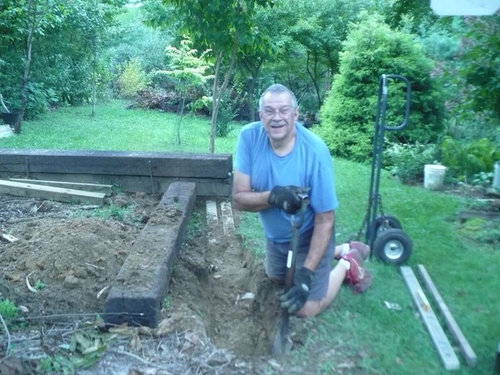
I have been planning to put a new hosta bed under a chestnut oak on the NE side of my house in the back yard. The tree is ~15 years old, having moved it as a sapling from Delaware. It has grown to 50 ft, don't ask me how!

The yard slopes somewhat in the area, so I had to design a railroad tie bed similar to the rest of my garden beds which are on the slope. My son Mark helped me put in the first railroad ties and then I had to put in the side ties myself.

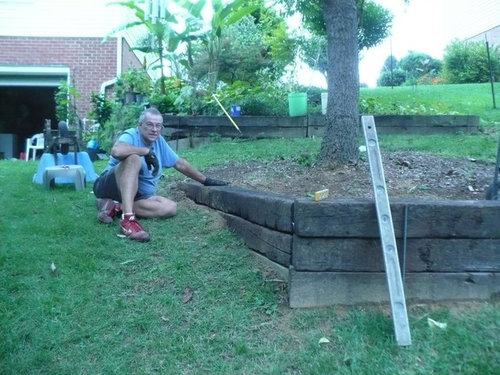
This view shows digging in the hard clay to place the side railroad ties.

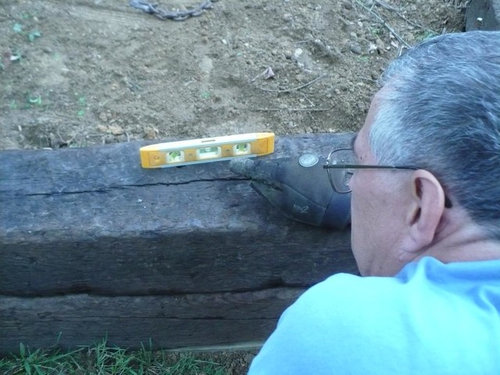
Working on a slope, the level tells us we are fine when it doesn't appear that way to our eye!

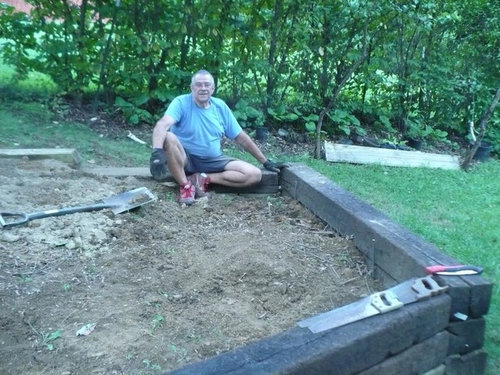
Finshed work ready for soil!

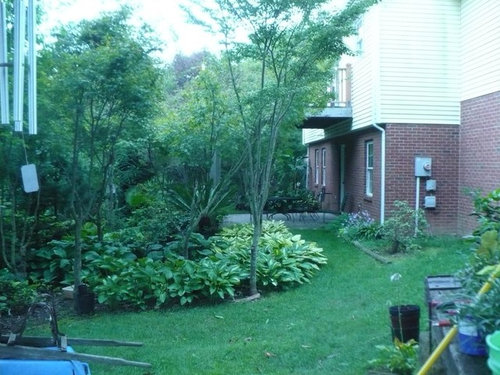
View looking from the new bed at the back porch gardens

Finished the other side!

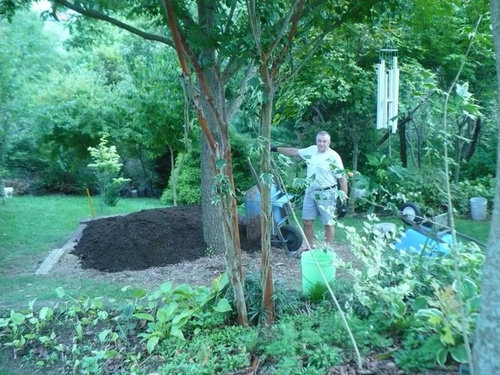
35 wheel barrows later of 80/20 screened manure/topsoil the soil is level with the base of the oak

Now to spread it out, wait for a rain to settle it (today!) and then start replanting happy hosta!

Probably took a week of backbreaking labor all around for the 8 ft square (roughly) bed!

Bruce

Comments (13)

  • 12 years ago

    Mocc,

    In the last photo you should be able to see the chimes hanging from the oak tree!

    Too large to miss - had to "hang 'em high!"

    Bruce

  • 12 years ago

    That's great work! Our entire lot of land is sloped, very steep in some parts. We have a few old limestone walls for some parts. I've been hesitnant to do much because all the materials available are too modern looking to the big rectangle blocks someone put in decades ago. But it gives me ideas. Great job!

  • 12 years ago

    Yes, indeed, I see it. The large chestnut tree should make a great home for it. The sound in the winter especially pealing across the ravine on each breeze. I must find a high spot to move mine while the house is being remodeled.

    Great looking bed, Bruce. I know what you mean about 8 foot square, that can involve a lot of earth. I need to build a mountain somewhere in my hosta garden, and I am puzzling over how and where. Mine could become a BERM with some rocks, but it must be created out of "whole cloth" s the expression goes. My yard is flat as a pancake and not all that big.

    Your sloping hillside may create problems but it also creates opportunities not found on flat ground.

  • 12 years ago

    crikey.. you work to hard ...

    i would have thrown them on the driveway ... and called the job done... lol ..

    ken

  • 12 years ago

    Bruce, you have a terrific property! Watching you work has been a treat also! Having a "dolly" is a must when moving extremely heavy objects while working solo, isn't it? I'll bet you are very happy that part is done!

    Your garden off the patio is lovely. Looking forward to seeing the new bed once it is planted!

    Jo

  • 12 years ago

    Nice job Bruce, congrats. I can feel your pain (rail ties ain't light) and your joy (a fresh bed full of hosta ready black dirt) i managed to bring in just shy of nine yards for three different beds this year. Is it bad that they're nearly packed full already? Maybe i have a problem...... Naaah

    At least not until they leap and i have to make more beds to spread em out hehe

  • 12 years ago

    This is nice work!
    But, sorry to say that, but did you consider what all that soil could do to your tree? There was that story one famous hybridizer lady wrote in the AHS Journal about what several inches of soil on top of surface did to her trees.
    Bernd

  • 12 years ago

    Bernd, it might not be a problem since he's only done it on one side. The other side is at it's original depth. When you really get down to how much of the tree roots are a whole lot deeper, it's not as much as it seems.

    At least, it won't be on the scale Olga had. She buried her trees completely, under two feet of clay and dirt. (You think she would have gotten a professional opinion before she did it.)

    bk

  • 12 years ago

    if bruce kills a tree.. with his 60000 years of experience... i will eat all the hosta on the driveway ...

    dont ask me why.. it just wont die ... its bruce ...

    ask him about his banana experience sometime ... who knew they lived for decades on the east coast ... lol ...

    ken

  • 12 years ago

    Now that is testimony to friendship, confidence, and track record. If I were a betting man--which I am not--I would agree with Ken and BK. The tree will live.

  • 12 years ago

    Now all you need is a pergola, under which you can find room for another couple dozen. And a great place to hang another set of harmonious chimes!

    Looks good (even professional, even)

    Dave

  • 12 years ago

    That oak tree is quite frankly known as the "resurrection oak", as it has come back from the dead three times already!

    It was about 3-4 years old and someone snapped off the central leader. I trained it back and same thing happened again - could have been deer, my younger sons, who knows, Maybe a lawn mower accident, happened to a few of my trees in pots and in the ground.

    Finally planted it in the ground and it got broken again.

    BUT it had good root stock so I moved it to Virginia as a 4 ft whip. Worried a tad about the 3 regrowths from the broken center leader but then planted it in bad clay and said " Go to it, young oak tree"

    One son caught me fertilizing it with chicken manure (special grade) and said no way that tree dies now!

    So, no, it won't die; yes, good to be concerned, as I am a spokesman too many times for dead trees that are mulched to their death.

    The soil line will be below the current tree "shoulders", so I am sensitive to the problem. Since I planted the oak slightly high ( which is probably why it is growing well) I will be watchful.

    Thanks for the concern.

    Ken, I do have some of those old Banyai banana plants to give away again - just can't kill them.

    Bruce

  • 12 years ago

    Sorry, but it may appear that there is too much soil in the photos; it will settle down and compact with a little more rain, as it is screened compost manure.

    I work it into the clay a bit but just let the plants have at it. They are planted shallow anyway and have to be tamped back in after the first winter heaves are over - always plant them higher than we might think, vs. too deep.

    Have done it this way for years; in Delaware planted all my hosta beds in 12-16 inches spent mushroom compost.

    Bruce