Software
Houzz Logo Print
susanlynne48

'Marginal Tomato Climate' - Definition?

14 years ago

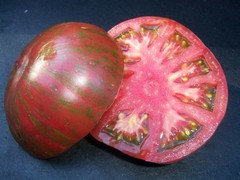
I saw this tag on a Pink Berkeley Tie Die tomato, and am scratching my head. What does that mean? Does it mean that it should not be grown in certain areas of the country, or what?

Thanks, Tomato Gurus!!

Susan

Comments (18)

  • 14 years ago
    last modified: 11 years ago

    Not a tomato guru, but I think they are trying to convince you that even if you live in an area where the season isn't long enough for tomatoes to ripen in the outdoor garden, this one will.

    I remember the 1960's so the name Berkeley scares me a little. LOL

  • 14 years ago
    last modified: 11 years ago

    You must have been at Brad Gates' website, and I have no idea what he means by it. I suppose it would depend on what he considers a marginal tomato climate. That's the beauty of using this phrasing, since different people will interpret it differently depending on their own idea of what a marginal tomato climate is.

    My interpretation of his use of this phrase is that he believes Pink BTD will produce well in areas where it is hard for tomatoes to set a good crop, whether we're talking about a foggy, cool, cloudy coastal area like San Francisco where it can take forever to get good fruit set and ripening or a warmer, hotter, drier part of the state in a more desert-like area where you're in a hurry to get good fruit set before the heat shuts down fertilization. In either case, you're more likely to get a good crop from a variety that sets fruit early, and when I've grown BTD it has set fruit very early in the season. So, I'm inclined to think that's what he means--it sets early thereby increasing your chance of getting fruit in a 'marginal' tomato growing area.

    I remember the 1960s too, and Pink BDT is exactly the sort of psychedelic tomato some people would have seen when they were....well, tripping.

    It is a beautiful tomato!

    Dawn

    Here is a link that might be useful:

  • 14 years ago
    last modified: 11 years ago

    Ooh, wow! That is gorgeous, and thank you ladies for the info.

    Lol! I remember the 60's, too, having grown up in those years. I think I'd be more concerned about a "Haight Ashbury" or a "Kent State" than a "Berkeley", but all have negative implications due to the political and social unrest during that period of time.

    Susan

  • 14 years ago
    last modified: 11 years ago

    I think of them in a positive light . There was turmoil and a lot of positive change along with it. Thumbs up for tie dye and tie died tomatoes! I think some of those german striped tomatoes are even trippier. LOL

  • 14 years ago
    last modified: 11 years ago

    All I can say is my climate must be beyond "Marginal Tomato Climate". So far I haven't found any of his varieties that perform in my climate. I know several others that have had the same results. Him and a couple of others convince me to try Pink Berkeley Tie-Dye a second year. And it only produced one fruit in 2 years. Good flavor but I've grown others I like as well or better that produce a lot better in an average year. Randy's Brandy and Grandma Suzy's were both as good as if not better tasting and also produced better in a terrible year last year. Brad's creations are pretty but lack the hardiness needed here. I don't blame him. It is hard for someone who has never gardened here to imagine how difficult it is for a plant to survive and produce many years. Jay

  • 14 years ago
    last modified: 11 years ago

    Wow, Jay! So, what types do you look for that produce best in your part of the state versus the types that the rest of the state grows?

    Susan

  • 14 years ago
    last modified: 11 years ago

    Jay,

    If anyone has a marginal tomato climate, you do, I don't know what's worse for you there...the lack of rainfall or the never-ceasing winds.

    I think if last year had been a better weather year, I would have gotten better production from the Wild Boar Farms varieties because they started out really flowering and setting fruit well in April and May, but then the heat shut them down. As it was Black and Brown Boar and Michael Pollan both set fruit well at least until June arrived and the rain stopped falling. Red Boar produced into August and with very little care or attention. Still, none of his varieties produce heavily here at our house either.

    Pink BTD reminds me a lot of Chocolate Stripes, but CS gives me 10 tomatoes for every 1 that Pink BTD produces, so if I am going to grow one or the other, it will be Chocolate Stripes every time.

    Dawn

  • 14 years ago
    last modified: 11 years ago

    Susan there are a few rules I follow but until I actually try a variety I never know how it will do. Varieties either developed in and for this general or that have been grown here for several years usually do ok. Then the smaller the fruit the better they usually produce and handle the elements. This year I will be trying Burrell's Special a determinate from a breeder/seed company in Rocky Ford, CO. It is a commercial heirloom now that many in that area and not far from me have grown for years. Merced was a hybrid bred for conditions similar to mine and always did well. The varieties I received from Gary that I grew last year that have been grown in his area for years did better than most I try here. Black from Tula is one that never seems to bat an eye here. Cherokee Purple will outperform Indian Stripe here 4 years out of five. I think Dawn says IS performs better for her many times. KB always outperforms KBX here. 4th of July hybrid is one I recommend to any grower here. It sets and produces every year just like Merced used too only a little earlier. Jet Star & Jetsonic will always produce some here. Not as heavy in a year like last year but you can depend on them to produce some every year. Like I have said before Randy's Brandy from Gary set and produced better last year than any Brandywine type ever has for me. We will see if it can again this year. Another thing I have found is if I will plant a variety here for several years and only save fruit from those plants that produce well each year in 4-6 years I can usually get a plant that will tolerate this climate. Kanora is a variety developed by K-State in the 20's as a hybrid then stabilized. It almost always does well here. It is typical of many varieties developed/grown during the late 20's and 30's here. They didn't pay as much attention to flavor as they did survivability. It is a hardy, compact plant that will set in the heat and tolerate wind and drought. Many of the varieties that do well here are on more compact vines. My theory on this is the compact vines don't have as much foliage to maintain during the extreme hot, dry winds. So they not only uptake less water they can take care of their foliage and thus have less stress. By the same token a good foliage cover is mandatory here or you will have sun scald. In the past I was able like several other growers to get a good fruit set and production on plants set out early. But due to the late frost/freezes of the last 5-6 years those plants set out early have either been froze or set back considerably. I will try to get some out earlier this year. If and when I finish the greenhouse I plan on pulling plastic over the top and replacing it in the summer with shade cloth. This will allow some protection from the sun,heat and insects. To start with I will leave the rolled poly carbonate on the sides.

    Another thing I'm going to try this year is grafting. I have hopes for it. I received an update on some trials here in KS last summer just this last week. In the east most of the trial sites saw an production increase of 40-120% over non grafted plants. Even in Western KS north of me where they have less disease stress than I do and also had the drought we had they saw enough of an increase to create optimism. For growers just south of me with nematode problems I would be trialing grafted plants for sure. I recently watched a webinar by a man from K-State and one from NC State. They did research in area of NC where the growers had quit growing tomatoes due to the nematodes. The grafted plants had 100% survivability rates and the non grafted had 100% death rates. Grafting offers other advantages besides disease resistance. One reason some feel you see less death loss and an increase in production in area where there isn't much if any soil borne disease problems is the increased vigor which helps prevent stress on the plants. I've seen where some have had success grafting with varieties such as Celebrity but trials have shown it along with several other varieties don't offer the benefits/potential that several of the varieties developed solely for rootstock.

    Dawn I have had some of his varieties survive all summer while several just gave up due to stress. Even those that survived either didn't set or set very few fruit. Jay

  • 14 years ago
    last modified: 11 years ago

    Wow, Jay! At least we can say that you truly love tomatos, and you keep giving it your all to produce them in your continued efforts, many inventive methods, that you do!

    I'll be interested to see how your grafted tomatos do, and I do hope they perform above and beyond for you.

    Susan

  • 14 years ago
    last modified: 11 years ago

    Jay, Did you see the double grafted plants from Territorial with two tomato varieties grafted onto one rootstock? Just think, if you could master that technique, you could grow twice as many varieties in the same amount of space.

    Now that I've mentioned them, I'll link the Territorial page for anyone who wants to see them. The double-grafted plants are at the bottom of the page.

    Grafted plants may be the answer for Jo and others who have severe nematode infestations in their gardens.

    Dawn

    Here is a link that might be useful: Grafted Plants at Territorial Seed

  • 14 years ago
    last modified: 11 years ago

    Jay and Dawn,
    One quick question. What is best way to select good root stock for our own climate? Any recommendation for good root stock for tomatoes? I would like try grafting 2-3 types into one better root stock. Last year was bad, I could not determine which tomato grow great our soil/climate. -Chandra

  • 14 years ago
    last modified: 11 years ago

    Chandra, Johnny's sells the rootstock seed, but be prepared for the sticker shock. They are very expensive.

  • 8 years ago
    last modified: 8 years ago

    I saw that today (on the Wild Boar Farms website), and wondered, too. So, I looked it up and found your thread.

    I'm not sure what they meant by marginal, but I can say this about Pink Berkeley Tie Dye (I'm in SW Idaho, though, and not in Oklahoma: so take this with a grain of salt): I grew it in 2016, gave it plenty of water, and had it in fairly compact soil. I got a few small to medium-sized tomatoes that took until well after the first frost to begin to ripen. I saved seeds and grew those the next year in a slightly looser soil (still not exactly loose) with wood ash added. I only watered them during the first part of the 2017 season. They flourished, and produced very large, earlyish tomatoes (not all season, but they did well while they were producing); they were one of the best-producing varieties out of about 105 kinds that year.

    I guess PBTD must like wood ash and drought.

    My area is semi-arid and doesn't rain much at all during the growing season. We get very hot summers (it's the hot/dry part of Idaho—not the cold or rainy part); we benefit from heat-tolerant tomatoes. We benefit from cold-tolerant tomatoes, too (especially early and late in the season), but also due to cooler-than-average nights, considering the daily highs. Our soil is clay loam (and I think our soil often stays pretty cool even when it's hot outside). It can be pretty windy here compared to some areas (but probably not compared to Oklahoma), but it's not always particularly windy by any means.

    An Armenian cucumber in 2017 (Metki Dark Green Serpent melon) did excellently in or by the spot where PBTD had struggled in 2016.

    Jay, is your area rainy and humid? What's the soil like there?

  • 8 years ago
    last modified: 8 years ago

    Jay, where can you find Grandma Suzy's, Randy's Brandy, and Kanora? Determinates usually struggle in our Idaho garden; semi-determinates and indeterminates usually do a lot better—but your what you say about those breeds intrigues me. I'm not sure that those are determinate, but it sounds like they're smaller, at least, with regard to foliage growth.

    I have definitely found that plants with more leaves can drink more water than those with few leaves (at least when it comes to container plants). I noticed one year that reseeded tomatillos in my area didn't seem to require any watering at all beyond what it takes to sprout, unless I did water them (then they needed to be watered regularly for some reason). However, that's just for the plants to survive (although they looked healthy); I'm not sure about production.

  • 8 years ago

    Awesome! Thanks for the information! :)

  • 8 years ago

    Oh my!! Fascinating info, Dawn and Jay. I'll have to read through this tomorrow.


  • 8 years ago

    I got my Grandma Suzy and Randy's Brandy from Gary (Duck Creek Farm) at a seed swap. I don't see where he sells tomato seed anymore, I had better save seed this year. He sells sweet potato slips. You could email him and see if he has seeds. I think Tomato Man's Daughter (south of Tulsa) sells the plants, but that won't help someone in Idaho unless she'll ship to you. I was surprised I couldn't find these elsewhere. I love the taste of Grandma Suzy's Beefsteak. Rand's Brandy did not grow well for me, but I grew it in very wet years. Maybe I should try again.