Software
Houzz Logo Print
susanlynne48

Ruby Throats at Red River

15 years ago

Dawn, be on the lookout. You may have a gaggle of them if they get there before the cold front. That will keep them on location for awhile until more favorable weather and winds return.

Susan

Comments (16)

  • 15 years ago
    last modified: 11 years ago

    Someone has reported sightings in central OK and further north, but I not seen them yet in our feeders.-Chandra

  • 15 years ago
    last modified: 11 years ago

    None here yet and the feeders are filled and waiting for them. I'll be surprised if they beat the rufous hummers here (although from the migration maps it seems clear they will) because the rufous hummers usually beat them here.

    Normally, the hummers follow the green-up and bloom of the native American Crossvine, but that doesn't come until April of most years. The hummers sometimes arrive before my crossvines bloom, but it is usually a difference of a week or less. I suppose if they're traveling ahead of the crossvine's blooming period, they are being sustained by feeders and some early-bloomers. The American crossvines here are not even showing leaf or flower buds yet. Unlike many of the plants on our property, the crossvines are not fooled by early hot weather and they don't leaf out until they're good and ready, no matter what anything else is doing in terms of early blooming or budding or leafing out.

    We're now hot and down in the single digits in humidity. I've been trying to water and it seems like the water evaporates as soon as it comes out of the hose. Maybe the hummers are holed up on the Texas side of the river in a cooler, more humid little bend of the river or something.

    Dawn

  • 15 years ago
    last modified: 11 years ago

    None here, though I put out a feeder Sunday, since it has been so warm. Poor little things. This wind is probably holding them back to a certain extent. The only things I have blooming are a few Dianthus and a pot of yellow Pansies. Not much enticement there.

    Jeanie

  • 15 years ago
    last modified: 11 years ago

    Still they are stuck at red river basin? I hope prevailing warmth could encourage them to move forward!!! -Chandra

  • 15 years ago
    last modified: 11 years ago

    Chandra, It was 34 degrees here early this morning, and I'm less than 1/2 mile from the Red River, so I hope the hummers aren't here yet because the nights are too cold for them this week.

    I've seen no sign of them, but the American Cross Vine is beginning to put out leaves and that's important. American Cross Vine is one of the native vines they rely upon for food. In Texas, the hummers always arrived at our house just when the American Cross Vines started blooming and it was said there that the hummingbirds "follow" the vines north as they bloom in Texas. If mine is leafing out now, it should have blooms in 2 or 3 weeks. Sometimes the hummers arrive here before the cross vine leafs out and blooms, but not often. It usually is the rufous hummingbirds that arrive before the cross vine blooms and the ruby-throated hummingbirds are a week or two behind the rufous ones most years. I never see black-chinned hummingbirds until much warmer weather arrives though.

    Some years we have hummingbirds in late March, but usually it is early April, and our first few years here they didn't find us until May. I'm about 120 miles south of OKC, so when I post that I've seen them here, those of you in central OK probably will be a week or two away from seeing them.

    Dawn

  • 15 years ago
    last modified: 11 years ago

    This week's Journey North map puts them in SW Oklahoma and SW Arkansas, but not much in between. Seems like there's a gap in South Central and SE Oklahoma where there are no reports. Doesn't mean they're not there, but just no reports yet. The poor little things must be shivering in their britches!

    My Swamp Milkweed has broken ground, so hopefully I will have some food for the Monarch babies.

    Susan

  • 15 years ago
    last modified: 11 years ago

    I saw one lone Monarch here about a week ago. He must have been a scout. LOL

  • 15 years ago
    last modified: 11 years ago

    Carol, do you mind if we report this to Journey North?

    Dawn, with the warmer weather coming up, you should be seeing Ruby Throats any day now, so would sincerely appreciate your letting us know.

    Susan

  • 15 years ago
    last modified: 11 years ago

    When I see them here, you will know it. I always post as soon as I see them so folks north of me know to get the feeders out.

    Our American Cross Vine is leafing out and blooms follow really quickly after it is leafed out, so I expect them any day now. The hummers usually show up when the Cross Vine is leafing out or blooming, and very rarely show up until it is at least leafed out. So many people put out feeders for them that they do tend to arrive nowadays before it blooms some years. It used to be that I never saw them until mid-April or early May after the Cross Vine already was in bloom.

    Our yard continues to be dominated by several kinds of swallowtails and the white cabbage moths. When I mowed, I left a patch of lawn about 20' x 20' unmowed because it had lots of henbit and was covered in butterflies. They continue to visit that patch daily, but more wildflowers are blooming too and they visit them as well.

    With the poor rainfall in the fall/winter, the wildflower stands are very poor this year in unirrigated areas, so I've been watering an area that usually has lots of wildflowers in the hopes that we'll have a better wildflower show.

    Dawn

  • 15 years ago
    last modified: 11 years ago

    Our hummingbirds returned today. They were zipping and zooming through the air all day as I worked outside in the garden. I could hear them, but didn't get a close-up look at them until they came to the feeders just before twilight.

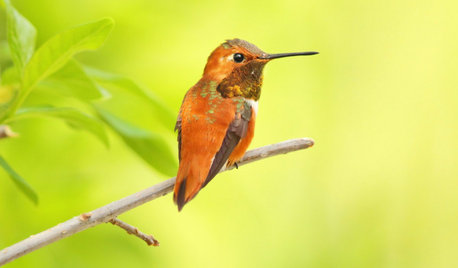
    As usual, our first hummers back are the little rufous hummers. They usually arrive here anywhere from a couple of days to a couple of weeks ahead of the ruby-throated hummingbirds.

    I had just put out fresh nectar today, so I was ready for them. They were spending a lot of time flying around in the woods and not so much time out in the yard, garden or pasture areas.

    So, they're here....and on the same day we had the first observed visit from a monarch here.

    Dawn

  • 15 years ago
    last modified: 11 years ago

    Dawn, how wonderful! I know how exciting it is to hear them chattering and buzzing around. We've had rufous hummers here in Tulsa a few times, but they're not reliable. The ruby-throats typically hit us hard in April-May, then disappear until the chicks are up and out sometime in July. The most fun is in the fall, when we have 3 or 4 in the yard regularly. I lived on 20 acres in Northern Oklahoma before moving to Tulsa, and the hummers were non-stop from April through October. We had two large feeders which required refilling every day. Even had a hummer buzz up to the back of my head when I was hanging one. And, the neighbor across the road had feeders, too! Little monsters.

    Wow, what a ramble. I must be ready for spring!
    Carol

  • 15 years ago
    last modified: 11 years ago

    Carol, thanks for the explanation on the timing of your hummer visits. I've always wondered about the spring visits because I have never had them visit then. I always put out food anyway just in case.

    Hummingbirds always show up in July and are here thru the time they migrate. I know from your post, that I am only seeing juvies, maybe a female or two as well, but no adult males. I rarely see a male with full plumage except occasionally during migration time in fall. Four is the largest number I have seen.

    When you mentioned Northern Oklahoma, I recalled that my sister, who is actually in SE Kansas in the Independence area. has them all summer long, and in large numbers. She lives on the edge of a very small town called Neodesha, though, and I don't know if that is the difference- I live further South of her and I live near downtown OKC.

    Dawn, I'm so excited they have arrived. Let us know when you see the Ruby Throats, too, if you will. I never see Rufous here, and am still surprised about your population. How exciting! They are supposedly a rare sight in Oklahoma.

    Glad to hear about the Monarch, too! I am just about ready for them.

    Is the American Crossvine a native vine, Dawn? I see Cross Vines offered for sale at various websites online, and a few local nurseries, but they are always hybrids. I hear it is not nearly as invasive as Trumpet Creeper.

    One plant I will forego this year is Salvia elegans or Pineapple Sage. Last year, it finally bloomed.....but in late October. The hummers were already gone and so were the butterflies. I remembered that I had grown it about 10 years ago, and had forgotten about it blooming so so late. It's a beautiful plant, but totally useless for me. My best Salvia was the Lady in Red, followed by Black & Blue, Hot Lips, and Cherry Queen.

    What are your best hummingbird plants?

    Susan

  • 15 years ago
    last modified: 11 years ago

    Susan - salvias are terrific for hummers and butterflies, aren't they? I have the red salvia (S. coccinea) that reseeds all over the place, and begins blooming in mid-summer, when the hummers are busy. Black and blue is also good, although it's kind of a thug in my garden! Still, there's always something nectaring on it.

    I lived just south of Coffeyville, KS, only about 4 miles from the Kansas border, so fairly close to Independence. Must be something about the woods and Kansas that the hummingbirds like!

    Carol

  • 15 years ago
    last modified: 11 years ago

    Carol,

    I love hearing them whizzing and whirring around the property. That make all sorts of sounds that are very interesting.

    We have a lot during spring migration and late summer migration, but fewer throughout the summer. Still, we usually have 6 or 8 or 10 around at any given moment during the summertime. I have to put out 4 or 5 or 6 different feeders because otherwise a couple of dominant males will "guard" and fight over a lone feeder or two. They do nest here and raise their young, and you know when you're near a tree or shrub containing a hummer nest because a hummer will come and fly in circles around your head trying to make you go away.

    We have a neighbor a mile or so south of us who has been feeding the hummingbirds for her whole adult life. (I believe she is in her 80s). She has a lot of feeders and probably dozens if not hundreds of hummers at her place on a regular basis. Her granddaughter told me she has to refill her feeders daily. I love having hummers around, but to feed then at the level she does would be a full-time job.

    Susan, I would expect to see the ruby-throats sometime soon just on the basis of how danged hot it is here now. They usually aren't far behind the rufous when it comes to finding us in spring. I may or may not see black-chinned hummingbirds in the spring, but they always visit in the summer. When we moved here, I never expected to see anything but the ruby-throats, so having lots of rufous and the occasional black-chinned hummer is a bonus.

    American Cross Vine is native and it used to be found all over Texas. Now, with the continual conversion of wild land full of native plants into housing subdivisions with nicely manicured lawns, it is not as common as it once was. We always had it in Texas, and it was one of the first vines I planted when we moved here because I knew if I planted it we'd always have hummers. It is not invasive anywhere that I've grown it, but I've only grown it on clay soil---black gumbo clay in Texas and Red River red clay here in OK. I suppose it has the potential to become invasive in good sandy loam, but have no idea if it does become invasive. The hummers love it.

    Because I wanted hummers, the other vine I planted right away after the house was built was trumpet creeper. I don't care how invasive it is, I still love it and have planted it in several locations. We have both the orange-flowered one and the yellow-flowered one. Another vine that is a huge hit with the hummers is coral honeysuckle. I have "Pink Lemonade" honeysuckle on the cedar entry arbor that leads into my veggie garden, and it has hummers visiting it from sunrise to sunset when it is blooming.

    Their favorite tree (and I know it is a trash tree but they love it and I love it so I planted it anyway) is the mimosa that I planted just west of my garden. They surely do love the mimosa. They also like the Chaste Tree and Desert Willow tree.

    All the above vines plus some of the common annual vines (especially morning glories) are faves of the hummers. Their favorite non-vining plant has to be the Texas Hummingbird Sage. I planted a packet of seed of Texas Hummingbird Sage from Seeds of Change about our 2nd or 3rd year here and it has reseeded itself ever since. I plant other annual sages and the hummers visit them too, but Texas Hummingbird Sage always draws the largest crowd. I see hummers at the Laura Bush petunias too and I'm sure they visit many other flowers, but if I am in the garden, I'm usually too busy to stand and watch them to see which flowers they're going to.

    We have hummers that live here and they return every year. I know which ones are the returnees because if I hang the feeders in different spots than they have been in during previous years, the returnees hover and buzz at the places where the feeders "used to be". They don't like change! The regulars are quite used to me and follow me around the yard. They'll sit on top of a tomato cage, the garden fence or even the electric line and hang out for a while and watch me work.

    If I go back towards the house, the resident hummers follow me there. I have to be really careful because sometimes when I go into the house, they follow me right inside. It is never a good thing for a hummer to come into a house with a cat or cats inside. Chaos ensues. I have to throw the cats out, calm down the bird and then guide the bird back to the door so it can fly out. Sometimes I have to catch them by cupping my hands around them while they're at the window trying to fly back outside. One year, the hummers or possibly one single repeat offender, would follow me into the house, go straight to the ceiling fan, perch on a fan blade and ride the ceiling fan around and around and around. It was bizarre. It hasn't happened since that one summer, so I think we had a hummer who thought the ceiling fan was an amusement park.

    Finally, I cannot wear red when working in the garden or the hummers become convinced I am a flower and keep trying to land on me.

    Dawn

  • 15 years ago
    last modified: 11 years ago

    Awwwwww, Dawn, such cute stories, and what adventures you've had with the hummers. I now dub you the Hummer Lady! How precious! I know the hummingbirds are precocious birds, like recalcitrant children!

    I will have to look into the Cross Vine. I have lots of Trumpet Vine, though. They do like it as well.

    Susan

  • 15 years ago
    last modified: 11 years ago

    Susan,

    The hummers are fascinating creatures. We've always had them here since the very first year we moved here, but since buildling the big red barn, we have lots and lots and lots. I think they are attracted by its red color and then find lots to eat when they fly down to check it out. However, we have lots of problems with hummers flying inside the barn and then being unable to find their way out through the same doorway thru which they made entry. I have to close all the doors but one and then hang a hummingbird feeder in the open doorway to lure them to it. Once they calm down enough to make their way down to the feeder, they discover the open door and they're outta there.

    Our first ruby-throated hummer showed up last night. I think it is a resident that lives here because it was 'buzzing' a tree as if protecting a nest. I couldn't find a nest, so I think it is trying to claim this tree as "its" tree. Although, now that I think about it, there used to be a feeder in that tree and I don't have one there this year so maybe it was looking for that feeder. It also spent a lot of time sitting on the cattails in the pond, which led me to wonder if it might be planning on using some of the fluffy seedheads from last year as part of its nest.

    I'd say it is a pretty smart hummingbird. I noticed the first open bloom on the honeysuckle late yesterday afternoon about a half-hour after I noticed the ruby-throated hummer. I'd been working in the garden on and off all day long and hadn't noticed any blooms, but somehow the hummer managed to time its arrival to match the blooming of the first honeysuckle flowers. It always amazes me that they know just when to arrive, although of course we humans mess that up a little (in a good way) by having feeders out before there are enough blooms to feed them.

    Dawn