Software
Houzz Logo Print
ejr2005

Am I Being Paranoid?

18 years ago
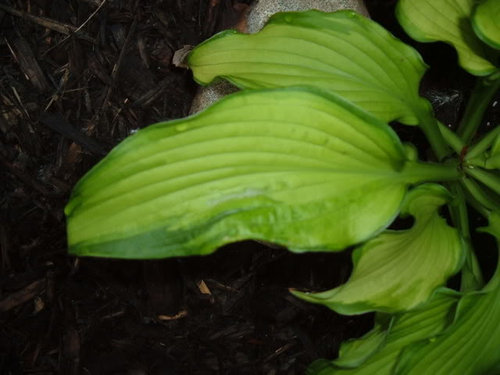
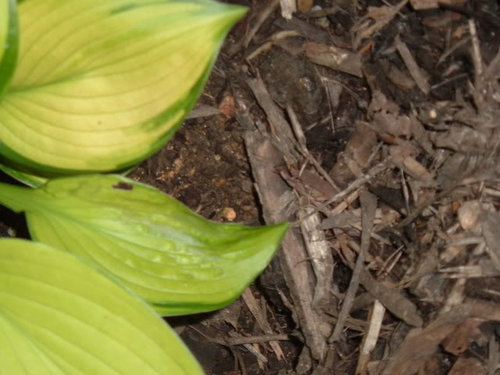
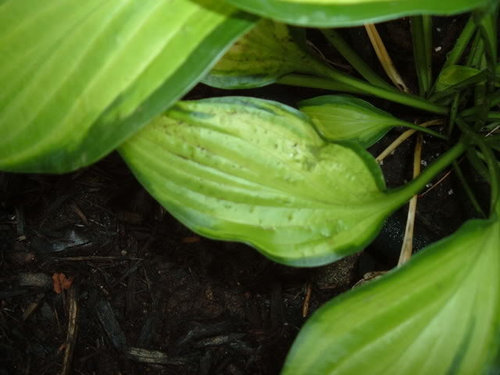
I just posted about finding foliar nematodes in many of my hostas after vacation. After inspecting all my plants so carefully, I then started seeing "evidence" of HVX. I really hope I'm being paranoid. What do you think?

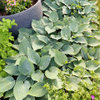
Emerald Ruff Cut:

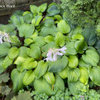
Dick Ward:

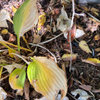
Orange Marmalade:

In all of these plants, only one leaf is looking weird, the rest look fine. Not sure if this might just happen after seasonal wear and tear. To me it's looking like collapsed cells though.

Comments (14)

  • 18 years ago

    Don't allow yourself to be paranoid, get the test kit and know.

    Here is a link that might be useful: hvx test kit

  • 18 years ago

    These look more like physical or cold damage...not HVX.

    The test kits Butch linked to work really slick and are easy and quick.

    Don't be paranoid...just learn all you can, use sanitary practices in the garden, and be observant.

  • 18 years ago

    Thanks - they're ordered. I got the one with 25 tests - they're guaranteed for a year but probably last much longer. The way I'm going, i may need all 25 before the winter!

    The whole "sanitary practices in the garden" is a pretty funny concept. There I was being so careful digging out plants, getting rid of soil, sterilizing instruments and the voice inside of me was saying - you're covered in dirt - how sanitary can you be. What about the mulch I used - goodness knows where that has been...

  • 18 years ago

    The whole "sanitary practices in the garden" is a pretty funny concept. There I was being so careful digging out plants, getting rid of soil, sterilizing instruments and the voice inside of me was saying - you're covered in dirt - how sanitary can you be. What about the mulch I used - goodness knows where that has been...

    HVX does NOT live in the soil, it's in the roots, crown, petioles and leaves, in other words, the whole plant. And it will survive while hydrated on any surface that has come in contact with it, such as possibly the spade or fork you used for digging, or the knife you used for making a division, or the countertop the plant was on while making the division, or the pruners you used for cutting leaves or scapes. The only possible reason for disposing of soil is to make sure that whatever may remain of the roots of the infected plant is disposed of, the virus itself does not survive in the soil.

    Now, with foliar nematodes that's a whole other story.... and another subject...

  • 18 years ago

    pietertje - You're right. I was doing all that to try to keep foliar nematodes from spreading and should have put those thoughts in the nem thread.

    This thread was started because I was thinking I might be becoming paranoid about HVX because of my nem disaster. They were linked for me, but probably not for anyone else reading this thread.

  • 18 years ago

    Ejr, when I first got the publication "Hosta Diseases and Pests" I took a look at all the horrible photos in it and imediately ran outside and looked at my hostas and diagnosed a Gold Standard with HVX. To this day, that hosta is healthy and showing no symptoms of HVX. So, becoming paranoid is something that a lot of us do (or at least I hope I am not alone in this :-) ). I think you are doing the right thing by purchasing the test strips. I plant to buy some.

    PLEASE let us know the result of your test. I saw a problem with my Antioch like your first photo and underneath the leaf was a bug of some sort, I think the second is a maybe for HVX, and have never seen a problem like what is in the third picture.

  • 18 years ago

    Yea!!! I just tested all three plants plus two more that I thought might be suspicious and they were all negative! I took the tissue from the area that was most damaged so I'm hoping the results are for sure.

    Guess I was being paranoid, but I'm glad I tested so I won't worry about them through the winter.

    It's funny (or sad) - when I talked to the nice person at the test place she was saying that if they didn't test positive to call back and they might be able to help me find out what's wrong. Thank you very much but frankly I'm going to chalk it up to seasonal wear and tear and be happy in my ignorance!

  • 18 years ago

    Pieter...~"and it will survive while hydrated....." Does that mean that a tool used 3 days before and not still wet from HVX fluids will be safe to use without sterilizing? Mary

  • 18 years ago

    Mary, I would think if there were any transfer of virus during because the implement came in contact with infected tissue 3 days ago and the implement has been dry virtually ever since that the virus will not have survived. Having said that, I have no knowledge of any scientific test to confirm or deny this. The virus is dependent on specific host material for its survival and multiplication, which is Hosta tissue. If you are dealing with a wide variety of Hostas from several unknown sources it is only common sense and good husbandry to clean and disinfect the implements you use when switching from one plant to the next. Don't take a chance.... it ain't worth it.

    Pieter

  • 18 years ago

    Pieter~Thanks. I don't intend on using infected tools without sanitizing them, but there's always the times one forgets which tool was used where and when. Just checking so I don't get paranoid with goofs I make. :O) Mary

  • 18 years ago

    Mary, we all make goofs. Sometimes they're called brain farts, blond moments, senior moments, or whatever, I'm sure you've heard them all and these days mine tend to be the former and the latter. As long as eventually you come to the 'what was I thinking' part you'll be just fine.....

    Pieter

  • 18 years ago

    Ejr - congrats on your test results and thanks for following up with us. I am going to order some of those test strips today and check out a few of mine that I worry about.

  • 18 years ago

    In regards to survival on tools, tests by Dr. Lockhart at the University of Minnesota have shown that HVX can remain viable on tools up to 3 WEEKS after contamination. So it is important to remove any plant sap from tools right after use and/or before using them again on another plant.

  • 18 years ago

    In regards to survival on tools, tests by Dr. Lockhart at the University of Minnesota have shown that HVX can remain viable on tools up to 3 WEEKS after contamination.

    Wow Chris, time to eliminate them thar brain farts and senior moments. Who'd 've thunk the virus could survive for that long not being hydrated... thanks for the info, that's SCARY!