Software
Houzz Logo Print
okieladybug

Wisteria, Hydrangea and lilac questions

19 years ago

I want to create a cottage garden in my yard. Because of the mature pecan trees all around my home, I'm in shade most of the day. I love these two plants, but have some questions about growing them here. FYI: I'm a beginner garden with zero experience. I have several questions about each; I also need to know what month to plant each of these, if I decide to grow them.

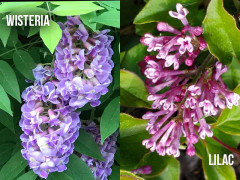
Wisteria: I saw this in front of several houses Wednesday when I was in Stillwater and love the look of it. I think it could really soften the look of the front of my house. Will this grow in shade? If you have it, what do you have it on (wooden arbor, etc.)? How do I get some (starts, buying a bush, etc.)? Does it require a lot of water? How long does it take to grow?

Hydrangea: I read that hydrangea will be ok in shade, as long as you keep them watered. Is this true here in Oklahoma? There is a house in my town that has tons of hydrangea on the north side of their home. The only shade provided is their house...in my yard shade is provided by my house and trees. How long does it take for them to get established and bloom?

Lilacs: I LOVE lilacs...they were one of my great-grandmother's favorite flowers and have become mine, too. I read that you can get a shoot off an existing plant to start with. If I do this, what do I do with it? Does it go outside immediately or do I need to keep it indoors for a while? How long will it take to bloom if I get a shoot? Is there a better way to start growing them?

Thanks in advance for all your help!!! I really want to beautify my yard this year, but know nothing...so I'm sure I'll be asking a lot of questions!

Comments (10)

  • 19 years ago
    last modified: 11 years ago

    You can grow all three in Oklahoma, but they like a lot of watering, so if you don't plan to water a lot in the summer, I'd look at other things. THE best hydrangea for Oklahoma is actually oakleaf hydrangea. The blooms are cone-shaped, white, and turn to pink as they age. The foliage is outstanding, shaped like oak leaves, as the common name indicates. The foliage turns red in fall, and the bark is a peeling cinnamon color, so it provides year-round interest.

    Also, wisteria is a very opportunistic grower. You will need to cut it back severely at least twice a year and its a job because the stems get large. You could try the chinese (or is it japanese?). One or the other is not as aggressive as the other, but still provides the same bloom show. Get as mature a plant as you can, or you might be waiting for blooms for several years. You will need a very solid structure for it to climb on as it is a heavy vine. Most trellises will not be strong enough to support it. You need a solid wood arbor. I've seen wisteria growing in shady situations, but you will sacrifice blooms. They prefer sun.

    Hydrangeas - God love em cause I do. But, they are water guzzlers, too, if you want good performance from them. They like an acid soil - necessary if you want blue blooms. If not, they will grow in alkaline soil, but the blooms will be pink, unless you pick some of the newer cultivars like Lady in Red (reddish cast to foliage and stems). I've also heard that this one doesn't perform as well. H. arborescens 'Snowball' has those huge basketball size white blooms on it. H. 'Nikko Blue' will have either blue or pink blooms (or in between, like lavendar) depending on your soil acidity. You have to prune hydranges (most, except for 'Endless Summer'), right after they bloom, so they can produce new wood for the blooms to appear the following year. Don't prune in spring, or you will cut off that year's blooming stalks. Hydrangeas are best suited to partial shade.

    Lilacs, I really don't know too much about, except that most like cooler climates than ours. There are a few bred to withstand warmer climates like Oklahoma, and one is Lavendar Lady. I understand (from a friend who tried to grow one) that they take buckets and buckets of water to establish, and then they still like to be watered well. But, they are beautiful, cottage gardeny plants, and they attract butterflies, too! Lilacs like sunny exposures.

    Hope this helps some.

    Susan

  • 19 years ago
    last modified: 11 years ago

    Okieladybug,

    Susan gave a great answer, so I'll only add a couple of things.

    Wisteria: very deep rooted and very aggressive. Once you have it in the ground you will have it forever. Fast grower, very rampant and long vines. Will easily get 20' to 30' tall/long in only 2 or 3 years. Will eventually crush and destroy the support it is growing on, so build it a VERY STURDY arbor and be prepared to prune heavily to keep it under control.

    The Japanese Wisteria and Chinese Wisteria are both commonly sold. The American Wisteria (Wisteria frutescens) is harder to find but is not quite as rampant of a grower and might be preferable. It will grow in full sun to part shade, in wet or dry soil, but will bloom better the more sun it gets.

    HYDRANGEA: Oakleaf and Lady in Red are my favorites. The Oakleaf is more hardy.

    LILACS: To grow a lilac from a shoot, find a shoot growing out from the main clump of the mother plant. Dig around the base of the plant gently to expose the roots of the shoot. Sever the roots between the mother plant and the shoot. Wrap the shoot in a wet paper towel or newspaper and take it home and plant it as soon as possible. Plant directly where you want it to grow. If your soil there is lacking in humus, add some humus or compost before you plant. Water it regularly until it takes off. It should take off quickly in the spring. Water regularly the first year and keep it well mulched to conserve moisture in the summer. Might take it a few years to bloom, though. If you want faster blooms, buy one in a container at a nursery and you should have flowers next spring.

    Dawn

  • 19 years ago
    last modified: 11 years ago

    Thank you very much, ladies! Your information is very helpful. I was afraid of the wisteria taking over and looks like I *should* be concerned about it. Perhaps that's not the best option, then. I'm not sure how long we'll be at this house and I don't want to create a headache for future owners.

    Can you suggest another vine that would grow well in shade? I love the pics I see of vines growing up around a front porch. I'd also like to have a vine covered arbor in the back yard where it is total shade until the leaves are gone in the fall.

    I'm including a link to my photo album. These were taken in August 2005, right after we moved in. Don't let the green yard fool you...that's all weeds!

    Here is a link that might be useful: okieladybug's home pics

  • 19 years ago
    last modified: 11 years ago

    Other vines for shade here are Sweet Autumn Clematis for good coverage, and a mass of tiny white blooms in late August-September that are very fragrant.

    A lot of clematis will grow in partial shade and some of the best are viticelli hybrids, like 'Polish Spirit'. Jackmanii is another.

    Honeysuckles will take partial shade, too. Some of the newer cultivars are great bloomers, especially of the ssp. Lonicera sempervirens.

    Dutchman's pipevines are wonderful vines for shade but may take awhile to become established (about 2 years). After established, it grows very fast. Aristolochia macrophylla (syn. durior) has HUGE heart-shaped leaves, and the flowers are shaped like meershaum pipes. It is also a host plant for the pipevine swallowtail. A. tomentosa has hairy foliage and stems as the name indicates, smaller foliage, but is nonetheless a nice vine, too.

    Crossvine (bignonia) will do well in partial shade and has the same tubular flowers as trumpet creeper (campsis) without being quite as aggressive.

    Climbing hydrangeas are beautiful, but it can take up to 5 years for them to really start growing.

    You can grow ornamental Kiwi vines (actinidia kolomitka). Insignificant flowers, but the foliage is mottled green, pink, and white.

    Japanese Hydrangea vine (shizophragma hydrangeoides) 'Moonlight' is similar to the regular climbing hydrangea, but the leaves are infused with silver - gorgeous! Some of these hydrangea vines take many years to become established, but you can supplement them with annual vines in the interim, like antigonon leptopus (coral vine--hummingbirds love it); some morning glories will tolerate partial shade. Is your exposure total shade???

    I think the Aristolochia or pipevine for the back area is the best idea. They are hardy and will eventually cover the entire area. These are old fashioned cottage garden type plants that southerners used to use for shade on their porches.

    Confederate Jasmine is another nice foliage vine that blooms with fragrant white blooms in spring. It is perennial. Carolina Jessamine is another perennial vine that has yellow spring blossoms.

    Hops vines are nice, too, and hardy, and are a host plant for the beautiful Question Mark, Commas, and Mourning Cloak butterflies. You will have lots of butterflies around. Forgive me, I'm a butterfly and moth fanatic, so I'm always thinking of ways to encourage people to grow butterfly-friendly plants. It is best to start these vines from rhizomes that you can order over the Internet, from places like The Thyme Garden. They are very inexpensive, too.

    I have given you a link to vines that grow in shade. Aristolochia is not among them, but it is just now making a comeback, so it is early in the game for some garden writers. Also, I don't recommend 5-leaf akebia, which can easily get out of control, nor do I suggest the fig because of its marginal hardiness here. American Bittersweet is okay (but not Chinese bittersweet) if you have lots of room for it to romp, and make sure you get a male and female plant in order to get the berries. Otherwise, it is virtually carefree except for some pruning, and I've never seen any pests on mine. Wouldn't recommend the climbing bamboo (smilax) either as it is hard to get rid of once you have it, or the Chinese and Japanese wisterias. The common periwinkle is very invasive as well. Other than those, there are some good suggestions with photos.

    Susan

    Here is a link that might be useful: Vines for Shade

  • 19 years ago
    last modified: 11 years ago

    I planted a nice size, store bought lilac bush 3 years ago. The first year it did not bloom, the second (last year) it had one itty-bitty bloom. This year again, it had one very small bloom. I have heard it take a few years for them to get settled. But I don't know.

    My neighbor has 3 (1 large and 2 medium) bushes and usually at the swap I bring some potted starts. I dig them up with a big amount of dirt still around their roots without disturbing them and that way they usually survive. When the sprouts start popping up, if you want, you can get a hold of me and come by and pick some up. Or I can bring them to the swap??? Less expensive that way, because I paid $25 for the 1 ft. bush I bought. Where do you live?

    I also have wisteria and it is growing on my back yard fence. I let it go...It kind of give me a barrier from the street. I do have to trim it by a tree to keep it from growing in the tree though. Mine blooms a little later than what is blooming now. I haven't tried to get any cutting or sprouts but if it is possible we can try. It does pop out of the ground like the lilac.

    Cheryl
    dvlwitgrneyes@aol.com

  • 19 years ago
    last modified: 11 years ago

    Thank you for the replies! I appreciate all the information and will print it off and see where to go from here.

    Thanks again!

  • 19 years ago
    last modified: 11 years ago

    I planted five 5 gallon size potted 'Miss Kim' lilacs last spring. Two of them were planted where they receive full sun; one was planted where it received morning shade and afternoon sun; the other two received sun except for, from 11am to 4pm, when they were shaded by a fairly narrow spreading oak tree. The ones which received full day sun and also the one which received morning shade and afternoon sun grew and bloomed very nicely. But the other two lilacs which got midday to almost all afternoon shade almost died.

    This last Fall, I moved the two nearly dead ones to the west side of a wooden fence near where the other one which received morning shade and afternoon sun was doing so well.

    Those ones I moved last fall struggled to leaf out this spring, but in the last week they are beginning to leaf out nicely.

    So far this spring; out of all my 'Miss Kims' the one, which was first planted where it would receive morning shade and afternoon sun, seems to be doing about twice as well as the other two, which get full day sun. But the ones getting full day sun do not seem to be suffering or at risk of dying like the ones displayed, which got too much shade and had to be moved.

  • 5 years ago

    I wish we had never planted wisteria. There is a native that is not as invasive as the Chinese.

Sponsored
Daniel Home
Average rating: 4.8 out of 5 stars20 Reviews
Premier Interior Design Team Transforming Spaces in Franklin Co, Ohio