Software
Houzz Logo Print
spademilllane

Roundup-Resistant Weeds

16 years ago

See article below on Roundup-resistant weeds.

--Robert

Here is a link that might be useful: Roundup-Resistant Weeds

Comments (12)

  • 16 years ago

    Robert,

    Thanks for the link. That's a great article. Ever since they introduced Round-up Ready crops, I knew this would happen eventually. I was still a kid in the 1970s (my grandfather was a farmer/rancher) when Round-up was introduced. One reason it was a 'big deal' at the time was that many weeds had developed resistance to the herbicides used in the 1940-70s. So, I guess it seems ironic to me that the same thing is happening with Round-Up.

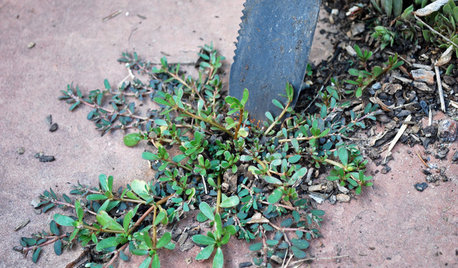
    Just the mention of the word 'pigweed' sent a chill up my spine. I have it here and hate it, hate it, hate it. If I don't stay on top of it and pull every little pigweed sprout I see, it will take over our place in a matter of weeks. It is almost as aggressive as bermuda grass but easier to remove when young.

    I worry about them using Bt in GMO seeds.....I suspect that we'll eventually see Bt lose its effectiveness on worms/caterpillars as a result, and you have to wonder if Bt-corn is playing a role in reduced numbers of some butterflies.

    The older I get, the more I go back to doing things 'the old way'....the way my dad and his family did things in the 1920s and 1930s when no one had the money to spend on fancy-schmancy pesticides, herbicides, etc.

    What are all these chemicals doing to our world? I think we all sort of know the answer to that.

    Dawn

  • 16 years ago

    Dawn:

    That article seems to have inspired a round-table of sorts on "superweeds" at the NYT. Below is a link to comments from the following luminaries, as well as 150 people's comments both pro and con:

    • Michael Pollan, a contributing writer for The Times Magazine and the Knight Professor of Journalism at the University of California, Berkeley, is the author, most recently, of "Food Rules: An EaterÂs Manual."

    • Stephen Powles is a professor of plant biology at the University of Western Australia. He is also a grain grower and glyphosate user. (I like that--"a user" like a drug user?)

    • Blake Hurst farms in northwestern Missouri with his family, raising corn, soybeans and greenhouse crops.

    • Anna Lappé is the author, most recently, of "Diet for a Hot Planet" and co-founder of the Small Planet Institute and the Small Planet Fund.

    • Scott M. Swinton is a professor of agricultural, food and resource economics at Michigan State University.

    • Micheal D. K. Owen is a professor of agronomy and an extension weed scientist at Iowa State University.

    • 150 other people's comments--all very interesting

    Oh, and taking center place is your favorite weed, the Pigweed, or Palmer amaranth. They are rather hateful things, aren't they?

    --Robert

    Here is a link that might be useful: Superweeds

  • 16 years ago

    Robert,

    Thanks for the link. I am going to go and read every bit of it now, but first I have to tell you that the photo of the pigweed practically made me throw up. Hate that stuff. Our very first year here, I was a city girl newly moved to the country and didn't know what pigweed was. However, I thought it looked like amaranth and I grow lots of ornamental amaranths, so I left it where is was. Huge mistake! I'm older and wiser now, and well-experienced at yanking young pigweeds out of the ground. (If you leave them, they get as big as trees and make a gazillion seeds each).

    Michael Pollan is one of my favorite authors and I've read many of his books over the years. I love the term 'glyphosate user'...the use of those words sort of is a hint of illegality there, ha! (I am an occasional gyphosate user myself, but am not addicted to the stuff and can stop using it any time I want.)

    Is this the same Anna Lappe who wrote "Diet For A Small Planet" when I was a kid? I didn't know she was still writing. Ooops.

    OK, I'm going to go read the discussion and comments. Thanks again.

    Dawn

  • 16 years ago

    First of all PIGWEED! I never knew what it was called, but it hogs my garden time and I hate it! Thanks for the ID.

    Second, thanks for the info. Just today, as I was planting tomatoes and peppers while fighting chickweed, I was ruminating about the day in the not so distant future when it will fall on me to manage the family farm. I will have to make decisions regarding large property, much different from my home garden. I hope I am able to make wise choices.

    Our current challenge is the invasion of musk thistle. There are HUGE financial penalties for not eradicating it. I don't need a crystal ball to know how my challenges will be different twenty years from now.

    Thanks for sharing this insightful article. I've forwarded it to my brother so he can share in my discomfort.

  • 16 years ago

    If I looked at the map right it doesn't show any in TX. I know they have them. As the first time I ever heard of Round up resistant weeds were from my best friends who live and farm big around Morse, TX. At least 3 years ago there were several specialists from the state and chemical companies that came in and studied the problem and tried different chemicals. 2,4-D will kill pigweed. The problem is in that area down there they raise a lot of cotton now. And as one farmer told me all you have to do is walk by a cotton plant and mention 2,4-D and it dies. 2,4-D Amine is the safest to use of the different mixes. There may be some around here but so far have never heard of any. I know it still kills mine when I spray. I usually mix both together if I have too spray. I'm trying to do less spraying every year. Kochia weed is more of a problem for me than pigweed is. If you let a Kochia weed get big you almost need the chain saw to cut it. Jay

  • 16 years ago

    This will be interesting reading. I will return to it later.

    Seedmama, the best natural way to keep weeds (not eradicated, but under control) on larger acreages is mowing, clipping, brushhogging, whatever you call it. You just keep the top growth cut and eventually the plant dies out. We have thistles here too, two kinds and I have sprayed and I have mowed, mowing is better.

    Like Dawn I am a judicious user of Gly-4 (like my blackberry patch to try to control cheat) but feel guilty every time I use it.

    Here is a scary thing: Early in the season when nothing much was green except cheat, I sprayed near some iris...just the drift caused some blooms to be very strange. They were different color and shaped more like a Dutch iris that a bearded iris. I know the herbicide is what caused it!

  • 16 years ago

    This all begs a question: when does an ornamental suddenly become a weed? Lots of people plant kochia because they think it pretty!

    Plenty of people on this website complain about the eastern cedar and what a weed it is. Yet I have three of them in my front yard and another three in the back that must be at least 85 years old [when the house was built]. They are tall (about 45 feet), majestic, and have wonderful gnarled trunks. The diameter of the trunks at ground level is about 26-32 inches, depending upon the tree. The branches don't begin until about 20' up the trunk. They are quite beautiful, and they have at least another 175 to 250 years left in them.

    I acknowledge that these trees are weeds when seen growing alongside the road or on the fenceline of farmland. But in my yard these aren't weeds, they qualify as specimen trees.

    I suppose it is always a question of context. For one person a Kochia is an expensive nursery shrub, for another it is a pernicious weed....In my front yard the eastern cedars are stately, but down the road a mile or so next to the Canadian River they are a nightmare.

  • 16 years ago

    so now I know what that weird weed is that I've been fighting for years in several areas around my home...it's PIGWEED! I was confused for several years because the leaves look so much like my perenial verbenia's...but I gaged the growth and always pull it. The roots are ridiculously long...but I've always mananged to overcome it. BTW - the perenial verbenia is still doing fine. The tell-tale indicator came when I found it where the verbenia's were NOT planted.

    This forum is such a GREAT source of knowledge! I think it's a shame that our surrounding states don't have a forum as active as ours. Is Oklahoma a GREAT STATE or what? =)

  • 16 years ago

    Seedmama, "I've forwarded it to my brother so he can share in my discomfort". Oh, that is too funny for words, even if you didn't mean for it to be funny. Seriously, I am sure once the two of you face those kinds of decisions, you'll make the right choices.

    We try to dig out the thistles while they'll small. Otherwise, we just mow them repeatedly to try to keep them from flowering and setting seed. We only have a few acres though. I cannot imagine trying to deal with them in a farm-type setting because they are relentlessly aggressive.

    Jay, Well, at least I don't have to worry about cotton plants because our place (formerly a cotton farm in, I think, the 1950s) has cotton root rot in the soil making it impossible to grow certain kinds of plants. No cotton will grow here! (I LIKE cotton plants, think they are pretty and would grow some if I could, just for fun.)

    We have neighbors (ranchers) who sometimes spray their fencelines with glyphosate products or their hay pastures with broadleaf weedkillers. Herbicide drift can be a problem here at our place but most years I see relatively little plant damage or death from it, and that's a good thing.

    Glenda, I know. I feel guilty when I use glphyosate here, and I only use it once every 3 or 4 or 5 years. I've pretty much given up on controlling bermuda non-chemically with any degree of success. I dig it out of the garden beds when it invades, and otherwise am just trying to shade it out by planting tons of shrubs and trees around the house.

    Robert, For years and years you could buy little packets of kochia seeds on the seedracks in the stores. I always wondered why anyone would plant it on purpose! (I guess my perspective on it comes from having relatives who farmed and considered it a weed.)

    I agree that, as a specimen plant, Easter red cedar is gorgeous, but it sure becomes weedy fast. I always liked them until we moved here and I learned how quickly they grow, spread and outcompete everything around them. Seeing them burn and literally explode in wildfires has made me like them even less. They can send a burning resinous sap flying through the air and it spreads fire with it wherever it lands.

    Paula, I was chuckling to myself yesterday pulling pigweed seedlings from my veggie garden. Lots of folks let it grow wild in their pastures here, and we're downstream, so I'll undoubtedly being pulling those seedlings every spring for the rest of my life.

    This is a great forum....and a really active one compared to some of the other state and regional ones here at GW. There are so many folks here with knowledge, experience and expertise in so many different areas.

    Dawn

  • 16 years ago

    Yes this thread reminds me of a saying an old timer used to say when talking about certain pests and weeds. What is a gold crown in one's opinion is a thorn in another person's opinion. And for me I have more trouble and hate Kochia weed more than Pigweed. I don't have a lot of trouble controlling the pigweed. Kochia weed gets a very tough stalk that can dull a mower blade fast. I've seen people try baling them and using them for feed. The trouble is if not mixed and fed right they will kill cattle and cause other problems. I could never imagine anyone planting either one. But if I did plant one it would be pigweed. Again just like the taste of a tomato a personal difference in each of us. Jay

  • 16 years ago

    Pigweed! Aha, so that's what that is. It's never been a huge problem for me, as I find it fairly easy to control as compared to Bermuda and Johnson, but do have to pull it every year.

    While googling pigweed images, I also happened to find what ragweed looks like. Can you believe I never bothered to ID it before? Sheesh. It's all over here and I'm forever pulling it.

    Diane

  • 16 years ago

    Here are two weeds that I really hate: Dock and poke!

    Both have enormous roots and must not be allowed to go to seed.....I know. If you chop them out be prepared to go several feet down....The birds did a great job a couple of years ago spreading poke seed everywhere. Cocklebur is another.

    I actually appreciate a cedar tree or two in the pastures. They give the cows great shade and I think the resin they rub off from the branches help with the flies. Never seen any supportive documents on that, but I know it works.

    BTW, I read all the articles in the NY times. Very interesting and informative. I fear government will choose mega companies with monetary support or farmers likewise to aid in their buying the more expensive seeds or the companies in developing even more toxic chemicals. It will be an interesting thing to follow. Not hearing much on farm shows about this yet.

    Glenda

Sponsored
Peabody Landscape Group
Average rating: 3.5 out of 5 stars8 Reviews
Columbus' Reliable Landscape Design & Contracting