Software
Houzz Logo Print
jessaka

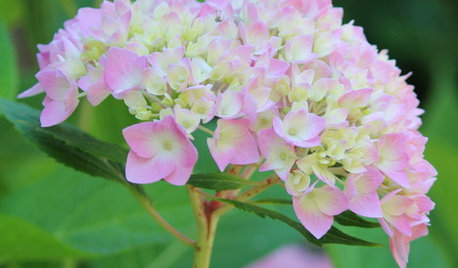
Hydrangea not blooming

18 years ago

I was given three hydrangea plants by a woman that had them in complete shade and said she never saw any blooms. Mine gets morning sun and afternoon shade, I think, but they have never bloomed. Am I doing something wrong? Do I need to feed them. Move them more out into the morning sun?

Comments (17)

  • 18 years ago
    last modified: 11 years ago

    Jessaka, I've linked a website I found. I don't know much about hydrangeas but I bet Dawn can fill you in. --Ilene

    Here is a link that might be useful: Hydrangea

  • 18 years ago
    last modified: 11 years ago

    When did you last prune them? Hydrangeas need to be pruned right after they bloom, because they bloom on the previous year's growth. If you prune them in spring or too late in the fall, you will not get any bloom at all.

    Do you know if they are of the "mophead" variety? The easiest way for me to prune my hydrangeas is just to....not prune them! LOL! After blooming, they will begin to produce new foliage above the current blooms. Those stems will produce next year's flowers.

    Also, if you have the regular blue hydrangeas, you will need to fertilize with a high acid fertilizer to maintain the blue color. These hydrangeas' color is dependent on either acid or neutral soil. In neutral soil, they will be pink and/or lavendar. I like to change mine around a bit just to confuse neighbors! One year I will apply acid fertilizer so they are blue blooms, and the next year, I don't apply anything and they are a mix of pinks and lavendars.

    Also, how large are the hydrangeas? How long have you been growing them (length of time they've been in the ground). Hydrangeas need plenty of water (hence, the "hydra" meaning water, in the genus). The only hydrangea I have that doesn't need as much water is the Oakleaf Hydrangea.

    Susan

  • 18 years ago
    last modified: 11 years ago

    Hi, I didn't prune them. They were given me me last summer and were 3 feet tall. They died back and grew from the old stalks and maybe new. They get plenty of water. The woman had them in her garden in shade and said they never bloomed. I don't know how long she had them.

    I have no idea what color they are. The leavs are a varigated yellowish green, which makes me think they need some kind of food. I have not fertilized them at all.

    Thanks for your help, jessaka

  • 18 years ago
    last modified: 11 years ago

    Jessaka,

    Can you tell by looking at the leaves if it is SUPPOSED to be the varieagated hydrangea (I think its name is "Variegata") or if it is just a hungry plant?

    If it is "Variegata", I think they are slow to bloom, and it can take them 3 to 5 years from their initial transplanting into the ground as young plants to set buds and finally bloom.

    Also, if it is "Variegata", they are warm-zone hydrangeas that bloom very well in zones 8 and 9, but not in zone 7 and colder zones because their buds often freeze in the colder zones' winter months.

    Dawn

  • 18 years ago
    last modified: 11 years ago

    Hi, Well, I just looked at photos of variegated hydrangeas, and mine is not that. What do I need to feed it to make the leaves green? Some are greener that others.

  • 18 years ago
    last modified: 11 years ago

    I'd use any fertilizer that is NOT excessively high in nitrogen since too much nitrogen inhibits blooming.

    If you want to use a good organic fertilizer, Espoma makes two that would fit your needs: Holly-tone or Plant-tone. One thing about these that is great is that they contain all the micronutrients (trace elements) that your plants need.

    If you want to use a chemical fertilizer, just choose one that does not have a really high percentage of nitrogen. If you can find one that also has micronutrients (trace elements), that would be even better. You want a balanced fertilizer with N-P-K numbers like 10-10-10 or something close to that, not something like 24-8-16.

    Maybe someone can recommend a specific chemical fertilizer that they use and trust. Since I don't use chemical fertilizers, I'm not much help in that area.

    Dawn

  • 18 years ago
    last modified: 11 years ago

    so of course i can't find 10-10-10. Thanks for the information. I will keep looking for it.

  • 18 years ago
    last modified: 11 years ago

    Jessaka,

    Since I garden organically, I don't know specific brand names of chemical fertilizers and their N-P-K ratios, so I asked a friend and he told me he thinks Osmocote has one that is either 10-10-10 or 16-16-16 or something similar. The key is that you don't want a fertilizer that is very high in nitrogen (the first number) or you'll get more foliage and less flowers. If you can't find one that is perfectly balanced with all three numbers being identical or very close, just find one that is as balanced as possible.

    Dawn

  • 18 years ago
    last modified: 11 years ago

    If you just got them last year, I wouldn't be surprised that they haven't bloomed. They might need to settle in. I'm just now seeing some flowers on a couple of Nikkos (?) that I planted several years ago.

    You should be able to find the Plant Tone at your local Lowes, at least that's where I find mine. I also used "back to earth", a cotton burr compost, around mine.

    Lisa

  • 18 years ago
    last modified: 11 years ago

    I couldnt find Plant Tone at Lowe's here. I did find some that was 6-4-4. Would that work? Then another lady said that she gets something called Shake and Feed at Lowe's and her's was blooming.+

  • 18 years ago
    last modified: 11 years ago

    I think the 6-4-4 would be great because the idea is to give it a good gentle feeding without overdosing it.

    If you noticed Lisa's comment, she believes your hydrangesas may not be blooming because they are fairly young and that is a very important point. So, you want to feed them a gentle, balanced fertilizer to help them grow, but you don't want to overfeed them by giving them something with high numbers because that is bad for them in the long run. Think of the typical high-number fertilizer as being steroids--quick fix but bad results long-term. Sometimes, especially if a high-nitrogen fertilizer is used, you get a lot of leafy foliar growth at the expense of the plant's root system, and that is very stressful on the plants.

    Shake and Feed is a pelletized Scott's Miracle Gro product. The advantage to using it us that it is coated with a material that allows it to dissolve slowly over time--I think they say one feeding will last for 3 months. It has higher numbers (20-20-20-, I think, but check the label to be sure) so, if you use it, you're giving your plants a higher dose, but not an unreasonable one. At least it IS balanced and that's a good thing.

    Keep in mind, though, that the lady who uses it and said her hydrangeas are blooming may have older, more well-established plants and the Miracle Grow may not be the sole reason her plants are blooming. Still, there's nothing wrong with using it if that is what you want to do.

    If your hydrangeas are in one of the parts of your yard that stay well for an excessive period, they may NEED those higher numbers, because lots of moisture leaches nutrition from the soil.

    Good luck with your hydrangeas and I hope they bloom for you, and I suspect they will bloom next year, but probably not this year.

    Dawn

  • 18 years ago
    last modified: 11 years ago

    Now I am very frustrated. I have been unusually diligent this year with the fertilizing. I just went out and checked and every variety of fertilizer I have, including the Miracle Gro for acid loving plants, is high in nitrogen. Of course, all the packages show beautiful blooms. Looks like I need to go back to the store for one more package of fertilizer with a little less nitrogen.

  • 18 years ago
    last modified: 11 years ago

    One More Plant,

    Hi. Wait. Don't get too frustrated too fast. I think I need to explain further and then you can decide if you want to continue your current program or, perhaps, make a change.

    First of all, I try to garden as organically as possible because I believe that is what is best for me, my family, the domestic and wild animals that live on our acreage, and the environment at large. And, no, I am not an environmental wacko, just a person who does her best not to harm the environment. So, under the organic way of doing things, we add many ingredients to our soil and then we let the soil feed the plants. And, most of that time, that works just fine. The kinds of things we organic gardeners add to our soil include compost, composted cow manure, soft rock phosphate, lava sand, greensand, blood meal, composted cotton burs, bone meal, etc. If you have good soil, the plants will normally get all the nutrition they need from the soil. So, by adding amendments to the soil, we are feeding the soil....and the soil feeds the plants. No extra fertilizers are required. If you feel your soil is not as good as it ought to be, you can feed your soil a gentle organic fertilizer like liquid compost, liquid seaweed or fish emulsion.

    There are several reasons why this is my preferred method--one is because it is environmentally friendly, a second is because it prevents salt (nitrate) build up in my soil and groundwater, and, mainly, because it works.

    Organic gardeners seldom use high-nitrogen fertilizers because we understand that such fertilizers are like steroids for plants....they give you a ton of growth....in fact, they give you unnaturally fast growth. Whenever someone tells me that their tomato plants are "all foliage and no fruit" or that the same is true of their flowers, I know before I ask them that the are NOT organic gardeners and that they have fed their plants a high-nitrogen fertilizer.

    Why is excess nitrogen bad? Well, nitrogen is not bad in the proper ratio (which is the same ratio that nitrogen is found in nature) but humans tinker with fertilizer formulas and give their plants a percentage of nitrogen that exceeds what they need. A plant can only use so much nitrogen at once. Excess nitrogen will remain in your soil and will leach into the groundwater and such nitrate buildup is bad for the environment. It also is bad for the soil. A continual use of synthetic fertilizers causes decreased soil fertility over time.

    When a plant takes up excess nitrogen, it is the equivalent of me eating 3 doughnuts for breakfast instead of one. The excess nitrogen gives the plants a burst of "energy" (resulting in plant growth) the same way that the doughnuts give me a burst of sugar energy (resulting in fat growth). LOL And, after a sugar rush, my adrenalin crashes and I want more sugar. Your plant responds the same way to a burst of energy from nitrogen.

    Excess nitrogen gives you lush, lovely, gorgeous, fast-growing plants which sounds lovely, but it does so at the expense of their future. Root systems often cannot keep up with the topgrowth of the plants. Should you care about that? Absolutely. I know that I do. I want my plants to have slow, steady, healthy growth that they can maintain over the long term. I want to have healthy soil. I don't want to have a lot of nitrates and other chemicals washing into the groundwater or into surface water in our creeks and ponds.

    And, this is NOT a chemical/synthetic versus organic/natural argument, because it is absolutely possible to give organically-grown plants too much nitrogen also, although you have to work harder to overfeed them.

    Based on a lifetime of gardening experience, I have found that the overfeeding of nitrogen does give me big, tall, thick, lush, bright green foliage....and that foliage is on an energy rush so it is unbalanced and THAT makes it very attractive to pests and diseases.

    When we first moved here to Oklahoma in the winter of 1999, I knew I had bad, heavy red clay soil, and I knew I didn't have much time to improve it before I planted. So, I did minimal soil improvement that first year, knowing I could do further soil improvement over a longer period of time. And, I chose to use Miracle Gro water-soluable fertilizer to feed my garden in an effort to make up for having such bad soil. It was a decision I came to regret.

    For the first few weeks, everything grew well and was beautiful, but I had gazillions of pests, especially aphids and spider mites, and every plant disease in the book. It took me a few months to connect the many problems with the regular use of a chemical fertilizer that was more food than my plants needed.

    So, I swore off the fertilizers with high N-P-K ratios and my garden has done much better ever since. (I also continually work on soil building to keep it that way). I only use Espoma and similar organic fertilizers and I have lovely plants and they produce fruit, flowers and veggies as they should.

    And, I haven't even addressed the issue of micronutrients (trace elements). Many chemical fertiizers ONLY have nitrogen, postassium and phosphate in them. How, then, will your plants get the essential trace elements they need?. Those "other elements" (aside from N-P-K) are iron, potassium, calcium,magnesium, nitrogen, phosphorus, sulfur, manganese, chlorine, boron, zinc, copper and molyndenum.

    Do you know what percentage of a healthy, whole plant is nitrogen? Two percent. So, you see, it doesn't need a fertilizer that is significantly higher than that in nitrogen.

    Most of the time (but not always) when someone has a plant that is not blooming naturally as it should, it is because the plant is overfed, overwatered, in too much shade or some combination of the above. Sometimes it is because the plant is too young OR was pruned improperly. (Some plants set their buds in summer, autumn or winter for blooms the following spring or summer. With those kinds of plants, pruning at the wrong time cuts off the buds that would eventually bloom.) The reason I always caution people to go for a fertilizer that is NOT high-nitrogen is because the plants do not need an excess of nitrogen.

    I hope that is clear. As far as whether nitrogen from a natural, organic source (like compost or manure) is better than nitrogen from a chemical source, I'd have to tell you that the plant itself does not care where its nitrogen came from....it will use that nitrogen regardless. But, I care.

    You probably could guess that I would strongly encourage everyone to garden organically and in the most natural way possible. And, of course, I would. But, it has to be each individual's choice and I would never tell someone they "have to" or "must" do things my way. What I will do is explain why I make certain choices, how they affect my gardening effort, and why I feel they are best.

    Gardening is as individual as each one of us who does it--there are many paths you can choose to follow. Only you can decide what works for you. So, if you are happy with the performance of your plants with chemical and high-nitrogen fertilizers, and you choose to continue on with that, there's nothing wrong with that. But, if you have a sneaking suspicion that "there has to be a better way", then I encourage you to kick the high-nitrogen fertilizer habit and give a more natural form of gardening a try.

    Happy gardening,

    Dawn

    Here is a link that might be useful: Info on Plant Nutrition

  • 18 years ago
    last modified: 11 years ago

    Thanks Okiedawn for all the information about the nitrogen. I will look for the Espoma and the Plant tone and/or Holly tone.

    I am fortunate. I have good soil. My father and grandfather were ranchers who took care to improve their land, part of which I live on. Mom and Dad always used the barnyard dirt to fertilize the garden and they had the largest tomatoes I have ever seen. My only experience with the barnyard dirt was to burn up the tomatoes a few years ago. Mom never measured anything. She said, "Just sprinkle a little around the base." Unfortunately, my sprinkle was too much for them and I have been afraid to try it again.

    I do some organic practices. Now armed with your information, I will forge ahead with others.

  • 18 years ago
    last modified: 11 years ago

    You're welcome. And, I DO wish gardening came as naturally to a lot of us as it did with "the old folks". I grew up in a neighborhood full of "old lady gardeners" who could grow anything. They'd take a cutting and just stick it in the ground and it would grow. I can't do that! They'd pour dishwater over plants outside the back door and the plants would thrive. They'd throw a handful of this or a cup of that in that garden and the plants weren't damaged and the roots didn't burn and everything thrived. I remember, even as a child, asking why they did stuff one way or another. The answer usually wasn't too satisfying.....something like "Because it works, child" or "Because that's how my daddy or mama always did it." I wish they were around today so I could pick their brains! It seems to me that we have to try a LOT harder than they did, or maybe they just made it seem easy?

    You know, I used to follow recipes exactly, but now I am one of those cooks who throws in a pinch of this or a little of that, and it drives people crazy when they want to know how to make something! It IS hard to define a handful of this or scattering a little of that, whether in cooking OR gardening. I do think, though, that the longer I garden, the more naturally it comes to me and the more I seem able to instinctively know how much of anything is "enough" versus "too much".

    Dawn

  • 18 years ago
    last modified: 11 years ago

    Is there a way to reverse the "over Nitrogen" this season? I am hoping for more flowers...I'm in NC so I have a few months to go.

    Thanks,

    Kasey

  • 18 years ago
    last modified: 11 years ago

    Hi Kasey,

    I don't know of a specific way to remove excess nitrogen from soil. However, if you are receiving regular rainfall, the rain will eventually leach the excess nitrogen out of the soil and your soil will return to a state of balance. And, when I say eventually, I mean that in terms of weeks or months, not years, since most chemical forms of nitrogen are fairly short release type products. Even a heavily-coated slow release nitrogen fertilizer usually lasts less than a year in the soil, and the more rain you receive, the less long it persists.

    If you are feeling "desperate" for flowers, you could add phosphorus to your soil and, hopefully, that would help. There are many organic sources of phosphorus, including bone meal or liquid bone meal concentrate (the liquid is designed for faster uptake, I think), earthworm castings, alfalfa meal, seabird guano, bat guano, soft rock phosphate, compost or fish bone meal. Of those, at least SOME of them should be easier to find, while others may be a bit harder to find unless you have a local nursery that carries a full line of organic products. Usually bone meal and earthworm castings can be found just about anywhere that carries gardening supplies. This year, here in southern Oklahoma we have been able to buy earthworm castings at Wal-Mart, of all places, and I think this is only the first or second year they've been available there.

    If you want to give your plants a quick boost of a chemical fertilizer, you can use one of the readily available bloom booster fertilizers. Most of the commercial fertilizer companies like Scott's Miracle Grow or Peter's or whoever all have a similar formulation. Miracle Grow's Bloom Booster, for example, has a 15-30-15 forumlation as it is designed to give you more flowers (or fruit). So, that's probably your best best--adding either an organic form or chemical form of phosphorus.

    If your hydrangeas aren't blooming as well as you'd like, you might want to visit the Hydrangea Forum and seek the advice of the Hydrangea experts there. Even though excess nitrogen is often the problem, different kinds of hydrangeas bloom differently and sometimes the problem is the timing of pruning or something else.

    Good luck. I hope you get more flowers.

    By the way, the only way I know to remove "contaminants" from soil (other than watering heavily to leach them out of the soil) is an activated charcoal product called Zeolite. It is not easy to find unless you have a top-of-the-line organic nursery, but you can order it online. It probably wouldn't remove nitrogen but would remove most other chemical contaminants should any accidental dousing of the soil ever occur.

    Dawn