Software
Houzz Logo Print
quailhunter_gw

watermelon

17 years ago

Can somebody tell me a little about blacktail mountain watermelon. Think I may grow some next year. Since it's a smaller melon, could it be trellised and supported by pantyhose like I'm doing with my canteloupe? Does it vine like canteloupe? I know a couple of you grow this variety. I've read a lot of good things about this watermelon.

Comments (4)

  • 17 years ago

    Quailhunter,

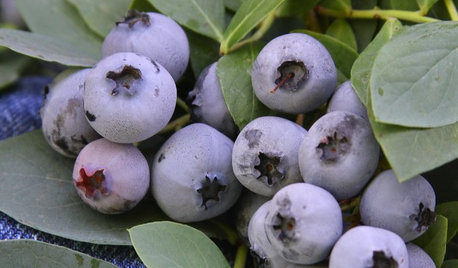
    Blacktail Mountain is a very early, very tasty, space-saving watermelon that can be trellised. I grow it every year and its flavor is just superb. They are generally ripe around 70 days after being transplanted, so if you start them inside in spring and transplant them out when the soil is warm in, say, mid-May, you can have ripe watermelons around mid-July.

    You can trellis them and sling them with pantyhose. I grow all my melons (true cantaloupes, muskmelons, watermelons and other minor melons) that way which allows me to grow a lot more of them than I can grow if I let them all sprawl on the ground.

    In a exceptionally dry year, I might only get 2-4 melons per plant, but in a wetter year (or if I irrigate heavily early in the season, but not during ripening of course,) I usually get 4-8 per plant. Depending on the fertility of your soil and on the amount of water the plants receive, the fruit will be from about 6 to 10 lbs. each.

    The melons have a very dark blackish-green rind and red flesh that has a slight orangey-red tint to it. They are sweet and flavorful. As grown in my garden for many years, they have been pest-free and disease-free.

    Dawn

  • 17 years ago

    Thanks. Did I read somewhere that melons don't like to be transplanted? What about direct seeding them? Does it matter?

  • 17 years ago

    quail hunter...I did direct seed mine, because I got a late start and the weather was already plenty hot enough to get them up and growing. The Blacktail Mountail's I planted took right off and don't seem to be having any pest or other problems so far.

    I have them trellised and they are soon going to be vining. Then I'll have to figure out how to train the vines up onto the cattle panels, a good 2 1/2 ft from the ground to the first rung on the panel.

    I'm excited because this is my first year to grow this cultivar and I'm anxious to see what their like!

    Barbara

  • 17 years ago

    Quailhunter,

    I start them inside in paper cups with the bottom cut out of the cups. To plant the seeds, the cups are lined up in a black garden flat and filled with soil. Then I just stick a couple of seeds in the cups, water and wait for the to sprout. Usually, I transplant them into the garden, cup and all, only 2 or 3 weeks after the seeds sprout.

    If you let them grow too long in the cups, the roots come out through the bottom of the cups and become entangled with the roots from other cups. I prefer starting seeds inside in cups for several reasons, but primarily to get a 2 or 3 week jump on the growing season. By planting the cups, I have no transplant shock or other transplant issues. The rim of the cups serves as a cutworm collar.

    Depending on the kind of paper cups you use, and also on your soil moisture levels, the cups may or may not decompose there in the ground quickly. If they don't, I just yank them out of the ground at the end of the growing season and throw them on the compost pile.

    Another advantage to starting plants in cups is that you don't end up with "empty" spots in rows where seeds failed to sprout. I garden biointensively in well-enriched clay soil so I don't want to 'waste' an inch of space that could be growing something since it has taken so much work to turn that dense red clay into productive garden soil.

    I start almost all my seeds this way, especially for succession plantings going in from late spring through fall. This year I also started black-eyed peas in the bottomless cups, although in the past I have direct-seeded them. On the day that I took out the broccoli plants when they were through producing and the heat was getting to them, I removed them in the morning and transplanted bottomless cups of black-eyed pea plants in the late afternoon. Even though it was 98 degrees and the heat index was in the 105-108 range, the black-eyed peas didn't wilt or show any signs of transplant shock.

    I start almost everything inside in cups or flats and transplant it outside, so I can go from bare beds of mulched soil in late winter or early spring pretty quickly to full rows of 'new' plants. This way, I also can change over quickly from cool season to warm season crops, or to other succession plantings of warm season crops. It also saves water because instead of having to keep a whole row area damp enough for seeds to sprout, I just have to keep the flat well-watered.

    Barbara,

    The watermelon vines are easy to 'train' to climb. As soon as the vines begin to run a bit, I just lift one up off the ground and lay it against the trellis. It climbs on its own from that point forward. I already have cucumber and cantaloupe vines in excess of six feet tall, and the watermelons aren't far behind them, although I planted them a bit later. (The watermelons were a succession crop following a cool-season crop of cabbage, so they went into the ground a bit later after all the cabbage was...

Sponsored
Peabody Landscape Group
Average rating: 3.5 out of 5 stars8 Reviews
Franklin County's Reliable Landscape Design & Contracting