Software
Houzz Logo Print
redding_gw

Squash in trouble also

15 years ago

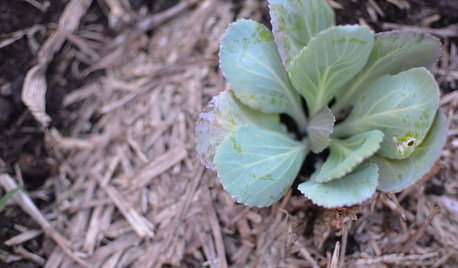
It seems that my poor baby buddleia is not the only thing in trouble. The squash are also looking terrible. This has just happened in the past 48 hours or so. The speckled bleaching on the leaves looks just like what's happening to the buddleia. I thought it might be some form of iron chlorosis, but I just don't know.

Dawn, first let me say thank you for the great reminders in the tomato thread. Mine are looking much better since we put up the shade for them and I was finally able to pick a few handful of cherry tomatoes for the first time this year. The spider mites have moved from the decimated marigolds and are now attacking the tomatoes, but maybe I can still salvage enough to be able to have some salads and a few BLT this year, even though the big Golden Girl have only set a half-dozen fruit in all.

I had not even thought about any chemicals that might be in the straw I'm using for mulch. So far nothing has seemed to be affected by it, even though there's run-off from the irrigation. It looks like my straw might be clean.

I had never heard of alfalfa tea, although I've certainly used manure tea in the past. I just bought some alfalfa pellets for the sheep, so I'll make some up. Is there any chance that it might help my poor suffering plants?

Here's what the squash looked like today. Not good. Not at all.

{{gwi:1118896}}

{{gwi:1118897}}

{{gwi:1118898}}

I can't believe they are already hitting the end of the season, although this heat has been really hard on everything. I'm nervous about stressing them any further with a spray application of MG, but I really don't know what to do. I don't want to let them go without a fight, unless it's simply hopeless.

Pat

Comments (3)

  • 15 years ago

    Spider mites are causing the damage in the last 2 photos. Spray the backs of the leaves with a sharp spray of water every morning and every night to knock them off the leaves. It may be too late. That looks like a pretty heavy infestation.

    The yellow foliage in the top photo could be downy mildew but that doesn't make sense because it is usually more of a cool weather disease. It looks sort of mottled in the photo (unless it is my eyes...and it may be because I just came in from a wildfire and am so tired I may not be seeing straight) so it might be one of the mosaic viruses.

    No matter how beautiful and perfect my garden looks in June, the you-know-what hits the fan and by late July in 8 or 9 out of ten years it tends to look pretty pitiful by the end of month. July is when the heat and pests really begin to take a toll on anything that is still looking good and producing. There's a reason many of us replant new stuff for fall, and July is 'it'.

    Alfalfa tea has growth hormones from the alfalfa that helps the plans grow. Liquid seaweed works about as well. Both will help a plant somewhat, but neither one of them is a miracle drug that will save a plant that is heavily infested with spider mites or which is diseased. They're just good plant tonics, not miracle workers.

  • 15 years ago

    Thanks, Dawn. I think what surprised me so much is that it seemed to come on so fast! I should have instantly yanked out and destroyed any plant that showed the slightest hint of spider mite, but we had a couple of other catastrophes going on at the time and I didn't get right to it. Within a couple of days, it looks like the whole garden is infested. I destroyed all the marigolds and what remained of the beans today, but tomorrow I'll need to evaluate the situation and see if I'm going to be able to save any of it at all. I'm sure there's a lot more that needs to be pulled up. If I can save half of what's left I'll be happy.
    There's no mildew that I know of in the garden, but a mosaic virus is what I first thought of. That's what seems to have attacked my beans. Where does it come from? Is it transferred from surrounding vegetation? The cedars, maybe? Is that something that's going to stay in the soil? How do I make sure I've gotten rid of it? Sounds like I need to do some homework on it.

    Now, about the situation with the little buddleia. It's apparently also got spider mite, although I'm not 100% positive it isn't mosaic also. I did order the Liquid Ladybug spray to use on the perennials if it's spider mites. If all the leaves on the baby buddleia are damaged, is there any hope of still recovering the plant if I use the spray treatment on it and then maybe give it a gentle feeding in a couple of days? I can take it out and replace it, but I hate to do that if there's any hope of saving it.

    Thanks for writing when I know you so badly need your rest, lady. Resting is what I hope you're doing now.

    Pat

  • 15 years ago

    Pat,

    I tried to rest. Honestly I did. After feeding all our animals and putting out feed for the wildlife (they were waiting for me, more or less patiently, when I arrived home from the fire around 11 p.m.), unloading the dishwasher, eating what passed for a late dinner, giving DH a telphoned fire report, etc., and putting clothing into the dryer, I went to bed around midnight and got to sleep until our fire pagers went off around 3:30 a.m. I was not happy to hear that sound during the night. Some days (and nights) you just can't win around here.

    Mosaic virus can exist on many agricultural crops and weeds. It can be transmitted by your hands, gardening tools, agricultural machinery and even insects (though that's not really the main way it spreads). It can survive on plant debris from a previous year. For example, if you rototill diseased debris into the ground, plants can catch the virus from that debris when their roots make contact with it. Mosaic virus can survive on seeds.

    The best 'cure' for mosaic virus is to plant tolerant varieties, and to be careful to avoid spreading it mechanically when working in the garden.

    Liquid ladybug? Not having used it, I'll reserve judgement on it but I wouldn't have bought it nor would I use it now. In the kind of high heat and low rainfall we're having now, any oil or soap based product has the potential to harm plants, often irreparably.

    I don't grow buddleias here because they hate my summer weather and hate my clay soil. It took me just a couple of years of fighting to try to 'save' them to learn that I should seek out plants that want to grow here instead of those that don't. People in NE OK with much higher rainfall and much better soil than I have in SC OK might have more success with them, but here where I live all you have to do is buy a buddleia, take it home and show it where you are planning to plant it and it throws a temper tantrum, stomps its foot, says "You cannot possibly be serious" and proceeds to wither and die.

    When gardening in Oklahoma, you've got to laugh....or you'd spend too much time crying.

    Dawn