Software
Houzz Logo Print
redding_gw

How about discussing trees?

15 years ago
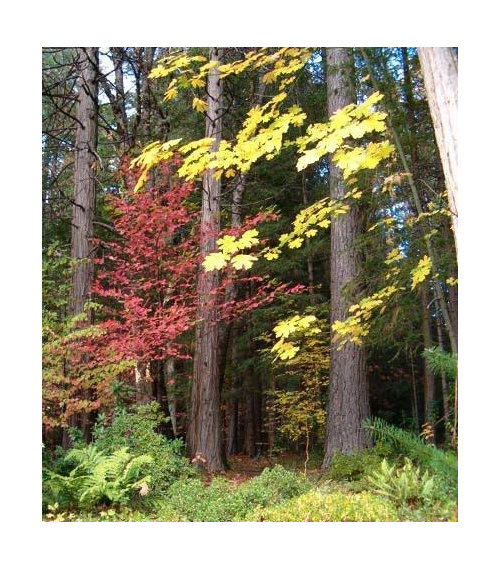
We've gotten off on some trees in the wildflower forum, and Jeanie, you mentioned the gingko as being one of your favorites. I first became acquainted with it when I saw some fossils of gingko leaves at a small museum high on the banks of the Columbia River in inland WA. It's pretty amazing, isn't it? But isn't it also rather slow growing? I don't know if I have enough time to grow one and still be able to enjoy it as the years get shorter.

I agree that the mimosa can be messy. We had a run on robinia pseudoacacia 'Purple Robe' at the nursery in CA and they can beat a mimosa any day when it comes to mess. It's actually a form of black locust, and I suspect the native white form is growing wild here.

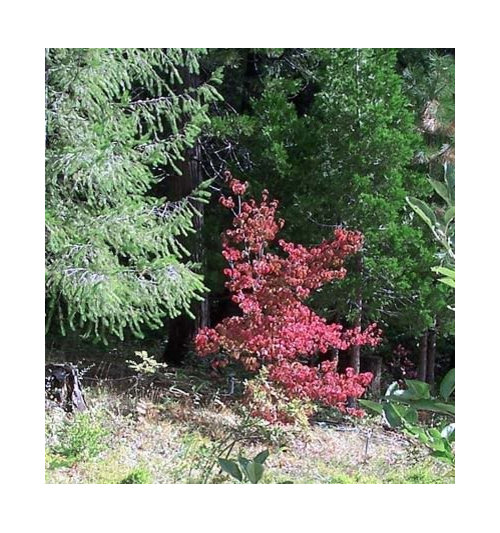
Some of my favorites for shape, color and form are the pink dogwood that not only has lovely blooms but also turns a deep pink-red in the fall. The first image here is a native white dogwood in the fall, sided by the brilliant yellow of a bigleaf maple. The second shot is of a hybrid pink dogwood that was a lot prettier and wider before it lost some branches to an out-of-season snow load.


I love some of the ash that put on such an outstanding display of fall color with their nice rounded habit, and the looser-limbed mountain ash that also provides the birds with a crop of showy berries; the pistache with its terrific fall color and the scarlet maple for the same reason. I suspect they won't grow here, except the pistache, but I'm sure there are others that will.

I really like a Shademaster gleditsia for the open shade it provides for a garden area. It can be a bit messy and sometimes shallow-rooted, but not too bad. And I'm quite fond of pistache. They can be really lovely.

One that I got very tired of seeing in NorCA was the liquidambar (American sweetgum). I don't think they'll grow here, so it's a moot point, but they were used to serious overkill in CA and they can be extremely fickle. They turn a variety of colors in the fall, and to choose the right one, the individual tree needs to be seen in the nursery in that season. As I said, I don't think they even grow here.

What about a star magnolia (stellata) as a small ornamental focus? Has anyone ever tried one? I've always been sort of attracted to them, depending on how it's pruned. I think I'd go for the open, lacy feel of a small tree rather than the more densely foliated shrub effect.

Sooner or later my yard and property will overfloweth with stuff, but it's fun to think of all the possibilities, even to learn by discussion of what will and will not work here. I just really, really like to see the variations in form and color throughout the seasons.

Pat

Comments (5)

  • 15 years ago
    last modified: 11 years ago

    Robinia pseudoacacia is native here and very poisonous, by the way. We do have plenty of sweetgum here too. There's a giant one in my neighborhood that gets pretty in the fall. I've seen several different magnolia species throughout the state but they seem to be uncommon in nurseries.

    Japanese maples are pretty popular, dogwoods and redbuds too, for the small trees. I don't know if lacebark elms get really big but the ones ive seen around do well. There's a dark leaved tree that is very popular right now but I haven't bothered to find the name. Usually if something is trendy like that I'll avoid it.

    You're near Shawnee, right? You can grow lots of stuff there that the western folks can't, like the maples and hickories, more kinds of oak trees, etc. Well, I suppose they could grow them but the water bill would be outlandish! Lol!

    Some trees I hardly ever see around Oklahoma include most of the conifers like spruces and firs, birch, Aspen, things that prefer cool and/or wet climates.

    If I were to choose a fast growing small tree to provide light or dappled shade, I'd go with a white redbud but that's just my personal preference. You can prune the branches up as high as you want. Japanese maples and dogwoods provide multiple seasons of interest. Red and sugar maples grow surprisingly fast here too if you have the right soil and water conditions.

    I saw a sassafras tree today for the first time in a while. That might be fun to grow. Or maybe sumac (talk about fast growing), persimmon, and of course, the crepe myrtle!

  • 15 years ago
    last modified: 11 years ago

    I didn't know the robinia was a native here, but suspected as much. We have native persimmon on the place and we have volunteer elm, of course. A lot of them. I saw my first hickory here when we went to look at a house around the corner last year. Huge big gorgeous things. I also spotted a bald cypress in the front of the parking lot at the Shawnee Mall. Couldn't believe what it was and had to stop and get out of the car to take a closer look. Jeanie, you're right. I need better glasses. But it was still a bald cypress, although a young one. I have to wonder about where it's placed. It could get interesting.

    I tried a small threadleaf red Japanese maple last year as an ornamental, but lost it over the winter. I was sick about it. I'm going to try another one, I think, because they are so lovely. It should have lived, and I need to find out why it didn't. I do have three standard maples started, including a scarlet one. And I have my funny corkscrew willow also. And so far the one paulownia that did survive seems to be doing okay. I wanted tall, straight shade for the front yard that would not overhang the parking area and I think by next year we might have it.

    I must say that OK has some truly spectacular trees. The big sycamores are just amazing, and I've never seen mimosa get to the size that it does here. I even like the cottonwoods. I hadn't seen any of them since I was a kid.

    Although I wouldn't want to plant one of them, I was fascinated when I saw my first Osage orange (bois d'arc). I had heard of them but never seen one.

    Maybe the sweetgum does better here that it did in CA. I was just not impressed with it at all out there. I'd really like to look into the possibility of a big sumac for the field we want to develop. I think it could be striking.

    Pat

  • 15 years ago
    last modified: 11 years ago

    So I wanted to know if the Lacebark elm was a small tree at maturity so I googled it. The link is below. Not only is it a small to medium tree, but it's resistant to Dutch Elm Disease! They really are nothing like our native American elms with the arching branches that die and fall on your car...

    Bald Cypress are cool. I'm always amazed at how adaptable they are. Put them in water and they get those cool knees. Put them on a dry hill and they are a magnificent specimin tree with no knees. The only deciduous conifer.

    You do know to keep willows away from your water pipes and septic system, right?

    Our park in Del City has some amazing cottonwoods. I was walking the dog one day and this guy was just standing there staring up into the tree. So I stopped and looked up into the tree too but nothing was happening. He said he's always loved cottonwoods and this tree was the biggest he's ever seen. I have to admit I have more fondness for that particular tree now. :-)

    I was a wildlife major in college and part of the curriculum in several classes was learning about native and invasive OK species. One thing that stands out for me is how cottonwoods have flat leaf petioles so they flutter in the slightest breeze and that cools them off in the hot sun. The breeze in the cottonwoods is one of those sounds that brings back nostaglic memories...

    All I have to say about sycamores is that they are MESSY!

    Osage Orange is also a fascinating tree. Horse Apple, Hedge Apple, Bois d'Arc, etc. (I've learned that the more important a plant was to historical people/pioneers, the more names it has.) They have extremely strong wood. People make fence posts and stuff like that out of them because it won't rot. It is almost impossible to cut through one with an axe. The fruit is supposed to deter pests if you cut it up and put it around the edges of your kitchen.

    They make sweetgums that don't produce fruit. If I ever planted one, I'd definitely get one of those. The stupid balls get everywhere and they are so sharp!

    Sumac likes to grow as a clump. If you want a single trunk it will take some pruning. I don't think it would be any harder than pruning a crepe myrtle though. There are smooth sumacs (Rhus glabra) and winged sumacs (Rhus copallina). The winged is prettier in my opinion and I like the fuzzy young branches. But the fruit clusters tend to hang down whereas Smooth Sumac's fruit stays pointed up. If aesthetics from a distance is more important, I might recommend the smooth. Cultivated winged sumacs may be different though.

    Trees are cool. :-)

    Here is a link that might be useful: Lacebark Elm on Wikipedia

  • 15 years ago
    last modified: 11 years ago

    Pat,
    I'll never have a Ginko, either, as I would never see it in it's magnificence, no more than a mighty Oak. No female Cottonwoods (although I love to hear Debbie Reynolds sing about them), no fruiting Sweetgums, no Mimosas and no Silver Maples for me. Although, I would love to have a fast-growing tree of some sort to plant in front of my West-facing bedroom window that can take horrible soil and intense direct sun. I love Dogwoods, Forest Pansies and Japanese Maples, but they are "understory trees" and would not like this location, at all. Wonder about a Desert Willow, although I think they are "borderline" here, but I think they are fairly heat and drought tolerant..........

    Jeanie

  • 15 years ago
    last modified: 11 years ago

    Yep, I do know about willows and water lines, but thanks for the reminder. and I totally agree that sycamores are messy beasts. I would never want one in my yard for that very reason, but I do like to admire the big ones that other people have . . . as long as I don't need to clean up after them.

    I imagine that all of you are aware of the cottonwood's history as far as the pioneers and the hardy folks of the old west were concerned? If they could see a cottonwood in the distance, they knew that they'd find water nearby. I just like to hear the rattle of the leaves and see the flash of silver in the wind. I grew up with one of them, a big old thing that we used to climb, and my sister and I thought it was so neat to take bags and fill them up with the 'cotton'. We thought we'd make pillows from it.
    Isn't it funny the place that trees have in our lives? I imagine all of us could name a favorite tree that we remember from childhood. We also had a big chinaberry tree, which was not in the least invasive where it was, but it would be in OK.
    Of course, I also grew up with a view of miles and miles of orange groves when I looked out the bedroom window. It breaks my heart to think they are all gone now, ripped out to make way for more and more subdivisions.

    I didn't know that the big sumac likes to be a clump, but that's fine with me. We have a blank 3-acre field to put it in, and it could use a showpiece like that. I did know that the smaller ones like to clump. Does anyone know what the growth rate is on them?

    I'll definitely look up the lacebark elm. I like elms, but am always watching for susceptibility to disease.

    Coming from the NorCal as I did, I've seen some of the most magnificent old oaks, but the CA Live Oak in particular. I have photos of giant boulders with these old trees growing up through cracks in the rock. I do have a sad story to tell about them, though, and it's a good example of what happens when people go fooling around with a natural habitat.
    Those big oaks do not like to be watered. They've lived for 100 years or more, perfectly happy with what the natural climate gives them. Then people come along and begin tweaking it around, as happened on the campus of the Santa Rosa Jr College. The trees there would take your breath away. They were so carefully pruned and tended by the best in the business. But . . . they overlooked the fact that a lot of topsoil had been brought in years before and then a lovely lawn planted on it and watered to keep it green. It took years for the trees to begin to die, but die they did. One huge one keeled over in the middle of a picnic on the lawn and made headline news.
    The professionals were called in to find the problem and see it if could be corrected. They had to dig out trenches about 24" deep and several feet wide to clear out the topsoil that had been jammed around the base of each tree, and put in grates to allow the trunks to breathe as they should. The old trees were very forgiving of the abuse that they'd gotten with all that water, but finally it was just too much for them. I don't know how many of them were lost before the corrections were made or if it solved the problem in the long run. I haven't been back past the college in years. It's just a word to the wise. Sometimes it's not good to mess with Mother Nature.

    Pat