Software
Houzz Logo Print
elkwc

Monarch's increasing

15 years ago

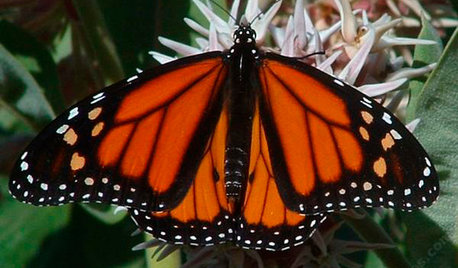
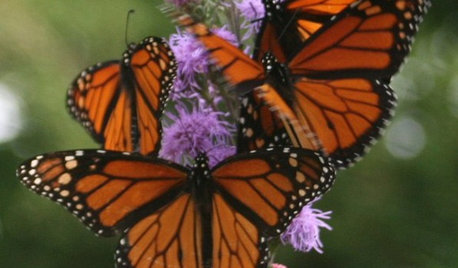
I saw a few last week. After the cool spell this week several more have moved in. I would guess at least a hundred here on my property. Will have to see if I can figure out where they are roosting at night. There were several scattered throughout the garden. A few of the flowers I planted still have blooms and of course the peppers, tomatoes and cukes do. They are so splendid to watch. There were several up around the house and trees in front also. They don't seem to be moving on yet. Suppose the next cool spell will move them on a little. Jay

Comments (18)

  • 15 years ago
    last modified: 11 years ago

    I've seen increasing numbers for the last couple of weeks too, though not nearly as many as you're seeing there. The ones here are really having to work hard to find blooms because so much is dead, dormant, dry and brown.

    We've been having a whole lot of hummers migrating through for about the last month too. Between the hummingbird feeders and trumpet creeper vines we have in bloom all over the place, they're fairly happy so far.

  • 15 years ago
    last modified: 11 years ago

    I can remember about 5 years or so ago that we had a real swarm of Monarch's and Swallowtails come through our area. Ever since then they seem to be less and less. So few now that each one causes suprise and admiration. I've seen maybe about 3 or 4 Monarch's this year so far. I don't know what the reason for the lessening; weather or loss of habitat perhaps`as our area is being developed to the max.......Maryl

  • 15 years ago
    last modified: 11 years ago

    Hi Jay and Dawn. Thanks for your reports! I guess it is getting to be that time again. I don't think that we will see the numbers that we have previously seen in the past. Who knows what will happen in Texas this year with little to no nectar source?

    The wind today has been from the NNW lt to around 18 mph. I saw several migrating about 30-50 ft high from around 11:30 a.m. to 12 noon. Then they dropped off from ocassional to rare. I have about 10 nectaring in my yard. It had been a terrible struggle to keep a small patch of zinnias, tropical mw, Gregg's blue mistflowers, and golden crownbeard alive with seems like weeks of 110 degree days!!! To have survived the heat and drought, to be about decimated with an armadillo about 3 weeks ago, was just about all I could take! Got rid of the armadillo problem, and I am "so proud" of what little I have to offer. There are definitely more sunflowers and crownbeard blooming from Hennessey to Enid on Hwy 81 due to more rain, but we do have some sunflowers, crownbeard, and rosenweed to offer.

    Jay,
    Keep me abreast of the Monarchs, and I will post to Journey North. We are supposed to have a light wind from the north Monday, and the next front is supposed to come in Wednesday for Okla. Not for sure for Kansas.

    Dawn,
    Good to hear from you. I'm afraid that we're not going to have much of a Monarch migration. It has been the most difficult summer that I know of, trying to keep flowers, trees and shrubs alive, and we're not out of the woods yet. I'll let you know when I see more Monarchs coming.

    Anyone seeing Monarchs, particularly large roosts, or seeing them in a dedicated flight to the south, and wanting me to report them to Journey North, let me know. It sure helps to know the place, date, time, approximate number of Monarchs at one time. I would love to hear about large roosts in your trees of 50 or more!!! Sadly, there is no crownbeard period in the place that I normally see the large roosts. :(

    Thanks!
    Linda

    Here is a link that might be useful: Report your sightings to JN

  • 15 years ago
    last modified: 11 years ago

    Linda we had a wind from the NE that kicked up during the night and still out of the N-NE. They were all gone this morning. Still here last evening. Think they roosted in a tree in the front yard. I was a little slow moving around this morning and they were gone. There was a lot of yellow sulfurs around today. More than I had seen yet this year. So things are moving around. Had several doves watering here but think they have moved along also. Things that normally water at the water tanks for the cattle ect are now having to water around homes, gardens, ect. I will let you know if anymore arrive. They were here at least 2 days maybe 3. Was going to post when they arrived and kept forgetting too. Really enjoyed them and hope more move through. I have the garden flowers, some saliva(sp) and some vinca flowering and that is about all. I have seeds for several plants they like. Finished the lean too Friday. Still have to caulk and seal it. Will move plants in this week. So next year I hope to have a place to start them and have plants they like. Jay

  • 15 years ago
    last modified: 11 years ago

    I have a couple that seem to be hanging out in the yard - probably afraid to move on from their nectar source, lol! They are loving the sunflowers! I let one grow about 2 years ago, from seed in my birdfeeder. It is a very tall, much branching type. The finches, both House and Gold, love it, as well as bees, dayflying moths, and hummingbirds - probably for the tiny flying insects! They are a hub of activity and I will continue to let them grow in reasonable numbers.

    The Monarchs also are using the Zinnias, Golden Crownbeard, Tropical Milkweed, Orange Cosmos, Verbena bonariensis, Royal Red Butterfly Bush, Dwarf Red Porterweed, Salvias, and Flame Acanthus.

    The female has layed a few eggs, but very few. I usually get larger numbers of eggs this time of year. Linda, I know Sandy is getting lots of Monarchs and eggs, too, right now, but don't know about any roosts yet.

    Susan

  • 15 years ago
    last modified: 11 years ago

    Hey Linda,

    I'm not expecting to see many migrating thru since the drought has wiped out so many of the wildflowers necessary for nectaring, but you never know.....sometimes nature surprises us. The hummingbird migration has been almost the usual size here, but of course, they are easier to feed via feeders even if the flower selection is slim this year. The few I have been seeing are faded and worn.

    Patchy rain (albeit measuring only in the hundreths or tenths of inches, so no big amounts) across various parts of southern OK the last couple of weeks might help a little by reviving some wildflowers that were barely hanging on. In parts of our county, there's quite a few wildflowers blooming now, including golden crownbeard, greenthread daisies, native sunflowers, Maximilian's sunflowers, blue mistflower, blue sage, fall asters and goldlenrods. In our garden, we still have some milkweed, autum sage, Texas hummingbird sage, morning glories, moss rose, Laura Bush petunias, daturas, gomphrena, verbena bonariesis, swamp mallow, malva sylvestris, four o'clocks (they bloomed all summer) and zinnias. I stopped watering that garden in late July and how the flowers survived is beyond me. They are thin, sparse and don't look great, but they are alive and blooming. I also noticed white prickley poppies and snow-on-the-prairie blooming in places yesterday along the roadsides. After a long, hot, dry summer with very few flowers blooming in the brown fields, it is nice to see some bits of green popping up and blooming. I am seeing more butterflies every day. We had a few all summer, but have many more now.

    Thackerville had hard rain and hail in places last night, and all that moisture might revive some of the flowers in the Wildlife Management Areas that have been clinging to life, but not blooming very much, this summer and that would help the various butterflies and bees a lot. The wildlife management areas usually support a lot of butterflies, moths and bees.

    Maryl, I think the last big migration that came through our area was 3 years ago, and we had good migrations for several years in a row before that one too. I believe last year and the year before they went further west and I didn't see many. Usually I can tell from Jay's and Linda's reports if they're coming my way (right down the I-35 corridor) or veering more sharply west as they did in 2009 and 2010. I was hoping to see large numbers this year back before it became so obvious that drought was going to plague us this year, but as the drought wore on, I began to wonder if anything would be alive and blooming for them. Not much is, but at least there's a little for any that come through here.

    Jay, I usually have tons of sulphurs, and had them in May and early June, but none since.

    Doves have been very prolific here and have fed so well at our wildlife feeding station that they are getting almost too fat to fly. Tim calls them "The B-52's" because they've gotten so large, and fly slowly like those large, lumbering B-52 aircraft.

    It is dove-hunting season, but I haven't heard many gunshots at all this year. I think maybe it is not a good year for the hunters with a lack of flowers to draw in the doves. The ones that eat here usually go into hiding during hunting season but this year they haven't done that. Of course, no one hunts on our property but the gunfire around us usually scares them into hiding anyway. It is nice to have them around in the cooler weather.

    Susan, We only have a couple of milkweed plants in our pasture with any green on them at all, although one recently bloomed, but I am not finding any eggs. It has been an awful year for the native milkweeds in the fields. A pasture adjacent to our fire station that comprises several acres usually is full of milkweed (the cattle don't eat it) and this year that milkweed is mostly dry, brown and dormant if not dead). That pasture is normally a hotbed of monarch activity, but this year....not so much.

    I feel sorry for the monarchs trying to migrate. I don't know how they'll find enough flowers in southern OK to nectar upon....and, if they do, what are they going to find in Texas? As bad as it is here, everytime we drive through any part of Texas close to the Red River, we look at all the brown fields (or, worse, those recently blackened by fire) and shake our heads and marvel at how awful it looks there.

    Dawn

  • 15 years ago
    last modified: 11 years ago

    I saw a monarch this morning on my patio in NW OKC. It was very dewy outside, and it looked like the monarch was down. I am butterfly-stupid, but think I may have read somewhere not to touch them, that their wet wings will dry out and they can fly again? Will look this evening to see if there are any more hanging around.

  • 15 years ago
    last modified: 11 years ago

    Jay,thanks for your report. If the winds just right, they don't hang around. There's still more Monarchs coming down from the north. The wildflower list that Dawn posted has some great nectar sources. The lean-to that you mentioned sounds like a great project! Thanks for the headsup on the large sulfurs. Seems like they came to visit last fall after visiting you. :)

    Maryl,I can remember those times, also. I've had up to 500 Monarchs stop to visit, and nectar on my flowers. It was like I was walking on Sacred Ground! Of course, we weren't in a severe drought, or record setting temps. You are right on about temps and habitat loss. Let me know if you see any migrating.

    Dawn, keep your eyes to when fronts are expected. The next one is for Wednesday. And, our wind has been from the N-NW not N-NE as in the last few years. Drought or no drought they will be coming through. I agree that I don't know what will happen when they get to Texas. They may have to hunt up some hummingbird feeders! I've had them come to the feeders before!

    I was hoping that you were getting some of this last rain. We had lightening to the north and south, but only got .07 of an inch. That doesn't go very far.

    Susan, hope all is well with you and your family. Glad you got to raise some Monarchs. I brought in a few a couple of times. I just happened to have some new growth on my trop. m.w. Sounds like you still have some flowers after this awful summer! I was at my wits end, when a mean armadillo threatened to decimate my precious small plot of flowers that survived the drought and triple digit temps! He won't be bothering it any more! Let me know if you see any movement. The 10 that stayed last night were gone this morning. I still have about 4 older Monarchs that want to mate every Monarch that comes into the yard.
    I'm sure that Sandy will post her findings.

    Hi Mia. It's common for Monarchs to wait to dry off, and sometimes nectar before they take off. Sometimes they suprise me,if the weather is nice, they've been known to take off before 7 a.m. You are correct that it is best to wait for their wings to dry off before touching them. Keep me posted if the Monarch took off, or if you had more.

    Thanks everyone.

  • 15 years ago
    last modified: 11 years ago

    Hi, Linda! Hope you and hubby are doing well, too.

    Yesterday, I was my daughter's house and there was a Monarch hanging around, gliding thru the yards, up and over the trees. Not moving South at all. There are no nectar plants to speak of in the neighborhood, so for the life of me, I can't figure out what was keeping it around. I will see if it is still hanging around today. Is that odd? Reminded me of "hilltopping" behavior, but I don't know of much egg laying going on right now. She does have some Cynanchum laeve growing in spots, but very little. Maybe there is more around the other houses.

    It has been a struggle, but I have managed to keep the garden "alive" along with a substantial water bill, lol! But, I love the wildlife so much, it would have been so disheartening to lose it and not be able to enjoy the critters.

    Susan

  • 15 years ago
    last modified: 11 years ago

    I've seen one at work the last few days. We're at I-40 and Meridian. I don't know of any nectar in the area.

    I have a decent patch of salvias and cosmos and zinnias and I've seen a few monarchs on my plants too. I'm in Del City.

    I have seeds from native milkweed that I was going to wintersow this year. Hopefully next year I can offer places to lay eggs along with the nectar.

  • 15 years ago
    last modified: 11 years ago

    The one on my patio was gone when I came home from work, so I choose to believe its wings dried out and it flew away. Tonight, I noticed several monarchs fluttering around, then looked up in the neighbor's elm and saw at least 6 flying around at one time, all in the same general area. I realized there were more in the tree, but they all look just like the yellowing leaves when they sit still. I tried getting binoculars out to tell but just gave myself a headache. Anyway, they weren't flying south, just kind of hanging out. We don't have much in flower here, aside from peppers and tomatoes and pumpkins, a few roses and pansies, lantana and some four-o-clocks. Dunno if any of those are on the preferred list for monarchs or not.

  • 15 years ago
    last modified: 11 years ago

    Lantana definitely is a favored nectar plant, but if it was evening, you may have been witnessing a small roost. They roost in trees at night, and it does look like the leaves are alive in the trees. I had a roost one year in my backyard trees, a sight I'll always remember.

    They will "wake up" in the morning and bask in the sun until their wings warm up enough for flight - about 60 degrees.

    Susan

  • 15 years ago
    last modified: 11 years ago

    Linda, I had about 10 Monarchs show up on my Sunflowers this morning - the most ever at one time. It was about 8:30 a.m. and about 55 degrees outside - brrrr for them!

    Susan

  • 15 years ago
    last modified: 11 years ago

    Awesome, Susan!! It's so great that there are so many Monarchs coming through this year.

    sandy

  • 15 years ago
    last modified: 11 years ago

    I have seen small numbers hanging around my crepe myrtles on at least two late afternoons. I'm guessing they roost there overnight. I've never seen that behavior in my yard before, it's kinda exciting! The first time there was probably 10, I think tonight I saw 6 or so. Not great numbers, but still more than I've seen all summer. I have some lantana in the front yard and a few scraggley tithonias in the back.

  • 15 years ago
    last modified: 11 years ago

    I am seeing small numbers of them all day long no matter where I am, both on the OK and TX sides of the river. Haven't seen any large groups. I do think they are finding one another and gathering to prepare for migration, though still in very small groups of 5 - 10. They are nectaring and taking their time. When they find something blooming they stay there a long time, likely because there is so little in bloom.

    Patchy rain has fallen across our county, though not in large amounts. our official rainfall remains just over 14", so there's not much green in the fields and very little in bloom. However, flowers in drainage ditches and other lower-lying areas somehow managed to survive and hang on and are blooming even though many of them are less than 1/4 their usual height.

    I'm keeping the hummingbird feeders full and they are being visited by three kinds of hummers: rufous, black-chinned and ruby-throated. Bees and some butterflies are visiting the feeders too. At first we had mostly ruby-throats and now I'm seeing fewer of them and more rufous and black-chinned hummingbirds.

    Overall butterfly numbers remain the lowest I've ever seen in early autumn, but I am seeing more monarchs than anything else. I haven't seen any roosting, not even in small numbers, but I'm pretty far south so usually don't see that until the first week or so in October.

  • 15 years ago
    last modified: 11 years ago

    I love seeing the monarchs flitter by. The other day I was cleaning in our pasture and picked up a tree limb that had fallen and lo and behold there was a monarch cocoon on it! I set it carefully aside and watched it a few days and sure enough - we had a butterfly! How exciting!

    My daughter did a great home school lesson on Monarchs. Maybe you would like to see her blog about it: http://cajunhomeschool.blogspot.com/p/monarch-butterfly-project.html

    Our grand daughter will never look at a caterpillar the same way again!

    Oh, by the way, I am new to the garden web and new to Oklahoma as well! Came here to see what I need to learn about gardening here in this grand state...

    Euvah

  • 15 years ago
    last modified: 11 years ago

    Welcome to Oklahoma, Euvah. We are glad to have you.

    Sandy

Sponsored
Wannemacher Interiors
Average rating: 5 out of 5 stars26 Reviews
Customized Award-Winning Interior Design Solutions in Franklin Cnty OH