Software
Houzz Logo Print
jeffinok

re : sweet peas

16 years ago

guess the first post got deleted? atleast i got to read your wonderful reply thanks dawn!! seems like they are really hard to grow in oklahoma? i grew beans for the first time last year .

i learned what i needed to know from reading past posts

from you and george in talaquah . trying new stuff besides tomatos and peppers . this all started when the nurserys

around here stopped carrying pink girl tomato plants .

i went looking for seeds i never knew there were so many tomatos? now i have many new to me variaties to try next year. thanks for all your help !!

Comments (21)

  • 16 years ago
    last modified: 11 years ago

    I saw that post earlier. Guess a GardenWeb Gnome ate it!

    I'm not an expert on English peas myself but I've grown maybe a dozen different varieties here and they've all done well. Of course, now that I've said that out loud, I won't be able to get a pea vine to grow again. LOL

    Diane

  • 16 years ago
    last modified: 11 years ago

    Hi Jeff,

    Glad you read it before it disappeared. Everything I wrote early this morning when Garden Web was messed up seems to have disppeared. Maybe I'll try to rewrite it later.

    Diane,

    I don't want your soil. (Ha!) Mine is just as clayey, but I'd love to have whatever weather you have there that allows peas to mature before it gets too hot. : )

    I wish somebody would have fed the Garden Gnomes so they wouldn't eat our threads and posts.

    Dawn

  • 16 years ago
    last modified: 11 years ago

    I missed the first post. Oh well. Have had some success here with peas. I plant in late Feb. My pet peeve is that they take up valuable space well into my bean and tomato planting time! But my wife LOVES them and they are very welcome early in the year.

    George
    Tahlequah, OK

  • 16 years ago
    last modified: 11 years ago

    i just made the space a little bigger this last fall so i could try more variaties of beans and not take away from my tomato space . guess if the peas dont grow ill rip them out and plant more beans!!

  • 16 years ago
    last modified: 11 years ago

    Jeff,

    You know, since it is an El Nino year I think everyone who lives north of the Arbuckles has a great chance at having a prolonged coolish growing season for their cool-season crops. It seems to me that your winter weather conditions in the northern half of Oklahoma hang on a little later than in an El Nino year than it does most years.

    We'rve already seen El Nino bring much of Oklahoma a lot more snow and below-average temperatures, so I think it might be a good year for cool-season crops.

    I don't even know how to begin to describe what southern Oklahoma's winter weather is like but a good term would be erratic. Our weather just see-saws from hot days to cool days. Usually the issue isn't that we get really warm really early and stay there (that would be nice!), it is that we have the occasional February or March day with high temps in the 80s or 90s and that kind of weather can cause cool-season crops a lot of problems. I think I grew peas the first 2 or 3 years we lived here before I decided that the sporadic hot days were too hard on them.

    Remember how I mentioned the two kinds of pea seeds: smooth-seeded peas and wrinkled-seeded peas. I don't know if many gardening catalogs include in their description if the seeds are wrinkle-seeded or smooth-seeded, but I know that Willhites's (mentioned in another thread here) does. You actually click on the type you want to see: smooth-seeded, warm-seeded or southern peas/cowpeas.

    And I cannot remember if I mentioned in the previous, disappearing thread that it helps to innoculate your peas (and beans). Innoculation improves their performance. Sometimes you can find innoculant in stores and it also is available from many online retailers. I noticed last year the the Burpee Seed display racks in Home Depot stores had packets of bean and pea innoculant right there on the seed racks. In fact, the innoculant was in seed-sized packets right there on the seed rack. You don't have to innoculate every year, but it is helpful if you innoculate the first time that beans or peas are planted in a particular location.

    George, The thread that disappeared was one of my typical ones....with soil and air temps needed for germination and growth, etc., etc. but that one disappeared because I posted it on the day the GW staff were performing maintenance and had to reboot back to the previous day's backup file so early morning posts were lost.

    Dawn

  • 16 years ago
    last modified: 11 years ago

    I hate to be a bother but I'm planning to try peas out in the garden this year too and I'd love to hear your thoughts on it. It is good news to me that we'll likely have a good cool season since this is the first year I'm going to plant cool season crops.

    I have some peas (Early Frosty Shell from Heirloom Acres Seeds)growing in the greenhouse right now in a big pot. I innoculated them when I planted. They're almost to flowering size. I'm starting to have to watch them really close because I don't want them inside the GH on days it gets up in the 70s inside there. I can lug the pot outside on those days. There haven't been many lately! I tried a few plants like this last year and I only got a few pods (didn't innoculate or watch temps) but oh were they yummy! I haven't ever had peas that good! It is worth it to me to try to grow them because the flavor is so amazing. Even if I only get a few it's worth it; kind of like a Brandywine tomato.

    Actually, I'm only curious about spacing. Some plants like tomatoes have to have their space and some aren't as picky. Are peas picky about breathing room? If so, I need to do some thinning!

  • 16 years ago
    last modified: 11 years ago

    Mmmmmm, I love peas! What about Snow or Sugar Snap peas? Do they do any better in Oklahoma than English? Just wondering cuz I would love to grow them and eat them fresh in salads or cooked up in a stir fry.

    I tried to grow them one year in the backyard before the trees all leafed out, but that happened to be one of our warm winters and it got too hot. I did harvest a few, but not as many for as long as I would have liked.

    Sorry - don't mean to hijack the thread!

    Susan

  • 16 years ago
    last modified: 11 years ago

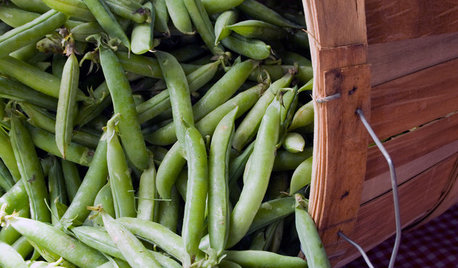
    Peas (Pisum sativum) as used here refers to cool-season peas such as English peas which are shelled before cooking, edible podded peas and snap peas. For newer gardeners, we are not discussing the southern peas (crowder, purplehull, blackeye, cream or zipper types) that are commonly referred to as cowpeas and which are a warm-season crop.

    The two main challenges faced by gardeners growing peas in our climate are getting good germination/growth in very cool temperatures and then getting the peas to set peas before hot weather burns them up. I think peas are easier to grow the farther north and east you are in Oklahoma and harder to grow successfully the farther west and south you go.

    Peas can be planted as a spring crop (planted in winter for harvest in spring) or as a fall crop (trickier to manage, timing-wise, but planted in summer for an autumn harvest. When planting in the spring, you want to get your plants in the ground early enough that they can mature before daytime high temperatures begin consistently exceeding 75 degrees, but you don't want to plant them so early that they are regularly exposed to overnight lows droppung below about 25 degrees because temperatures that cold can damage or kill the pea plants. For fall peas, you want to plant them roughly 8 to 10 weeks prior to the date of your first fall freeze.

    I don't have much luck with them here in southern OK because my spring daytime highs can get too high too early for the peas to mature.

    Peas don't seem to be especially picky about soil, although raised beds warm up a little earlier which is a good thing. They grow best in neutral to slightly acidic soil with a pH between 7.5 and 6.5. It is fine to add a few inches of compost or other organic matter to the soil in which you'll be raising the peas, but be careful about adding a high-nitrogen fertilizer because they don't need it and it can give you overly lush vines with few peas.

    I said peas are not especially picky about soil and they are not as long as it is well-drained, but they will perform a bit differently in different kinds of soil. Peas grown on sandy and sandy loam soil usually produce a bit earlier and peas grown on improved clay usually produce a heavier crop.

    When you sow your seed, innoculate it if peas or beans were not previously grown in that area. Your soil should be evenly moist but not sopping wet. Peas often will rot in very wet cold soil before they can germinate. You can get around the germination issues by pre-sprouting the seeds by soaking them in water for an hour or two, wrapping them in a coffee filter or paper towel, and placing them in a zip-lock bag to hold in the moisture. Place the bag in a cool place because if you put them in a warm location they may mold. You also can start them in peat pots and transplant them outdoors. Peas germinate very slowly in soil temperatures less than 50 degrees.

    Most pea plants have a tendency to climb, even the dwarf and semi-dwarf ones, so put your support in place as soon as you plant your peas. Otherwise, they may get away from you and grow into a tangled mess.

    After they're a few inches tall mulch them to maintain even soil temperatures and to keep weeds to a minimum.

    Plant your seeds according to the directions on the seed packet and thin them according to those same directions. Peas can be grown in relatively close proximity. For dwarf and semi-dwarf types the plants can be thinned to a final spacing of 2 to 3 inches apart. For vining types, I think they usually recommend 5 to 6 inches.

    Under normal cool-season weather conditions, peas should begin to bloom about 45-50 days after the plants emerged from the soil. Although peas can tolerate some dryness, they need to stay constantly moist once they are blooming and setting pods. If they get too dry at this point they sometimes abort blossoms and don't set a good crop.

    In humid conditions, peas sometimes get powdery mildew. To avoid this to the extent that you can, plant them where they get good air flow and water the ground around and beneath the plants themselves but keep the moisture off the leaves.

    About the only pest I've ever seen on peas are aphids, and normally the lady bugs will show up a week or so after the aphids and begin gobbling them up. Peas that are overfed nitrogen tend to be more attractive to aphids, so avoid using high-nitrogen fertilizers.

    To harvest your English (shelling) peas, you want to pick them while the small peas are full-sized, plump and round but still tender. For edible podded peas, you want to pick them while the pods are full-sized yet still tender, which generally means that the peas will be no bigger than BB-sized. Snap peas are more flexible and you can harvest them at any part of the pod's growth cycle, but they will be sweeter the longer you leave them on the plant (though tough if you leave them too long).

    Once you've harvested them, their sugar begins to convert to starch, so eat them the same day or within a day or two.

    Wrinkle-seeded peas are sweeter and smooth-seeded peas are more cold-hardy and you can use that info to help you choose a good variety for you and your growing conditions. Wando is the most cold-hardy pea I've ever grown.

    Dawn

  • 16 years ago
    last modified: 11 years ago

    Susan, I would think that you could grow snow peas if you plant them in February. I don't have any trouble with them here, but I am a little cooler than you. Sometimes I direct sow and sometimes I plant them in little paper cups and transplant them later. The small plants will handle frost and a light freeze without a problem. If I direct sow, I usually lose a few seeds and I think it is squirrels, but could be birds. I have a fence so rabbits can't get in. Whatever it is seems to have no interest in the plant, just the seed.

    I like the tall ones and I grow them on a trellis but they would rather cling to each other than to a trellis, so you will still probably have to tie them up a little. I just take string and loop around the trellis and peas together at about a foot from the ground, then again about every foot as they grow. Otherwise, the wind will whip down one and the rest will go with it. Most of ours don't make it into the house because we stand there and eat them as fast as we pick them. That is our garden snack until the cherry tomatoes are ready. LOL When the heat comes, the peas are gone.

  • 16 years ago
    last modified: 11 years ago

    Looks like Dawn gave a good answer while I was typing. I have read that people with a green house, plant them in lenghts of plastic guttering. When they are ready to put them in the garden, they dig a trench the length of the gutering, and start sliding it out from one end, right into the prepared row. They say it will slide out with very little disturbance to the soil.

    If you start them in cups, I would recommend 5 oz cups. I tried 3 oz cups and some of them tried to work their way right out of the soil (and cup).

  • 16 years ago
    last modified: 11 years ago

    I am very far east in Ok and have been starting my Super Sugar Snaps in peat pots or paper cups on a warm bench on a cool glassed porch for several years. I get perfect germination that way. Start them mid Feb, leave them for only two weeks and put them in the ground first of March. Sprinkle blood meal and human hair to discourage rabbits, and trellis as Carol described, using baling twine to keep them on the hogwire. Plant a 50 ft row which usually gives us lots in May finishing up by Memorial Day most years. Blanch and freeze a couple five gallon bucketfulls each year. Those are the only peas I've raised for years. Figure if I'm going to give them that much room, I want to get as much from it as possible. Hate throwing away pods if I can eat them. For me the warm bench is key. For years I got only half a stand when I direct seeded. Now get much more--although in 07 I had to plant twice. A hard freeze took them out in early April. Didn't get such a great harvest that year, but still enough to make it worthwhile.

  • 16 years ago
    last modified: 11 years ago

    thanks again dawn !!! and thankyou to the others that replied! im gonna try suger snaps also!!

  • 16 years ago
    last modified: 11 years ago

    First, I shouldn't try to type a long post while watching a bowl game and while sleepy, because I mis-stated that Wando is the most cold-hardy pea I've ever grown which is completely backwards. It is the most heat-tolerant pea I've ever grown, although I haven't tried any of the newer varieties that have come out in the last 8 or 10 years.

    Carol, I love the idea of starting them in a rain gutter and sliding them into a trench in the ground. That's very clever. Someone who doesn't have a greenhouse might be able to do the same thing using a cold frame or a glassed-in but unheated sun porch....and it wouldn't have to be a fancy cold frame either It could be something as simple as several hay bales set in a rectangular shape with an old shower door, storm door or window laid over the top.

    Dorothy, I'm glad you responded to this post because you have better success with peas than anyone else I know here in Oklahoma.

    I hate those April freezes almost as much as I hate days in the 80s or 90s in March and April when I'm trying to keep the cool-season crops cool.

    What do you use as a succession crop after the cool-season peas are done?

    Jeff, you're welcome. You'll always get lots of helpful suggestions from everyone here. There are many ways to do things in the garden and even after many years of gardening, I still learn something new about gardening every day and the things I learn make me a better gardener every year.

    Dawn

  • 16 years ago
    last modified: 11 years ago

    Now I wish I had saved our old gutters when we replaced them.

    Thank you so much Dawn and everyone else!

  • 16 years ago
    last modified: 11 years ago

    We grow Sugaree Snap, which is a non plant variety patented equivalent of Sugar Snap. Like Dorothy, we can't bring ourselves to plant peas which have inedible pods, when this one is just as good and the pods are edible too.

    George

  • 16 years ago
    last modified: 11 years ago

    Dawn, this year I planted cucs and the Cherokee Stripe Pole Beans that George gave me on the trellis where the Sugar Snaps came out. I had a glitch with backordered seed--broccoli and peas last spring--so planted half the row a month later than I usually do and picked up until that 100 weather hit in mid June, two weeks longer than normal.

    And I got great beans from the Cherokee Stripe, but the cucs didn't make at all. This past August, September and October was just too cool and rainy for cucs.

  • 16 years ago
    last modified: 11 years ago

    Dorothy,

    Most of my pickling cukes were from a mid-summer planting but we didn't get the really heavy rain that y'all got in August and September and that probably is what made the difference. The performance of the late summmer/autumn garden really made up for the spring/early summer waterlogging problems.

    Look at it this way, there's a good chance that 2010 will be better for us gardeners. I don't know about y'all there in eastern OK, but here in southern OK, one wet year usually is not followed by another, so I'm hoping for an average to slightly dry year in 2010. I'm not, of course, hoping for a very dry year.

    Dawn

  • 16 years ago
    last modified: 11 years ago

    TigerDawn: Watch out for Heirloom Acres. I bought $100 worth of seeds from them a couple of years ago. Half of the things I bought did not germinate at all. A lot of the other stuff was not pure. They would not return any emails or calls.

    OtherDawn: I'm sure my pea-growing success thus far can be completely chalked up to ignorant luck. I never have a plan with them -- I just go willy nilly. In fact, I've had such good luck with them that I refuse to ruin it by learning anything proper. LOL

    Diane

  • 16 years ago
    last modified: 11 years ago

    Heehee, Diane. Doesn't it befuddle you to grow something well that someone later says is impossible to grow, and suddenly it dies? It's like malice "after"thought, or twilight zone'ish. I'm into, "if you believe a thing is true, it is". Food for thought.

    Susan

  • 16 years ago
    last modified: 11 years ago

    I'm knocking on wood right now, believe me. LOL

    Diane

  • 16 years ago
    last modified: 11 years ago

    I think the best way to ensure a good crop for someone is to tell them "you can't grow that here" because, of course, that crop thrives and makes you look like an idiot for saying it couldn't be grown here.