Software
Houzz Logo Print
bonsaimaster1

rooting my florist roses

12 years ago

hello fellow rose growers. I recently picked up some beautiful Osiria or Love roses from my local smiths store. I'd love to root them but i have no idea how to do so. So far i collected some Weeping willow cutting and am going to let some root in the the water as an experiment, or i hope for them to root in there. But anyways, if any of you know a great way to root these babies please let me know asap. I don't have much time, also which rooting hormone would be good in rooting a florist rose anyway?

Comments (8)

  • 12 years ago

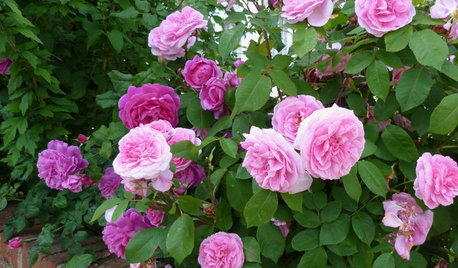
    here are some pics as well of the roses i purchased (Osiria).

  • 12 years ago

    Here is a video of a woman rooting her florist roses

    http://www.youtube.com/watch?v=LiL83eUKWY8

  • 12 years ago

    Ok... We need to correct a few things from that video on her methods.

    1. Always use sanitized tools before making cuts - especially for rooting cuttings.

    2. Always put a small amount of rooting hormone in a separate container before dipping any cuttings in it, toss what you don't use. Contamination anyone?

    3. Sanitize tools between each cut - I just use clorox wipes or the like between each cut.

    Potential issues with cuttings - This is going to have an extremely low success rate of the roses taking root. I would take many cuttings of a single variety. Roses with laterals, like hers in the video are going to do better - But I would root those directly. Generally florists strip the roses however (removing thorns) so laterals are going to be probably unlikely to find. Also, florist flowers are generally treated with a myriad of preservatives and growth inhibitors - it's how you promote shelf (those 'fresh' roses have sometimes been in cold storage for up to 6 months - not by the florist, but by the growers) and vase life for the consumer.

    Of course, it's worth a shot though because many commercial grown roses aren't available for the consumer to grow.

    Also, please please please don't keep the soil damp like she says in the video - that's asking for your cuttings to rot - moist at best is more than enough. However, this is the one time that the preservatives and spray will work for you in terms of cutting success **assuming your soil mix is sterile - the treatments will help quell potential mold issues.

  • 12 years ago

    Ok... We need to correct a few things from that video on her methods.

    1. Always use sanitized tools before making cuts - especially for rooting cuttings.

    2. Always put a small amount of rooting hormone in a separate container before dipping any cuttings in it, toss what you don't use. Contamination anyone?

    3. Sanitize tools between each cut - I just use clorox wipes or the like between each cut.

    Potential issues with cuttings - This is going to have an extremely low success rate of the roses taking root. I would take many cuttings of a single variety. Roses with laterals, like hers in the video are going to do better - But I would root those directly. Generally florists strip the roses however (removing thorns) so laterals are going to be probably unlikely to find. Also, florist flowers are generally treated with a myriad of preservatives and growth inhibitors - it's how you promote shelf (those 'fresh' roses have sometimes been in cold storage for up to 6 months - not by the florist, but by the growers) and vase life for the consumer.

    Of course, it's worth a shot though because many commercial grown roses aren't available for the consumer to grow.

    Also, please please please don't keep the soil damp like she says in the video - that's asking for your cuttings to rot - moist at best is more than enough. However, this is the one time that the preservatives and spray will work for you in terms of cutting success **assuming your soil mix is sterile - the treatments will help quell potential mold issues.

  • 12 years ago

    Moist being the key word, not damp. Of course they have to be kept moist. I didn't say to leave them to dry out.

    In regards to not sanitizing, I'd say you've been lucky then so far to not have issues. It's such a simple step that I don't feel it's worth skipping.

  • 12 years ago

    Well you've had good luck so I'd say stick with what you're doing!

  • 12 years ago

    Another point I wanted to make - is unfortunately a lot of cut flower roses that are for sale are not bred to grow here. They grow well in Ecuador and similar climates. Look at black baccara (a florist rose that's risen recently especially in wedding design) - it's plagued with disease when it isn't grown in ideal conditions and even in ideal conditions it is a poor performer.

    Love/Osiria fortunately is available as a shrub - breeder code JACtwin and is very available in the market. Snow Fire and Double Take are also very similar and available.

    The other reality is - that even if you do get a florist rose to root, that doesn't mean it's going to perform the same way as it does for the grower (who has at their disposal a myriad of fertilizer, pesticides, fungicides, and not to mention workers and lest we forget - a near perfect climate for growing 'florist' type roses). Don't get me wrong, I'm all for starting something from free-ish and it's certainly worth a try, but you gotta be realistic with the results you're going to get.

    I think you'd be better off seeking similar alternatives suited to your particular climate zone - by finding people nearby willing to give/trade cuttings on a similar rose, shopping around at the nursery's, and just overall finding something suited to and/or grafted to suit your particular conditions.

    Obviously, give rooting it a try (what's a little rooting hormone and starting mix?), it it roots! Woohoo! If it doesn't, well you're not really out anything and you know you can still get the rose you liked and/or something very similar to it that may be better suited to your area.

Sponsored
Peabody Landscape Group
Average rating: 3.5 out of 5 stars8 Reviews
Franklin County's Reliable Landscape Design & Contracting