My builder uses Houzz Pro to plan the timeline and give detailed estimates and daily updates with photos of progress, and provide invoices at pre-agreed key points in the build. This made the whole experience much more efficient and stress-free.
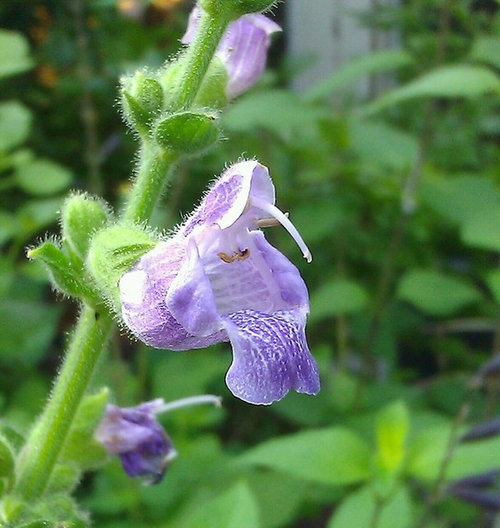
True S. hians has a rather large flower, about 2.5 to 4 times the size of S. przewalskii, and the color is two-toned blue, with one shade darker and bluer than the other and a white lower lip. I got mine from Srinagar, Pakistan from P. Kohli and Sons a long time ago, along with a S. nubicola that was colored the same way the image in .Concise Flowers of the Himalaya, by Oleg Polunin and Adam Stainton.
The S. nubicola I grew and the one in the book had an almost orange upper lip, or hood, really burnt orange, because of the density and shade of the purplish dots.
It seems to me that this species has become like the Holy Grail: even if one possesses it they are never quite sure of that fact, and everyone around them stirs the pot of confusion rapidly and no one is ever sure of what they have or don't have.
Many of the "Chinese" herbaceous perennial Salvias have overlapping ranges, and there is a great deal of both inter-species hybridization and naming confusion. This subject area will be confused and open to interpretation until a thorough study is done, which I very much doubt will be in my lifetime. We are still germinating seeds of newly collected "species: from these areas, and trying to make sense of their systematics. I can't think of another group of Salvias where there is greater confusion, often self imposed.
I have seen at least three totally contradictory descriptions of this species from respected authorities. And even more in older books. Who is right? Flip a coin. Or call the large flowered clearly two tone (usually - climate makes a great difference) blue that is or is close to these pictures S. hians. That's what I choose to do. Grail quests are for younger folks!
Dan Hinkley, while he was running Heronswood, sent me one cool spring an unknown Chinese sage that we both thought might be S. dolicantha. It grew nicely and even bloomed. At first, while still in unusually cool weather, the flowers were the lovely large size.
Not for long. A hot spell immediately followed, and the remaining flowers on the spikes were vastly reduced in size. The attachment is of the scanned spike, before flower size reduction.
Other sages undergo this reduction in heat, like S. chamaedryoides, but not quite so dramatically.




Gerris2 (Joseph Delaware Zone 7a)Original Author
rich_dufresne
Related Professionals
Elizabeth City Landscape Architects & Landscape Designers · Newport Landscape Architects & Landscape Designers · Coeur d'Alene Landscape Architects & Landscape Designers · Palm Bay Landscape Contractors · Elkton Landscape Contractors · Chattanooga Landscape Contractors · Killeen Landscape Contractors · Des Moines Landscape Contractors · Lawrence Landscape Contractors · Pine Bluff Home Stagers · Richmond Home Stagers · Georgetown Home Stagers · San Marcos Home Stagers · Fall River Home Stagers · Marinette Home StagersGerris2 (Joseph Delaware Zone 7a)Original Author
kermitc
rich_dufresne