Software
Houzz Logo Print
diclemeg

Square Foot Garden, Year 2 help

16 years ago

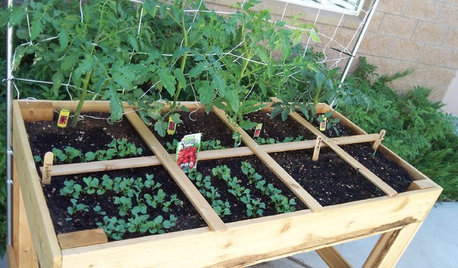
Last year, did four 4x8 boxes and a few trellises and grew nearly everything, with great success. At the moment, they are all covered by snow, and underneath are varieties mostly from Fedco (cold-tolerant)... swiss chard, butterhead lettuce, sugarloaf chicory, dandelion, escarole, beets, a couple zucchini, cucumbers, radicchio etc. After frost hit in November (37 deg did it), I left them there, and did not till nor yank the plants, all of which is still there under the snow.

Have a few important questions I hope someone can help with.

For this new growing season, should I yank all the plants there, and till, and plant seed anew? Or should I see what went dormant and resprouts, without any tilling/turning soil? I seem to have several plants that are biennial like the beets and swiss chard, so I'm not sure what I should be doing now and/or prior to the upcoming season. Any thorough advice would be really appreciated !!!!

Comments (13)

  • 16 years ago

    I'd pull every single plant from the bed, and start new.

    EG

  • 16 years ago

    I agree with EG. Pull all the spent weeds and plants and add them to your compost pile. Then add a scoop of compost per square and plant new. Even if anything did survive beneath the snow, it may not be worth nursing along when you can get more yield from a freshly planted crop.

    If you want to try overwintering some crops next year, there are ways to protect them by building tunnels and hoops. It may be fun to research. I would suggest exploring the methods by Eliot Coleman. He has several books dedicated to year round gardening.

    Rachel
    GrafixMuse's Garden Spot

  • 16 years ago

    But here is the thing... most of it is all cold-tolerant varieties like Fordhook swiss chard, and likely most of it is still alive but dormant, and Im thinking its so much that I have an entire garden still alive but dormant under there. I guess that is what my real dilemma is, whether I yank them even though they are hearty and able. Maybe I can pull all of them and put them in a safe place and medium, then till the old area and reseed anew, leaving some space, and if they all come back, I can move them back in.

  • 16 years ago

    >"likely most of it is still alive but dormant"

    No, because those veggies are annual, not perennial and cannot withstand the cold of standing snow.

  • 16 years ago

    If they do survive they will go to seed. Ever try carrots they are all tops the second year, same with almost all the annuals we grow, most are bi annuals and seed second year. Onions same way poor bulb and a seed head. Chard seeds second year. Pull and replant and have a good year. Good question I liked it. Thinking keeps it fun.

    Curt:)

  • 16 years ago

    Thank you CURT and others. Curt, your message nailed it and was exactly what I needed to learn that all the biennials will go to seed this second year. My concern is now closed. Next question... I have raised boxes, and wonder when is the best time to yank everything and turn/till the soil ? Please suggest my next step, including whether Im supposed to add some lime or some fertilizer or not when I till. THANK YOU.

  • 16 years ago

    diclemeg,

    Wait for the soil to thaw before pulling the plants or turning the soil. I wouldn't say that you really need to "till" the soil in the box, but giving it a few flips with a shovel, while you work in some new compost should be plenty.


    On the previous topic, some things to consider:
    You are on the verge of a four season garden. If I were in your shoes, I would check out the Four Season Harvest by Eliot Coleman, Winter Harvest Handbook by Eliot Coleman and the 12 month gardener by Jeff Ashton.

    A lot of the varieties that you mentioned would rebound fairly well from a light frost. What they really need is protection from the wind. Snow is not a big problem (it's actually an excellent insulator, and will protect the plants from much lower temps). If you had harvested them during the winter whenever the ground was thawed, you could have enjoyed some very tasty veggies. (Heck, you still might be able to eat them, if you pull them as soon as you thaw out - referring specifically to the radicchio, dandelion, and escarole. You might have to peel off the outer parts of the radicchio, but the center might still be good.)

    Don't just take my word for it though, check out those books from your local library. The key idea is that while the growing season stops in the winter (too little sunlight), the harvest season can continue all winter long (with the proper steps). Coleman lives in Maine, and is able to have fresh greens all winter long, with some very easy to make protections, and easy to follow instructions. Personally, I got all this information too late to be of any good to me this year, but I can't wait to give it all a try this fall/winter. In your case, you have some plants that might actually be able to rebound sufficiently to be harvestable. (Don't pull them while they are frozen. They can rebound if they are still in the ground. They won't grow like you want, as their primary goal now will be seed making, but if you can pull them before they start to grow again, they should be quite tasty (many of the starches will convert to sugars when exposed to freezing temps in root crops).

  • 16 years ago

    Thanks EAGLESGARDEN for the time you took to write that and the good advice. Coleman's book 4 Season Harvest I read last fall from library and was planning on building or buying a cover, for I am growing those very cold-tolerant varieties from Fedco in Maine like Winter Marvel butterhead lettuce and Fordhook Chard.... but an early frost hit in early November and I hadn't decided yet to build a frame to also use as a cold frame or buy a fabric cover, was quite hung up on which way to go. I have four 8x8 boxes, and was thinking of building a ten inch high cover frame with plexiglass for one box only which should suffice. But then I thought, maybe those hoop row things. "He who hesitates finishes last" was the current truth at that time. I guess I have this summer to decide which way to go with it.

    Regarding saving the plants for seed, I'm not interested in that at this point b/c of the amount of bought seed I have yet to use, for I was quite spend-happy on seeds last season, like a child with a new-found hobby.

    This is what I decided... Im gonna now only clear out and till a very small area in the corner of a raised box, probably the arugula spot, and put clear plexiglass over that spot and use as seed starter/cold frame for starting the tomatoes, for now, and will leave the rest until thaw, at which point I'll do what you suggested, especially with the escarole bordeaux that I seeded late and frost hit it once it was close to readiness. I was soon to put the rubber bands on them to blanch it. These should taste good. Thanks again.

  • 16 years ago

    I recently did some checking as to whether I should till our garden because I was worried that I might be chopping up whatever worms may have found a home in my garden and then I would be left with just pieces & parts. In my searches I found that people are very passionate about tilling or not tilling. As such, I have decided I need to increase the height of my bed anyway, so I will just add more Mel's Mix on top of what is there right now, and I am NOT going to till. Just some food for thought if you want to check into it and see what you think ...

    In regards to 4 season harvest, we are also in zone 7. I have found the following websites that give some good planting guides on how to get several growing seasons out of one year. This one has a calendar for every zone ... http://www.veggieharvest.com/Vegetable-Planting-Calander/zone-7-vegetable-planting-calendar/. And this one is not our county, but still good info for people in zone 7 North Carolina. It may or may not apply to your area, but helped a lot in my thinking and planning on how to get the most out of our garden by planting things in the same spot after other plants were done ... http://chatham.ces.ncsu.edu/growingsmallfarms/plantingguide.html

  • 16 years ago

    Thanks ANGELA... I'll use that chart, too, for its hard to find a good one here on Long Island, zone 7a.

    So many fine people are giving great advice in this thread.

  • 16 years ago

    I've decided that this garden is no-till. I'll be starting year 3 for two of my beds, second year for the rest.

    In the fall (with some extra addition in winter now & then) I cut the spent plants at soil level then top off the beds with compost, straw, coffee grounds, whatever OM I happen to have. I only dig where I need to when transplanting. I decided not to turn the soil because I have created such a nice place for the worms that my beds are thick with them. I feel bad messing up their world. I figure I'll feed them and they'll feed my plants.

  • 16 years ago

    oh, my red romaine. It seeded itself last year, loved the winter (even at freezing temps) and is coming crazy (crazy!!)
    I will be planting fresh, I have chard and will be re-seeding them also. spinach, some has popped up again this year and it never bolted.
    Looking forward to the garden this year and have winter sow containers all over (except the ones that blew across the yard, are doing well.
    I dont know if I should just add a couple more 4x4's and dig like cray and amend the soil for things like squash and the tomatoes seemed to need a much deeper box last year.
    I also wondered about clothes for weed cloth.
    thought?

  • 16 years ago

    I would just cut the plants at the base and not turn over the soil. There are beneficial microbes (microrhyzzae, which I can type but not say) in the soil that create webs if you pull all the plants and turn it over, you destroy the webs. After you plant your seedlings, top dressing with compost will add more nutrients without a lot of work.

Sponsored
Whisler Home Improvement
Average rating: 5 out of 5 stars9 Reviews
Franklin County's Committed Home Improvement Professionals