Software
Houzz Logo Print
musaboru

Low sugar tomato?

15 years ago

This might sound strange of me looking for a low sugar tomato, but my mom is diabetic and I am looking to grow a tomato that she can enjoy. I know I'll definitely not consider anything with the word 'sweet' in the varietal name.

Would anyone know of a cherry tomato that is quite low in sugar content when ripe? Sour is good. I'm interested some black tomatoes too. Thanks.

Comments (20)

  • 15 years ago

    Carbohydrate is the general word that includes various sugars and there are many different sugars. I don't know of any chart that specifically lists individual tomato varieties and their individual sugar contents, b'c again, there are many different sugars.

    THe link below will give you an idea of how tomatoes stack up to other foods and about one cup of raw diced tomatoes is about the same as one raw carrot.

    Your mother I'm sure has at one time or another been given information from her MD about what constitutes a diabetic diet or you can easily find that online if not, but I think most docs take diabetes very seriously and would have helped educate a patient in that regard.

    And if you looked at any of the suggested food groups on that diet you'd also see lots of fruits and vegetables suggested, tomatoes being one of them.

    There's a big difference with sugar content between carbohydrate content being what's called complex, which takes longer to break down into individual sugars, and non complex which would include fudge, orange juice, well I'm not going to list stuff here. But orange juice is a good example b/c if the glucose level drops too low, a problem I've never had, ahem, then orange juice is one of the main items sugggested to drink ASAP to get the glucose level up in a hurry.

    Diabetics do best with foods that have complex carbohydrates.

    I'm a diabetic.

    And I don't worry one bit about eating fresh or canned tomatoes, or fresh salsa or whatever. Actually I eat lots of tomatoes. LOL

    You can consult with your mom's MD b/c I don't want to be accused of giving medical advice to someone but I bet he or she would also advise you mom about the role of tomatoes in a well balanced diabetic diet.

    So if it looks like I'm suggesting growing any darn tomato varieties you want to I guess that's what I'm saying.

    And do take a look at the chart I linked to below which indicates total carbohydrate values for different foods and also indicates the amount of food, 1 cup, 2 tbs, whatever, that equates to that amount.

    Carolyn, who cheats when it comes to her diet, but knows when b'c as with all diabetics, I would hope, has this glucose meter that tells all. ( smile)

    Here is a link that might be useful: Carbohydrate Content of Foods

  • 15 years ago

    Good info from Carolyn. To put it simply, tomatoes of any kind including those with 'sweet' in the name, are not restricted in a diabetic diet. They play a big role in the standard approved diabetic diet. Just ask her doctor.

    Technically, there is no such thing as a low-sugar tomato. All tomatoes are acidic. There are just some varieties that "taste" more sweet/less acidic. ;) Your Mom may prefer a more acidic taste in her tomatoes but that is just a matter of taste and is not related to her diabetes.

    Dave

  • 15 years ago

    Best advice was posted by Carolyn. Test 2 hours after eating because everyone reacts differently. Not every tomato effects me the same way. Those that are dead ripe tend to have fully developed their sugar carbohydrates and do send my glucose up. I am type 2 so take that into consideration.

  • 15 years ago

    I'm a diabetic. What I would recommend your mom do is. When she has not eaten anything check her glucose level. Then eat a tomato. Wait 2 hrs and check it again. That way she will know how the tomato effects her glucose level. I can eat all the tomatoes I want with no problems.

  • 11 years ago

    I wish one of you guys had looked into which breeds of tomato are lower sugar, rather than just focusing on the diabetes aspect of OP's question.

    This thread is the top result on google for "low sugar tomatoes" and there is no actual info in the thread about which breeds would be best.

    Members of my family need to eat low carb since they are on ketogenic diets, this would be good info to have.

    Anyone know what breeds of tomato might be lower in sugar, or whether anyone has tested?

  • 11 years ago

    I just Googled the question. One article said that tangy tomatoes are lower in sugar than sweet ones. I tried to link but it didn't work. I'm still learning my way around a new Google Chrome computer.

  • 11 years ago

    A tomato is about 94.5% water. That leaves 5.5% solids. Any typical tomato has half of the solids being sugars (2.75%). Of those 2.75% about half are Glucose if it is nice and ripe. Call it 1.5%.

    That is very low.

    You canâÂÂt just say variety X is a diet or low sugar tomato, because conditions of the harvest are what dictate the sugar content. That said, the easiest place to get a low sugar tomato is to buy one of the lousy cardboard commercial mass produced green gassed tomatoes at the supermarket. These tomatoes will be the lowest sugar you can find. The less taste it has the better, same as most diet soft drinks. The difference is probably a store bought cardboard tomato having 1% simple sugar (call it your 1% lite blue cap tomato) and your good home grown heirloom having 2%, properly matured, call it your red cap tomato. Doesn't really matter much what cow, errr, variety. You just want a tasteless tomato, to which you can perhaps add some fresh basil, artificial sweetener and a little vinegar to design whatever you feel is appropriate and meets the good taste your Mom deserves. Given these differences I doubt it makes any difference but others can answer that better who live with Diabetes.

    Good luck and I hope your Mom can have something she enjoys. Eating half as much of a delicious heirloom sounds like a better plan to me than wanting twice as much of a cardboard red thingy.

  • 11 years ago

    I have a diabetic long time friend. He eats just about all kinds of fruits and vegetables, like banana, carrots, apples .. along with his medication.
    He has told me that what is important is total calorie intake, not just carbs. Carbs in fruits and vegetables are not like sugar (granular) in soft drinks. So per PC's numbers, if you eat 3 oz a good tasty tomato you might get about ONE gram of sugar. Is that too much for you ?
    I suppose there are different severity of diabetic . So the best way to to talk to your MD.

  • 9 years ago

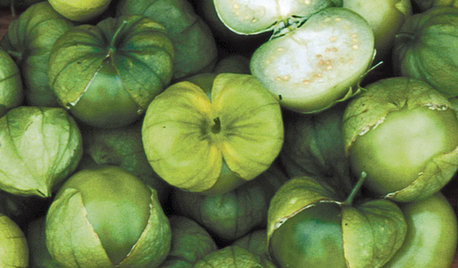
    Since no one seems to want to answer the question, here's what I did. There are some varieties that come prepackaged. Normally you can go to the website and they will have carb and sugar listing's there. I have found from research, the yellow and orange varieties are lower in sugar than the red ones. Also, there is a green variety the is low as well. I wish I could remember a brand to suggest but I can't. Anyway, just based off that, I would plant yellow, orange or green varieties. Hope this helps

  • 9 years ago

    Please go back to what I posted on Feb 23, 2011. I know of no site that have sugar listings for one variety, lists that rank such yes.

    There is no low sugar variety and yes, the pastel colored ones are said to be low sugar, but they aren't since all varieties are in the acidic range in the interior, but it's that acidity that masks any sugar content.

    And that's why many see some pinks and whites and the like as being often bland. But green when ripes are oneof my fave types, and I wouldn't call them pastels since they have a completely different genetic makeup

    Hope that helps,

    Carolyn, also a diabetic as you'll see when you read the post I referred to above and there are also other posts done earlier that help.


  • 9 years ago

    Well, it is not an exact science to say that this or that tomato is low or high in sugar contents. It can be differen at differen garden and season. You might be able to get a rough measurement by a device that is used in wine making to measure the brix of grape juice. You can get it at any beer/wine making shop . I have one from years ago. Actually it checks the "specific gravity" of a given solution. The higher the sugar contents ( in fruit juice ) the higher the SG ( = brix ) and thus sugar content.

    Sey

  • 9 years ago

    Seysonn: Well, it is not an exact science to say that this or that tomato is low or high in sugar contents. It can be differen at differen garden and season.

    ^This.

    It's basically impossible to say definitively. People can provide names of varieties that generally taste more or less sweet, more or less acidic, mild, intense, etc. But that's not guaranteed, i.e., one can have different results in different soil, different climate/weather different times of the growing season, etc. And different people growing in different gardens with different tastebuds will often identify different tomatoes as sweet or not, acidic or not, etc.

    A tomato that tastes acidic can actually have a lot of sugars in it just being masked by the acidity. Generally, the best-tasting intense tomatoes may taste balanced and therefore not seem like they're the highest in sugar but instead have the most sugar--it's just balanced well by good acidity and the result is a very intense taste. A milder tomato that has less balancing acidity may taste sweeter but have less total sugar.

    Also, for those complaining that we're addressing the diabetic aspect too much--that's actually a very important part of the original inquiry. Sorry if it's not your personal concern, but people are answering the question asked for the reasons it was asked.

    Lisa D: Since no one seems to want to answer the question, here's what I did. There are some varieties that come prepackaged. Normally you can go to the website and they will have carb and sugar listing's there.


    Mm, nutritional labeling is notoriously inaccurate. And for fresh produce, they can't really account for all the variables involved. FDA regulations on labeling of raw produce isn't particularly strict, either--in fact, labeling it at all is totally voluntary.

    And it's not that nobody wants to answer the question. It's that the people here who know the most about tomatoes don't want to give answers with a certainty they know to be false. They're honestly saying they can't say for sure because the information doesn't currently exist and the variables are many. They're not deliberately trying to keep things secret from people to annoy them.

  • 9 years ago

    Lisa, I thought I had answered your question several times, referring you back to last Dec and my most recent post just a few days ago. And referring to your comment above,I do know that I probably know more about tomatoes in general than anyone else posting here now.

    There's a darn good reason I don't come back here on a regular basis,just when I get a notice at home and feel that I need to.


    Carolyn


  • 9 years ago
    last modified: 9 years ago

    Since most tomatoes are on the acid side, on pH scale ( 3-8 to 4.2), low sugar also may translate into tangy or even tart taste. What sugar does is to hid the acidity. It should be noted that sugar doe not neutralize acids.

    Sey

    PS: You would think that (probably ) Coca Cola is sweet, not acidic. Surprise ! Some Cokes /Pepsi drinks have an acidity close to vinegar : 2.8 ( household vinegar has a pH of 2.4 ) . I have stopped drinking soda.

    Sey

  • 9 years ago

    If I may, I want to piggyback on this thread. I am in a situation of needing to avoid fructose, which is one of the FODMAP sugars and starches that have been identified as bothering people who malabsorb them or are intolerant of them, causing fermentation in the bowels and giving other gastrointeric problems I won't go into here. Irritable bowel patients are now being counseled to avoid high-FODMAP foods. Long story. Anyway, concentrated natural fruit sugar in tomatoes can be a problem, especially in larger portions or in sequential meals or in different foods in the same meal if they contain the same or different FODMAPs.

    As a gardener and a scratch cook, I make a lot of tomato sauce. I am aware that the newer varieties of tomatoes have been bred for sweetness. Last year I tried contacting my extension agent for names of varieties of low-sugar tomatoes. He was flummoxed. "No one has ever asked me that!" he said. My Plan B was to plant heritage tomatoes of various sorts, assuming that these would be lower in sugar.

    I am pleased to report that I can handle moderate portions of my homemade tomato sauces. Not only that, but I created some amazing sauces. Unfortunately, my stake labels got bleached out in the sun and I lost the names of the tomato plants so I can't mention them here, except that I know that Black Plum and Boxcar Willie were two good ones. I used onion + garlic oil infusion instead of full onion and garlic (they have fructans in them) and I did not use balsamic vinegar (fructose); some of my sauces contained box wines, though--Big House cabernet sauvignon was a fave. Some of these tomatoes were piquant, others smokey, others perky. I had 20 different plants so I could concoct like crazy, using whatever was ripe and prolific. I made enough frozen bags of sauce to have one meal per week until the new crop rolls in--they were stacked like bricks in my freezer.

    If anyone has a way of identifying the sugar content of tomato types, I would appreciate it. Perhaps, if enough diabetics and IBS-sufferers plead, our plant experts might make up some lists. Any experts listening here?

  • 9 years ago
    last modified: 9 years ago

    strange thread indeed.. many people in my family suffer from diabetes. doctors recommend lots of fruits and veggies..in fact, someone in my family went from requiring insulin injections to just being able to take an occasional pill by changing their diet.. you can't compare refined sugars with natural sugars.

  • 9 years ago
    last modified: 9 years ago

    This is incorrect and outdated advice. Sugar is sugar.

    The main thing is, many fruits have a lot of fiber which slows down absorption of sugars into the bloodstream, and many fruits have more sugar in the form of fructose, which can pose certain health risks over glucose but has less impact on blood sugar. However, drinking, say, fruit juice, is only marginally better than drinking something like soda.

    Both the glycemic index and the glycemic load of fruit tends to be lower than something like cookies, which not only have more sugar in them but also lots of the sorts of starches that break down quickly and become essentially no different than pure sugar. The role of starches is extremely important. For example, even whole wheat bread from the supermarket, can have a higher glycemic index gram for gram than straight table sugar. Rice crackers have a higher glycemic index than ice cream.

    So fruit can be more helpful to manage blood sugar. But sugar is sugar, and one still needs to take the glycemic load of what one eats into consideration. You can't just turn your brain off because it's fruit and it's "natural". Whether the source is natural or unnatural doesn't matter. It's the glycemic load of the entire meal that matters. So eating a piece of chocolate with a big salad with grilled chicken and low-sugar dressing can have lower impact on blood sugar than eating a fruit salad. Watermelon and pineapple, for example, have a higher glycemic index than chocolate. An apple, on the other hand, has a very low GI.

    Most doctors who keep up their knowledge now recommend that quantities of many fruits be limited for diabetics, especially high-GI fruits. Processed fruits are often treated the same as other sweets--once again, it's a case-by-case basis. I agree that tomato sauce is not particularly significant when considered with other sources of sugars in the diet, unless one is doing an extreme low-carb diet or something. The thing that spikes the blood sugar in a bowl of pasta with tomato sauce is not so much the sauce but the pasta.

    Like most things in the real world, hard and fast rules based on our arbitrary categories like "natural" and "unnatural" don't hold up.

  • 9 years ago

    The sugar content of a tomato will depend on the temperature when the tomato is maturing, its sun exposure, its level of maturity, possibly even its place on the vine, but the bottom line is that sugar level is going to be all over the place even for tomatoes from the same plant.

    If you poke around on-line, you can find information about brix levels of tomatoes. They seem to top out around 8% (sugar concentration), so mostly just water. The pH of a tomato doesn't correlate with its sugar content either, so taste isn't much of an indicator.

    The vast majority of diabetics can tolerate whole (fresh, frozen, or cooked, but not dried) fruits and vegetables just fine:

    Effect of fruit consumption on diabetes

  • 9 years ago
    last modified: 9 years ago

    >Effect of fruit consumption on diabetes

    In that study, the "high-intake" group was only consuming about 125 g / day.

    I think because people generally don't consume a lot of fruit to begin with in North America, saying that diabetics were fine when not asked to restrict their fruit intake tells us nothing.

    Once again, it's about a case-by-case basis, as we're all individuals. If someone really loves fruit, it's important for them to realize that it's easy to eat enough to interfere with blood sugar levels negatively. I really really love fruit and can eat a ton of whatever is in season. If I were diabetic, I would cause myself problems if told to eat unrestricted amounts of fruit. My brother, who doesn't really like fruit that much and doesn't eat much of it, would react totally differently if told he didn't need to restrict his fruit intake.

    Conversely, telling me to reduce my cookie consumption would have little effect--I don't eat cookies that often; I rarely think to buy them when I'm grocery shopping; I almost never bake them for my own consumption. I mean, I enjoy them when I have them, but they're not something I reach for when left to my own devices. But my cousin loves sweet baked goods and would need to be told to restrict her cookie consumption.

  • 9 years ago
    last modified: 9 years ago

    If people really need to keep carbohydrates minimal, such as for those on ketogenic diets for various conditions, getting a brix meter might be helpful so you can always test your tomatoes periodically. As jxbrown notes, sugar content can vary a lot in the same variety according to different conditions--something we all know, since we know that the same tomato plant can produce tomatoes that taste different according to weather conditions, lateness/earliness in the season, year-to-year differences, etc.

    While brix is not a perfect stand-in for sugars, I think it's a decent proxy for the nutrients in a tomato that will raise blood sugar.

Sponsored
Buckeye Basements, Inc.
Average rating: 5 out of 5 stars40 Reviews
Central Ohio's Basement Finishing ExpertsBest Of Houzz '13-'21