Software
Houzz Logo Print
anewgarden

Neem oil?

17 years ago

Does anyone use Neem as a preventive measure?

Comments (12)

  • 17 years ago
    last modified: 11 years ago

    Yes...had a wicked spider mite & aphid infestation last year. I use GardenSafe's Neem Oil based miticide.

  • 17 years ago
    last modified: 11 years ago

    Thanks!
    I use it on lots of things, but didn't think to use it on my tomatoes.
    I use it pure and then mix it with Dr. Bronner's and water. Anyone ever have a problem with that mix?

  • 17 years ago
    last modified: 11 years ago

    You'll find posts here from folks who have burned their plant leaves from using it in a manner other than the label directions. I prefer to dilute it to avoid that problem.

    Don't know anything about the Dr. Bonner's stuff.

    Dave

  • 17 years ago
    last modified: 11 years ago

    I have not used it but intend to try. I see from previous
    posts that there is a lot of use of neem oil against
    aphids and perhaps fungus diseases. I suppose these may be
    valid uses and I may try for those later.

    My current outlook is for Japanese Beetles. Granted, this
    application does not apply to tomatoes but some of the
    information I have dug up may be useful. My motivation
    for trying neem against Japanese Beetles is that I saw
    a bulletin from Purdue University that suggests neem oil
    (with azadirachtin)!!! may be effective as a repellent.

    Continuing my "research" I found that there is a large
    variety of neem products, and that the formulations vary
    considerably. I also suspect that the variation in
    formulas may be a large contributory factor in reports
    I've seen that neem oil is ineffective.

    Now, back to the azadirachtin. This is a name for what is
    considered to be the principal active ingredient in neem
    oil. It derives from the species name of the neem tree,
    which is Azadirachta Indica. The compound can be isolated
    and has been synthesized. It is regarded as an insecticide
    and fungicide and according to the Purdue release as
    a potential repellent.

    If you look and consider carefully you will find that
    most of the "neem oil" products on the market contain
    none of this compound or as little as possible. It turns
    out that neem oil is routinely processed in such a way
    that its components are separated. In fact, there is an
    EPA standard for two products resulting from the processing
    One is the azadirachtin, which is removed by processing
    neem oil with alcohol. Don't ask me what happens to it
    after it is removed, where it is used or even if it is
    used because I don't know. The remaining product is known
    as "clarified hydrophobic extract of neem oil" and this is
    the fraction that you will find in almost all products on
    the market that claim to contain neem oil. Exactly what
    the benefits of this product are - again, I don't know
    but at present I take it to be little more than a fine
    grade of horticultural oil. Additionally, some of the
    "neem" products are even more vague in their specification
    of ingredients, where the active ingredient may be shown
    as "potassium salts of fatty acids" (Bon-Neem). I take
    this to be the same ingredient as the "clarified extract"
    but have no specific information on that assumption.

    There are other products available. One is Safer's
    Bio-Neem which actually is specified on its label to
    contain .09% of azadirachtin (900 parts peer million).
    You can also obtain products which are claimed to be
    something like the pure pressed oil of the neem seed and
    these are claimed to have an azadirachtin content of
    up to 1800 ppm.

    I'm trying to determine which product(s) to use and how.
    Aside from manufacturer recommendations, which I consider
    to be generally worthless, I find little other than
    hearsay. If anyone has done more research or has more
    accurate information, I would be delighted to see it

    Link:
    http://www.epa.gov/opp00001/biopesticides/ingredients/factsheets/factsheet_025007.htm

    For now, Rotsa Ruck!

  • 17 years ago
    last modified: 11 years ago

    I wish I could add more to what you already know. I bought what is labeled as "Pure Neem Oil". I have been using it to combat Black Spot on Roses for about two years, I think. I have found it effective.
    Now I am worried about using it at all! I read on the Organic Rose forum that is has been found to be harmful to Bees!

    I would like to know for sure, but like yourself I am finding it hard to get verified facts.

  • 17 years ago
    last modified: 11 years ago

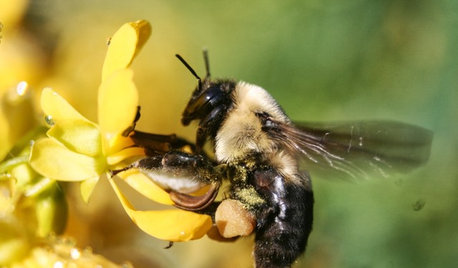
    As a rule bees don't walk on plants, but buzz right into open flowers. Neem oil can harm them, but it only harms insects that ingest it.

    If you avoid spraying open flowers the bees aren't likely to come into contact with it. Even if they come in contact with it there is little likelihood it will harm them. Neem oil is actually sprayed directly on bee hives to help them with predatory mites than parasitize them.

  • 17 years ago
    last modified: 11 years ago

    Another professional grade product.
    (Expensive - MSRP $108.95 for 16 oz. Available from
    A. M. Leonard via Amazon for $79.49.

    Name of product - Azatrol.

    LINK: http://pbigordon.com/pdfs/Azatrol-SL.pdf

  • 17 years ago
    last modified: 11 years ago

    Thank you!

  • 17 years ago
    last modified: 11 years ago

    Here is yet another paper and one well worth seeing.
    This time it is not a research report but a compendium
    meant to collect as much information as is available.
    From Cornell University, it is part of a larger
    "Resource Guide for Organic Insect and Disease
    Management". The other parts are worth looking at as well.
    The link to the neem portion is here:

    http://www.nysaes.cornell.edu/pp/resourceguide/mfs/08neem.php

    and the general introduction to the entire guide is here:

    http://www.nysaes.cornell.edu/pp/resourceguide/index.php

    I hesitated to add more because this thread is so long
    and detailed already but this one is to good to leave
    out.

  • 17 years ago
    last modified: 11 years ago

    I grow neem & use it as a systemic, not a knock down dead insecticide.
    This means used regularly, so it interupts the hormonal function of adults and then their reproduction codes have fatal malformations (population control).
    The leaf soaked in water until nice & stinky works too; the filtered liquid that is. The oil has a more concentrated active ingredient & ships better.
    As for a kill on contact natural plant extract the only one I know is Tephrosia vogelii, a.k.a. "fish bean". It may have been discontinued or restricted for sale in the U.S.A. because of the difficulty to use correctly.
    In Africa Fish bean is/was used to kill fish in the water; you wouldn't want your goats munching it. Planting seed is most definitely rare now.

  • 17 years ago
    last modified: 11 years ago

    I have some big box store stuff that i used to spray all my fruit trees today. I use Sevin when the going gets tough, but thought i'd give it a try on the Rose Chafer Beetles that can pummel the leaves on my trees. They are like a Japanese Beetle, but meaner :) The stuff really stinks. The smell alone should keep them away.

Sponsored
Urban Upkeep LLC
Average rating: 5 out of 5 stars6 Reviews
Columbus High Quality Painting Expert