Software
Houzz Logo Print
travelsfo

Treating bugs -- Sevin dust is toxic to bees!!

17 years ago

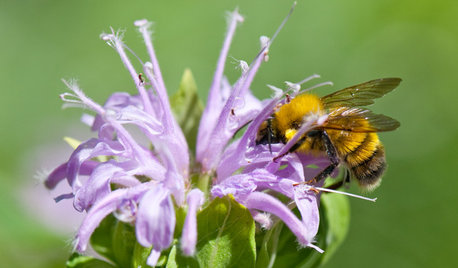
I saw lots of recommendations to use Sevin dust to treat "bugs" on tomatoes in this forum so I headed to Lowes to get some. While reading the instruction label for the product at the store, I read the part that it is TOXIC TO BEES. I refuse to use a product that is toxic to bees because they are hurting already -- and I wonder why people use a product that is toxic to bees.

I don't want to judge. I just want to understand why anyone would use a product that would/could harm bees that are pollinating flowers for us.

Please help me understand.

Comments (17)

  • 17 years ago

    Yeah I'd personally be reluctant to use it on anything that's actively flowering for that reason. If it's not flowering it's not an issue. At least not for bees. So far this year the only reasons I've been tempted to use it on anything that's flowering it to kill japanese beetles and squash bugs. Both of witch are difficult, if not impossible, to deal with short of chemicals. I shake my sweet corn every chance I get to get the beetles off the tassels and have given up trying to save my zucchini. I'm just hoping for a few more rounds of fruit before they bite the dust. Oh and I used it once to save my eggplants from flea beetles when they were still really young and not yet flowering.

  • 17 years ago

    Pheromone traps are very effective against Japanese beetles. There are several different brands. Just Google "Japanese beetle trap."

  • 17 years ago

    The only reason I can come up with why folks continue to use Sevin is because we have becoame a Fast Food Nation. Got bugs, zap them! So what if it kills beneficial bugs, harms the environment, increases the chance you'll soon be inundated with spidermites and so on. HEY! My bugs are dead!

    Very sad. We need better education and the world better wake up soon!

  • 17 years ago

    Everybody thinks, "It won't matter if I use this poison. It won't matter if a few bees die in my garden. There are plenty more bees in the world."

  • 17 years ago

    Sevin is a very popular pesticide that has been around awhile and can be found in just about any garden center. That's why it continues to be used.

    Having said that, it isn't much worse for bees than any other broad spectrum, on contact insect killer.

    The good news, at least for the bees, is that if you watch them in the garden, it's rare that they actually land on the plant. They seem to just buzz right into open flowers and then move to the next open flower.

    Regardless of what pesticide is used, avoiding the flower when possible will help reduce the damage to the bees and some other pollinators.

    Still, I do often wish broad spectrum, on contact pesticides were only available to those with a license. Getting that license would require passing a test indicating the person understood the other options available to them. It would also require demonstrating knowledge of how to use them in the most minimal manner possible to avoid killing non target critters as much as possible.

    That's the way it would be in JaG's world ;)

  • 17 years ago

    Reasons: panic, lazy-man's gardening, convenience, readily available, advertising, Dad or Grandpa used it, around along time, etc. None of which are good reasons to use it.

    And surprisingly, many post on the forums that "it is one of the safest, least harmful pesticides there is". Bull feathers!!! Boy are they under-informed!

    When they continue to insist on using it I try to recommend using the liquid Sevin instead because at least the bees don't carry it back to the hive like they do the dust.

    Dave

  • 17 years ago

    I would love to use the traps, but they do nothing but draw in clouds of Japanese beetles. They do catch quite a few beetles, and maybe even reduce the population slightly over a large area, but at the expense of concentrating them near wherever you place the traps. I don't have enough property to even attempt to use them in that way. My parents made that mistake with the traps a couple years ago and are absolutely infested now. Even using milky spore is almost useless unless you're trying to get rid of your moles; because unless you buy enough to cover several square miles the beetles will just come in from the neighbors yard, the field across the way, your neighbors neighbor and so on. I did break out he DE and am giving that a try. If that doesn't work I'll let the squash bugs have my squash and just deal with the japanese beetles reducing my useful amount of sweet corn.

  • 17 years ago

    Jeremyjs,

    Milky Spore is highly effective against Japanese Beetles, it just take about 2-3 years to totally eradicate them from your property. Studies show that Japanese beetles don't feed very far from where they hatch. If you have neighbors up close and their yards touch yours, see if you can convince them to apply Milky Spore at the same time you do, or just throw some over on their property. Make sure you apply it just before a rain, or be prepared to water it in for 15 minutes or so. Over time, the Milky Spore spreads all around your yard and to adjacent yards anyway.

  • 17 years ago

    jeremy, I'm familiar with the theory that Japanese beetle traps attract beetles from the surrounding area. I've used the traps for 2 years now; the previous owner had used a single trap the year before that (I don't know about prior years).

    The first year, I put the traps out late, and my trees and flowers suffered. Some of the young fruit trees had all their leaves skeletonized.

    Last year I put the traps out as soon as I saw the beetles. I caught markedly fewer beetles than the first year, and my fruit trees and flowers were in much better shape. I'll continue using the traps.

    [I have nearly 2 acres, with houses across the street (some highly landscaped, some not) and horse pasture/forest/golf course on the other sides.]

  • 17 years ago

    That's not been my experience with the traps. My parents are on 9 acres and the traps seemed to do nothing for the last 3 year, but attract them in. Heck I go out and shake their apple tree every time I'm over to check out how many 1000s of beetles are on the tree. It may or may not be effective for them to do their yard with milky spore to seriously knock down the numbers; because their property is pretty large, but the traps have been worthless. I live in town on a 1/4 acre lot. I'd have to treat my entire neighborhood. I don't have that big a problem though. They're more irritating; because I know I'm going to loose a few ears of corn to their tassle munching. My parents on the other hand lose grapes, fruit trees, beans, etc and I'm having a hard time getting my dad to treat with anything and I can't afford that much milky spore and I have my doubts how much it will really help; because there's also a large field right next to their property. Milky spore is ridiculously expensive.

  • 17 years ago

    How many traps do your parents use for the 9 acres? Last year I used 5 to protect about 2/3 of my property; this year I'll probably use 5 again. I'm still learning the best configuration, as the plants and trees that need to be protected are in scattered locations.

  • 17 years ago

    While I do understand that Sevin is toxic to bees, let me interject here with my experiences. We are bee keepers, and have in our yard 3 hives of bees, the closest being 50 yards or less from the garden. The bees have been here for 4 years, and each of those 4 years, I've used sevin in the garden, with no apparent ill effects to the bees. It must be what a poster above said, in that the bees rarely land, only buzzing inside of the flowers.

    Also interesting, the comment about earthworms. We have lots of nightcrawlers in the garden, despite the regular use of sevin.

  • 17 years ago

    As a new gardener, I have made a host of mistakes, most of which I am sure that many of you made while learning when you first started out. Being told to use Sevin was advice that I was given on numerous occasions (including from a family member), and I did end up using it once. I have since done more research, and don't think that it will be necessary to use it in the future, as there are other options available that are less damaging to beneficial insects.

    I am sure that laziness and convenience are the very reason that many people use it, I'm not picking on you digdirt :), but considering I don't fall into those categories, I recommend that we add a new category to the list of reasons: Doesn't know any better yet

    Better education about beneficial insects and the effect of pesticides on them is definitely in order.

    :o)

  • 17 years ago

    Hello,
    If you need to use Sevin, use the liquid version. It is not toxic to bees that way. The reason the Sevin dust is toxic is because they mistake the dust for pollen. You don't need to spray in the morning when the bees are busy.
    The only things I use the liquid Sevin on are squash and roses. I mix my own from the concentrate per directions and I only use if absolutely necessary.
    I've rotated my squash crop in a totally different garden this year in order to get squash bugs under control as I don't want to be using Sevin very often.
    I use it when I need it and yes my dad and all the other farmers used it.
    We do everything we can to produce foods naturally, but I'm not willing for squash bugs or Japanese beetles to destroy things.
    BTW, I've not had to dust my beans with pyrethrun vegetable dust but once this year. I think it's due to spraying them regularly with homemade deer repellent that has garlic, egg, and habanera pepper juice.
    zinia

  • 17 years ago

    One reason I don't use Sevin (besides the bee thing) is that it does not effectively kill off many or most of the insects I tend to have the most problems with here (aphids or spider mites). But it sure does do a good job of killing off any potentially beneficial insects that may help take care of them. :-( So by using it, I can potentially make my pest problems even worse.

    There was also an article I read a few years ago that suggested carbaryl (Sevin) can actually accelerate the reproductive cycle of mites. Ugh, don't need that here.

  • 17 years ago

    They have 4 or 5 scattered around the periphery.

Sponsored
Peabody Landscape Group
Average rating: 3.5 out of 5 stars8 Reviews
Franklin County's Reliable Landscape Design & Contracting