Software
Houzz Logo Print
icegardens

Dutchman's Pipe Vine

21 years ago

A friend sent seed for Dutchman's Pipe Vine last winter. I planted them in a tray in May, finally in late July the germinated and now the leaves are large enough that I can see they are heart shaped. I am planning on planting them in the next couple of days, was wondering if anyone has any tips for any special needs they may have, that would help, so that I don't loose them this winter. I live in southern Indiana, more zone 6 than 5.

Thanks

Carol

Comments (10)

  • 21 years ago

    If the seeds were larger than dust-sized, you are growing one of the tropical species. If they were from Aristolochia durior (=macrophylla), then what you have are vines that you will only grow fonder of as each year passes.

    Ideally, they will be in a partly sunny area with decent soil. They are not really fussy about soils, but dry rocky soils cause them to languish. After they are planted, let them grow for a year and before they start to show leaves next spring (they are kind of slow to leaf out), cut them to within a foot of the ground. This will cause them to have several leaders. They grow about 20ft in a year if they are happy, but don't expect that kind of growth the first couple of years. Also, they grow very late in the fall, mine are still putting out lots of growth. Don't worry about cold in your zone, I grew up with these in zone 3 on the north side of an open porch.

    If you got seeds that were flat things a little smaller than an eraser on a pencil, you can still get them to bloom, but they will need a large pot, plenty of room and temps that don't go below freezing in the winter.

  • 21 years ago

    Yikes, the seed I planted were tiny, about the same size as a tomato seed, maybe a bit smaller. I will need to treat these as a tropical, in zone 5/6?? Any special potting medium needed?

    Thanks
    Carol

  • 21 years ago

    It's hard to tell without knowing the cultivar or species. You might check on the butterfly forum because a LOT of people grow it for the pipevine butterfly.

    I have A. beatica, which is hardy to zone 5, and A. clematitis which is also hardy to zone 5 or 6.

    It sounds like you might have gigantea or durior. Durior is hardy, but gigantea is not. You might want to take a cutting of it before your first frost.

    Susan

  • 21 years ago

    Birthwort (A. baetica, note spelling if you are going to search) is fairly rare here, but very common in Spain. This one, though technically a small vine (10ft) of the Aristolochia clan, is not usually called Pipevine, although with common names one can not be wrong. The other Birthwort mentioned, A. clematatis, can hardly be called Pipevine since it only grows chest high. I agree, the butterfly forum would likely have much more info on all the Aristolochias. (Supposedly baetica is one of the all time favorite foods of the Pipevine Butterfly. Elegans is also very much sought after by these insects. What a charge they must get from the sap!)

    Virginia Snakeroot is also an Aristolochia, but it too rarely gets far off the ground and is almost never called Pipevine. It too is hardy to at least zone 5.

    The reason for my guessing about the seedz is:

    1. the commonest ones in the trade are several tropical varieties (elegans and gigantea, and druior (=macrophylla), the only big vine Aristolochia hardy to the temperate north.)
      2)the tropical ones have seedz about the size of tomato seedz, but durior, which doesn't make too many seedz, has 200 seedz tucked into a capsule about an inch long and as thick as a drinking straw. They are as small as tobacco seedz.

    The best way to ID your seedz would be to find out the size of the plant they came from and where it grew. If the thing was a 20ft vine, that eliminates the Birthworts (there are many on that side of the family), and Snakeroot. If the plant was in FL, both gigantea and elegans are quite common down there. Those seedz are plentiful and don't germinate until late summer for me too. I can get a photo of some seedz and the seedz capsules if you think that will help you Carol.

  • 21 years ago

    Pensylvania Pete, I never saw the seed pod, only was sent a few seeds. I would love to see a picture of the seeds though.

    I think I will go ahead and plant the vines in the ground tomorrow. If they come back next year, I will be pleased if not, I will look for a DPV that is hardy to my area next spring. I really don't have space for more plants indoors, I have already given up one room to store my Brugmansia in each winter.

    Thanks for all the information everyone! I really appreciate it.

    Carol

  • 21 years ago

    Can anyone tell me how to hand pollinate an Aristolochia Elegans - mine is flowering profusely but we obviously lack the appropiate pollinators as there is no sign of seed. Are they self fertile anyway as my other plant is still immature? I'm a dab hand with a paint brush with regards to passiflora!

  • 21 years ago

    Carol, here are some photos of the 2 Aristolochia that live here. The first pic shows Aristolochia elegans. Going clockwise from the flower, there is an unripe seed capsule, the leaf, a bottle cap for reference (Yuengling Beer, America's Oldest Brewery), and last year's ripened and split seed pod with seed.

    As you can see, cincinnata (Did your people fight alongside Caesar?), one A. elegans is enough to make seed, because that is all I have, one vine. It is also in a greenhouse, growing in the ground. The main reason I have this vine is for shading some of my succulents. Works well for it's purposes I must say.

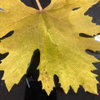
    This one shows A. durior, one of the smaller leaved cultivars. I have seen leaves on some vines that are dinner plate sized. A. elegans leaf is at the top, durior to its lower right. Then there is my pot of Aloe that must have been below the vine last winter and recieved a load of seed from above. On the upper left is the remains of an incipient (sort of) seed pod from A. durior. Try as I might, there are no flowers on it left. The bloom, such that it is, begins when the leaves start and it blooms until July. This stem comes from a flower that was not pollinated. Had it been pollinated (I found none this year), the bottom part would swell to about4/10 inch [1cm] and be 1 to 1 1/2 inches[3cm] long.

    {{gwi:1345270}}

  • 21 years ago

    The seedlings in picture two look like my seedlings, and the seed in the first picture look like the seeds I planted.

    I am crossing my fingers that it is A. durior, and that I will see it peeking up next spring.

    Thank you so very much for posting the photo's. Great photograpy too!

    Carol

  • 21 years ago

    Wow - Pennsylvania Pete - great photos! Thanks for the correction on the spelling. My spelling is getting worse as I get older.....sigh.

    I grow the Aristolocheas for the pipevines and not for looks, so I'm probably not the best source for info.

    I do know that Miss Sherry on the Butterfly forum uses chicken manure on hers and that speeds up the growth for her.

    Susan

  • 21 years ago

    hello all.

    can the us native vine be trained to grow up a tree, or would that be too dry being planted near tree roots, not to mention the shade?