Software
Houzz Logo Print
jeniqdickens

Feeding Plants to Worms?

20 years ago

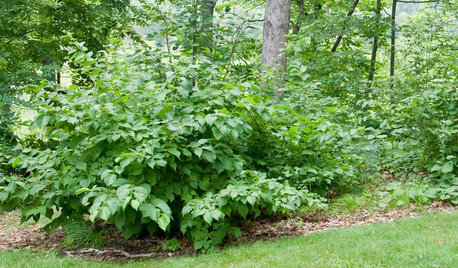
Just checking to see if anyone has experience with feeding plants to their worms. We are taking up our vinca's this week to replace them with pansies for the winter. (Vincas: http://hortwww-2.ag.ohio-state.edu/hcs/TMI/Plantlist/vi_minor.html)

I am planning on taking half my worm population to start a new bin and I was wondering if I could use the vincas as a food source to start the bin? That would be a great use of organic material and make sure there is enough food for the little guys, if they'll eat it.

So, any experience you'd like to share along these lines?

Thanks a lot,

Jeni

Comments (9)

  • 20 years ago

    There are a couple of problems with using plants removed fresh from the soil to the bin. 1. The plants could start composting and create a lot of heat and kill the worms. 2. If you don't do something to reduce the size and bulk of the plants they will break down very slowly and offer very little for the worms to feed on.

  • 20 years ago

    Hmmm... So the problem is that the vinca will either decompose too quickly or too slowly. Wouldn't it just be a matter of managing the quantity like anything else placed in the bin? I'm confused, as usual.

  • 20 years ago

    I tried vermicomposting hostas over the last few weeks. I chopped them up with a machete, but the leaves/plants were still pretty big when I put them in the bin. They haven't really broken down at all, stink to high heaven, and have really increased the moisture in the bin.

    I'm starting an overflow bin for those times when I have a surge of stuff to get rid of. Next time, I'll toss 'em in the overflow bin to break down a bit before I feed 'em to the worms, if at all.

    Of course, I could follow Chuckiebtoo's example, and just blow 'em the hell up.

  • 20 years ago

    Jason has the key to using plants. If they are thick or woody they will take a long time to break down. Some can stink so composting first or chopping into tiny pieces should make things work much faster.

  • 20 years ago

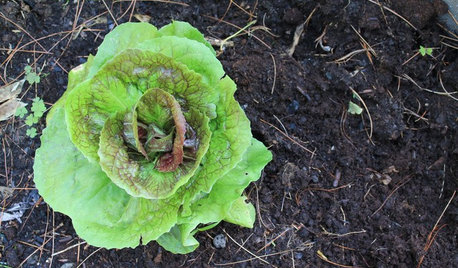
    In real terms we ALL have experience using plants in worm bins, because lettuces, tomatoes and apple cores are all plants (or at least plant parts).

    Anything that was once living or part of a living thing can be processed in a worm bin, and yes, I do mean anything (TNT anyone?). Some organic materials will require specialized management to ensure their natural decomposition processes do not negatively impact the system, however. Hostas, for instance, are no higher in moisture or N than are lettuces (in fact, chances are they are lower in moisture), but hosta leaves tend to be much larger. As they can cover the bin surface and block air movement into and evaporation out of the bin, managing them in such a way that this does not happen is a wise idea.

    As to vinca, much like ivy, these woody vines are pretty hardy, taking a long time to give up on life. Decomposition to a point that this OM option is available to the worms can take an extended amount of time. This is not bad, per se, and vinca can certainly be added to the bin, but it's tenacity and resistance to rapid decay need to be kept in mind, and feestock comprised of or containing large volumes should be managed accordingly. Chopping the vines will aid considerably in decreasing their residence time in the bin.

    Know, too, though, that chopping organic materials very finely is not always a good idea. While increasing surface area makes more of the material available to microbial decay, sometime leading to more rapid decomposition, smaller particles also reduce capilary space through which gas exchange can take place, sometimes leading to anaerobic conditions. Further, organic material with very high N levels often bloom microorganism communities with sufficient mass to generate significant heat. Increasing the surface area of these high-energy materials can amplify that heating potential to the detriment of a worm bin that is not designed to get hot. As such, chopping feedstock materials into chunks rather than grinding them in to fine particles is often a choice that better balances all of the physics of the system and better ensures successful processing.

    Make sense?

    Kelly S

  • 20 years ago

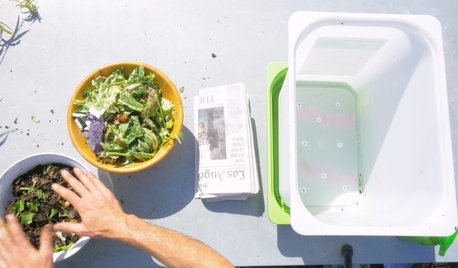
    OK, I am going to use the chopped vincas with shredded newspapers to start a bin without worms. I'll collect worms using Moni's neat net method for the next few weeks, then put the worms in with the chopped/decomposing vincas and shredded paper. That way the vincas have time to start decomposing and dissipating heat without harming the worms, and I won't have to just toss the plants out with the trash.

    Kelly - the vincas are only about a foot high and have no vines. I'm assuming that's a feature of an older, more established plant.

    By Jove, I think my plan is going to work!
    :)
    Thanks,
    Jeni

  • 20 years ago

    All I know is that I probably won't be doing broccoli again. Worms loved it, seemed to go in just over a week, but my bin smelled way too strong!

  • 20 years ago

    Kelly, you are brilliant. I've been basically pureeing the fruits and veggies out of my kitchen and have been battling stinky smells from my bin. Perhaps that is the source of the stinkyness, rather than the Hostas. Henceforth, I'll just chop everything up, rather than liquifying it. Or if I do liquify it, then I'll make sure to mix it thoroughly with some dry OM to make sure the aeration is still right.

  • 20 years ago

    I have added alot of food wastes and plant wastes to my worm beds in fact I grow veggies in the beds in the winter. All plants after harvesting is all turned under in the bedding. I have no smell but my beds are wooden 4'X 8'x12'deep. Food wastes are run through an outside garbage disposal and are fed by digging a trench on each side of the length of the beds spreading the wastes in the trenchs, covered with bedding. The worms go through it in a couple of days, depending on the population of worms. Plant wastes are just pushed down into bedding. In the fall they get peaches minus pits added into bedding. We manage a commercial peach orchard.
    Maybe the smell you get is too much food added to small bed or not enought worms to consume food fast enough.
    MaryKay

Sponsored
Industry Leading Landscape Contractors in Franklin County, Ohio