My builder uses Houzz Pro to plan the timeline and give detailed estimates and daily updates with photos of progress, and provide invoices at pre-agreed key points in the build. This made the whole experience much more efficient and stress-free.
I am not an authority on chickweed but I too have an abundance of this evil weed recently. White vinegar used full strength in full sun will kill some weeds, especially younger ones. Vinegar won't do you much good until temps are above 80. The hotter the better. Chickweed is very difficult to kill and may need to be sprayed more than once.
As I understand it, chickweed is a prodigious seed producer and the seeds remain viable for a long time. I've been meaning to visit the lawn forum for advice on the best broadleaf pre-emergent for chickweed but have been too busy. If I don't get it under control soon I fear it will move into my vegetable garden.
Whatever you do, DON'T let it go to seed. I THINK it flowers in June in these parts.
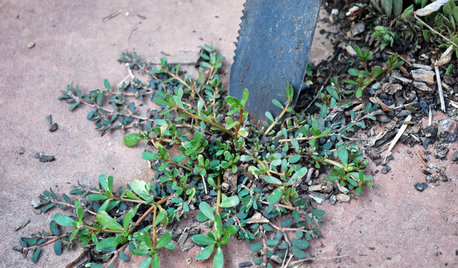
Chickweed, like purslane, will root from any wee bit of plant let on the soil so good cleanup is necessary when pulling these plants. In my garden chickweed as well as purslane succumb to covering with mulches and do not grow until the mulch is fairly well digested by the soil bacteria. These only frow where soil is left exposed to the ravages of the sun, wind, and rain, unmulched soils (or soils with too little mulch).
What worked for me is to cover the area where the weeds are growing with plenty of High calcium lime and cover with thick layer of straw. Changing the PH of the soil from acid soil to 6.3 with agricultural lime (not dolomite lime) and mulching it with straw will take care off many weeds. There is a website (I will post it later) about weeds and what they tell.
Calcitic lime and dolomitic lime are both agricultural limes and which you use depends on what is lacking in your sloil and only a soil test will tell you that. One never, ever that too few people practice is to have your soil tested before adding any soil amendments other than compost or other organic matter. Doing so can create more problems as well as waste your money, time, and energy by adding unneeded "stuff" to your soil, which will also contribute to the pollution of our planet.
Different regulations in different states. Some states reserve the term Agricultural lime to be used only for Hi calcium lime. In some states agricultural lime means Hi calcium lime and dolamitic lime.
By law the label on the bag mentions the percentages of ingredients. My soil is fully tested including trace minerals. The method used is solvent extraction method, which takes in to consideration the available minerals and NPK.Necessary amendments were added. It took about 3 years to become normal.
Still there are few small patches due to improper spreading of the amendments. The calcium Mg ratio is balanced 7 to 1. The potassium to Phosphorous (available) ratio is also fully balanced. (2 to 1) The biggest culprits are excess of K, low calcium and organic matter that is decomposing improperly. There is enough of information available about the weed identification and the type of soil they prefer.
Experience and observation also help. It is possible to come closely but not with 100% accuracy to tell about the soil conditions by looking at the plants and the weeds that are growing.



aka_peggy
Kimmsr
Related Professionals
Richmond Landscape Architects & Landscape Designers · Zanesville Landscape Architects & Landscape Designers · Rome Landscape Contractors · Bowling Green Landscape Contractors · Kansas City Landscape Contractors · Clarksdale Landscape Contractors · Texarkana Landscape Contractors · Syracuse Landscape Contractors · Rome Architects & Building Designers · Indianapolis Architects & Building Designers · Charlotte Architects & Building Designers · Spartanburg Architects & Building Designers · Virginia Beach Architects & Building Designers · Hackettstown Architects & Building Designers · Newport Architects & Building Designerseswar
Kimmsr
eswar
zorba_the_greek