Software
Houzz Logo Print
loribee2

Yet another blight question...

15 years ago
I know you get a trillion blight questions on this forum, because I've searched and read them....only to end up even more confused.

I've read we don't get blight in the Bay Area. I've read Daconil won't help once you get it. It seems if you have a plant with blight, the only recommendation is to pull and bag it....but others say don't. My head is spinning.

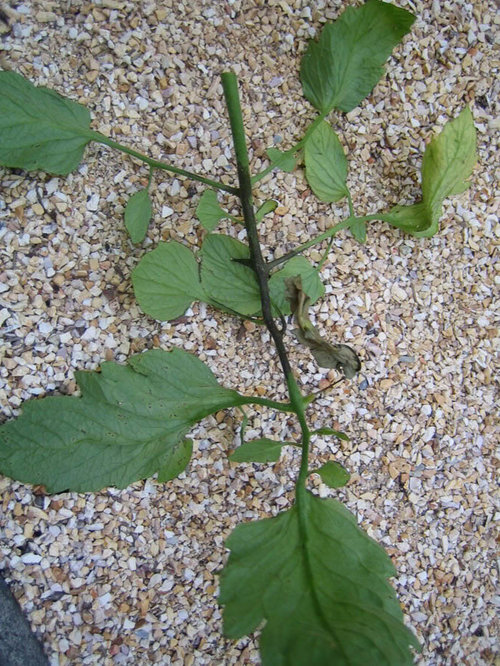
Would you all agree this is early blight?

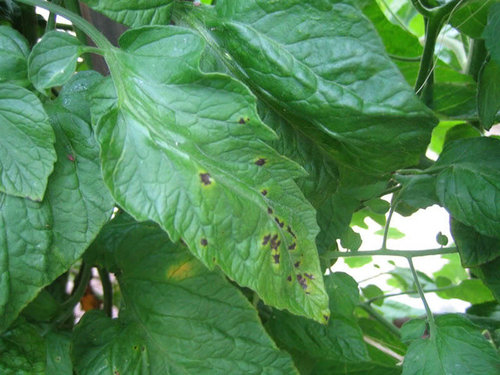
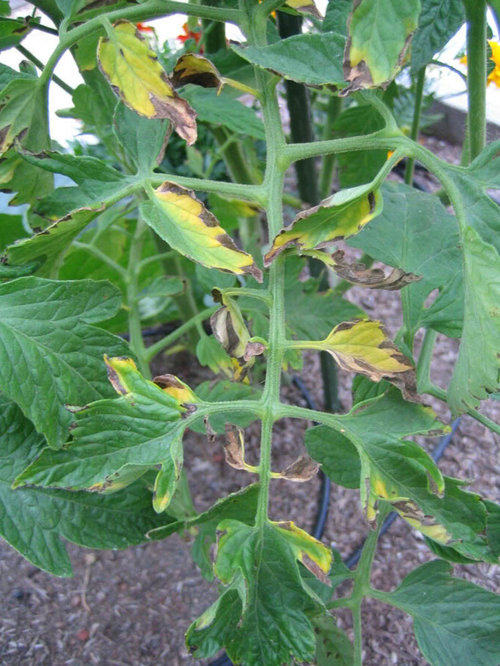
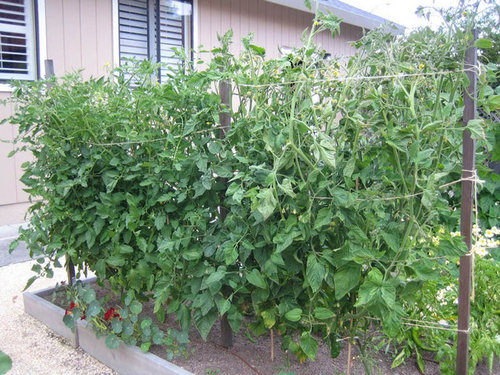
This is the general condition of my tomato plants which are just starting to form small tomatoes. I've got another 90 days to my growing season and would like these plants to make it if possible:

Obviously, I don't want to pull and bag them. I've cut off all the leaves that appear infected. Do you think spraying will prevent it from spreading further? And if so, spray with what? I read so many recommendations for so many products, I'm not sure what side is up!

Thanks in advance for your help!

Comments (8)

  • 15 years ago

    It looks like blight, and I'd do absolutely nothing about it. You can spray daconil if you want, but your weather conditions (dry weather, low humidity) will keep it in check. That vigorous, healthy plant will outgrow the damage just fine.

    Look at the big picture -- It's vigorous, green, blooming, etc. It would be a crime to pull that plant. :)

  • 15 years ago

    Lunita, thanks so much for the response. We have had some wet weather later in the season than we're used to, and I've been haphazard about getting the plants wet when I fertilize and spray down aphids...because blight isn't a typical problem for me. I guess I need to be more careful afterall!

  • 15 years ago

    I agree that your plants look healthy, and I wouldn't pull them. If it is early blight, it is mild so far. I also have had similar problems last year and this, and got several differing diagnoses and recommendations.

    This year, for the first time, I had aphids and white flies on the plants that showed the most disease. Don't know if the bugs brought the disease or vice versa. I found that neem oil spray killed the bugs and seems to have slowed down or stopped the disease as well. It took three sprayings over three weeks to begin to show results. Good luck.

  • 15 years ago

    Hey Loribee... I agree whole heartedly NOT to pull these plants. They look great and will continue to grow and produce. I have sought much the same kind of advice in the past, with plants that looked like yours. Many people gave me sound advice about adjusting my expectations about having perfect plants/fruit. It can be very frustrating when you have gorgeous plants that suddenly start developing signs of disease and imperfections. The reality is that all tomato plants get stuff. There are no perfect plants. My plants last year looked like crap and I ended up with one of my best crops ever. I just hated looking at the plants that looked so troubled. I did spray this year with daconil at the first signs of blight and have kept up with a light weekly spray. So far it has not spread beyond the lower leaves. Make sure if you do decide to spray that you dilute it properly following the instructions on the label, otherwise you can severly damage your plants. But don't give up on them. They are in good shape and producing and will continue to.
    Good luck,
    Don

  • 15 years ago

    Blight has been one of my issues.

    Can plants recover from it?

    Its bacterial, so it can be sprayed to treat it?

    Doesn't it transmit to the other plants?

  • 15 years ago

    @Ohiofem, thanks much for the advice. I get a rainbow of aphids in my garden, green ones on zucchini, gray ones on my brassicas and red ones on my tomatoes. All of them come with these tiny little white bugs. I've tried neem in the past, but what really works best for me is to hose them off the plants with water. Unfortunately, that's probably contributed to my blight situation on the tomatoes, so I'll have to go back to neem I suppose.

    And Don, thanks but....I want perfect plants!!! LOL Seriously, I do agree that's sound advice. And I need to remind myself that's why I put my garden on the SIDE of the house, instead of as the focal point out back. But it's comforting to know that I'll most likely not lose all my tomato prospects this year. That was my biggest fear, and I appreciate your reassurance!

  • 15 years ago

    I'm hoping to clear up some confusion here. There are TWO types of blight, Early and Late.(I wish the names were completely different so there wouldn't be so much confusion about them.) The must be treated very differently.

    Late blight is the one you read about that the plants must be bagged and pulled. Late blight will spread fast and ruin a garden very fast. Late blight looks moldy and they are black lesions. It is not good! Everything dies quickly. Late blight occurs when there is way too much moisture and it is cool out. so in a hot climate you normally would not see late blight until late in the year hence the name. But it can occur at any time like it did in the north east two years ago because summer was unusually cool and rainy.

    Early blight causes oyster shell/bulls eye/concentric ring looking spots on the leaves, and they develop a yellow halo. The whole leaves eventually turn completely yellow and die. Vigorous plants can keep on going with it, but if conditions are very good for Early blight to be happy even vigorous plants will have trouble. Warm humid/wet conditions are what makes Early Blight take hold. There are fungicides like daconil and copper that help control it.
    What you have looks like neither of those. It could be Septoria which is another fungal problem like Early blight. It causes small dark spots that develop yellow around them like you have in your close up photo of the leaf. It is also a warm humid/wet weather problem. Spraying with fungicides also works for Septoria.
    Remy

    Here is a link that might be useful: Septoria

  • 15 years ago

    Remy, thank you very much for the information and advice. It sounds like roughly the treatment is the same be it early blight or septoria (I'm presuming that's a bacterial fungus?). I think I'll watch the watering, start spraying and cross my fingers. Much appreciate the input!

Sponsored
Kuhns Contracting, Inc.
Average rating: 5 out of 5 stars26 Reviews
Central Ohio's Trusted Home Remodeler Specializing in Kitchens & Baths