Software
Houzz Logo Print
socal23

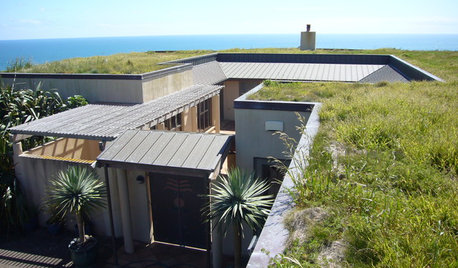
Green roofs, bioremediation

20 years ago

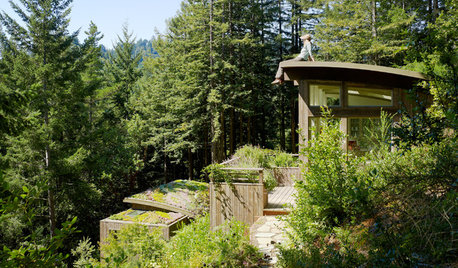
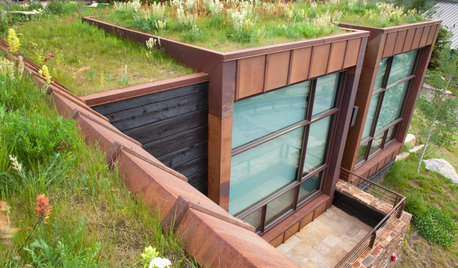
I was wondering if anyone knew of some resouces addressing either of the two above topics. Green roof information that was directly relevant to Southern or Central California would be beneficial. As far as bioremediation, treatment of raw sewage is of particular interest.

I'm searching google and have found several interesting articles, but the more sources the better the project.

You can reply either on forum or send me an e-mail:

Ryan Gyurkovitz

rgyurkov@calpoly.edu

Comments (10)

  • 20 years ago

    No longer required

  • 20 years ago

    Why? The response to your request might have wider interest.

  • 20 years ago

    I may be interested. DH and I would like to build a home in Arizona and are looking at Straw Bale method with mortar for the construction. Might keep the deer away :)

  • 20 years ago

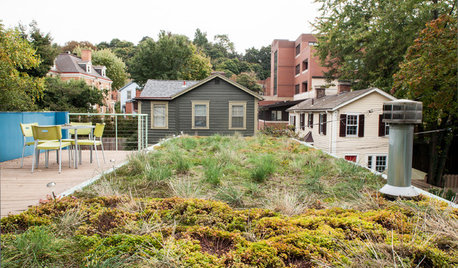
    I attended a stormwater seminar a few months back that covered a little bit on green roofs. In general, green roofs ar usually flat, or fairly flat and covered with soil and plants, usually turf grass. The roof usually has a rubber liner under the soil. The green roofs are big in Europe. I'll try to dig up more info.
    As for the bioremediation of raw sewage, that is how conventional sewage treatment works. I can explain more later, but it is late and I have to work tomorrow.

    Ziggy

  • 20 years ago

    Ziggy,

    I actually finished my research on green roofs. Such a short paper (I should have been more clear on the second; I had artificial wetlands in mind:

    Throughout the United States, industry and municipal planners are developing artificial wetlands to purify water. Paper mills and mining companies construct wetlands to clean industrial waste from waters before they are returned to the watershed. Similarly, residential planners are building wetlands to filter sewage. The town of Arcata, California, constructed a 96-acre artificial wetland to purify waste after research revealed that this system was far more efficient and less expensive than a traditional sewage-treatment plant (McCormick, pp.47-48). In fact, it is estimated that "one hectare (2.5 acres) of tidal wetland can do the job of US $123,000 worth of state of the art waste-water treatment," (Bellamy, in Dugan p. 8). Furthermore, wetlands can be constructed to treat landfill leacheate, agricultural effluent, and to curb the effects of flooding.

    The rest of the piece is here.

    Ryan

  • 20 years ago

    Ryan, when we visited Missouri on our Oct. vacation, we birded the floodplain "wetlands" used to remediate effluent from Columbia, MO sewage. Very interesting process.

  • 20 years ago

    There is a development being proposed here in Camarillo that would use an artificial wetland to control storm water runoff. This looks like the next big thing, and I'm actually considering a second major (soil science) with a minor in land rehabilitation (many pardons to info-terror, I'm an anarcho-capitalist who believes that most environmental problems have free-market solutions).

    Ryan

  • 20 years ago

    Ryan,
    I am also interested in wetlands (all aspects), but I'm mostly stuck with stormwater management and erosion & sediment plans for the moment.
    I've been around a few constructed wetlands for wastewater treatment, but most of the constructed wetlands I've seen in PA are for acid mine drainage.
    I'm not sure what you mean by wetlands for controlling stormwater runoff. Basins or ponds are constructed many different ways and have slightly different names depending on what they are designed to do. The old style detention designs just hold back the flow to reduce the peak flow rate. Retention designs hold back some of the volume and allow it to infiltrate into the ground. Vegetated filter strips are sometimes added to designs also. Without going into more details, there are three basic considerations in stormwater design: peak flow rate, volume reduction/groundwater recharge, and water quality. Which one or combination is the artificial wetland mentioned supposed to address (it should do all three to some extent), and what differentiates it from conventional ponds/basins used to manage stormwater (which are all sort of constructed wetlands)? I'm intrigued since Cali is usually ahead of the East Coast on environmental things.

    Thanks,
    Ziggy

  • 20 years ago

    Ziggy,

    The statement wasn't entirely accurate. The retention basin will become a wetland by default because the water table is very high in the area.

    Ryan

  • 20 years ago

    We reconstruct wetlands alot for remediation and stormwater quality considerations.

    In a nutshell:

    The difference between a constructed wetland and the conventional detention basin are several factors. Some conventional detention basins can become wetlands.... but generally the conv. are designed to be either dry bottom or wet bottom. A wetland is designed to have both wet and dry areas with varying water depths and fluctuating water levels.

    A wetland design incorporates the water table, the soil conditions and the plantings. A conventional detention basin strictly looks at release rates and volumes and does not typically incorporate water table, soils and plantings into the design.

Sponsored