Software
Houzz Logo Print
cheri127_gw

Wall ovens and ventilation

18 years ago

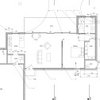
I was going to install my wall oven on the opposite side of the room from my cooktop. But then I started to worry about needing to ventilate during broiling. Now I'm second guessing my original decision and think I should put it under the cooktop near the hood. I've only ever had a range so I don't know if it matters. Can anyone advise me on the this?

Comments (8)

  • 18 years ago

    Don't wall ovens usually vent out the front (top or bottom, depending on brand)? If that's the case I don't think your cooktop's vent would be very useful so put your oven where you want it...

    On that topic, if it's true that wall ovens vent out the front, how are they to stand in front of when they're mounted under counter?

    Maybe I'm wrong about where they vent......

    Anyone else?

  • 18 years ago

    Some wall ovens may only vent the heated air around the unit, and not the interior air, but I am unclear about this.

    In any case, when the oven door is opened, there will be interior hot air and odor and moisture and probably grease released. In commercial settings, an "eyebrow" vent hood is used over the oven that protrudes out over the door opening.

    I intend to reuse a register in my kitchen ceiling connected to a separate exhaust fan to collect as much of this rising heated air as practical without using an eyebrow unit. In a plan view, this register is just in front of the oven doors.

    kas

  • 18 years ago

    Our wall ovens will be on an outside wall. Is there any way to take advantage of that and not ahve them vent out the front?

  • 18 years ago

    I don't think I was clear in my original post. I'm not concerned about how the oven itself ventilates, but about getting rid of odors while cooking stews, fish etc in the oven. If I keep the wall oven in it's proposed place, near the dining room, I think the smells may permeate the house, whereas, if it's under the cooktop, the hood might capture the odors before they leave the kitchen.(?) I hate it when the house smells like onions/garlic for 2-3 days.

    Now, if I could just convince myself to buy the Diva range, this would be moot...

    hollylh: I don't think there's anyway to vent your oven out the back wall.

  • 18 years ago

    There is no need to, and I do not believe there is now any way to vent electric wall ovens, I understand that a few manufacturers are bringing back gas wall ovens 30 and 36 inch wide singles and doubles, they may be ventable

  • 18 years ago

    cheri127:

    Your goal is difficult to achieve without some sacrifice. Either a lot of air has to be moved in a short time (large ventilation system), or a large hood has to be used in close proximity to the oven (space, cost and aesthetic penalty), or you have to live with the delay of several house air replacements at whatever ventilation rate you can maintain.

    If you had a make-up air system dumping tempered make-up air into the living room such that it passed by the oven on the way to the cooktop ventilation hood, the odors would be reduced. Or, open the windows in remote parts of the house and run the kitchen ventilation at a high value while cooking, or at least when opening the oven door if the oven is a sealed type.

    Odors, like the fine particles one can see viewing tobacco smoke, diffuse through the air at an amazing speed, so the air flow rate (cfm) has to be high enough that the air velocity (feet/min) counteracts the diffusion of the odors. Else, one will be able to smell them until there is sufficient air exchange with fresh air.

    For example, assume odors have diffused equally into all parts of a house. Let the house have an air volume of, say, 30,000 cubic feet (floor space times ceiling height). Assume a kitchen ventilation hood with an actual full power flow of 1000 cfm. Then one full house air exchange occurs in 30 minutes. But this flow is only diluting the house air; the new air doesn't perfectly replace existing air. Hence, the odor only drops exponentially. Depending on the odor level, one might have to exhaust the house air 6 or more times, requiring 3 or more hours of ventilation, and requiring heating or cooling many of pounds of air.

    This is why energy costs are a much higher percentage of commercial kitchen operating costs than the dim lighting in the customer area of a restaurant might suggest. It is also why early odor capture is more efficient than later air replacement.

    kas

  • 18 years ago

    Oh boy!!! This is why I use the slow-cooker in the detached garage. Maybe I should just put the oven out there as well. I guess I could do all of my braising on the cooktop. Thanks for the explanation, Kas.

  • 18 years ago

    Kas, that is SO helpful. Thank you!!

    This was the subject of a much earlier discussion a few years ago, so it's probably fallen away entirely. Someone posted they remember that older model wall ovens did actually have outside venting requirements and said they were surprised it wasn't more of an issue for today's wall ovens.