Software
Houzz Logo Print
rockmanor

Coating over brick?

18 years ago

We've had a problem with wind-driven rain in a challenging location. While the window deficiencies are being addressed, several people have raised the issue of rather large openings between the brick and mortar contributing to the problem. The builder strongly disputes this, but dh is inclined to think there's something to it.

Years ago, we bought an older house and immediately hired a brick mason to tuck point the brick. It was pretty expensive and he didn't do a terrific job. I hate to think of what it might cost to do the same here, and local trades' concern for quality work has not improved.

Mortar wash over brick is a popular look around here, and we're wondering if there is a product that gives the look of mortar wash but provides an excellent moisture barrier. It will have to pass the developer's ARC board, so the more it looks like either mortar wash or real stucco the better. It must have a matte finish, no sheen whatsoever. Any suggestions? Thanks.

Comments (8)

  • 18 years ago

    Check out the Thorocoat® system. We looked into using it, but did a mortar wash instead.

    Here is a link that might be useful: Thorocoat®

  • 18 years ago

    Allison, thank you very much. Thorocoat looks ideal. I like the fact that it not only repels wind driven rain but also breathes to permit moisture vapor to escape.

    When you were considering it, did you see any sample boards of the product and its different application styles?

    Also, if you don't mind, would you please share why you chose to go with the mortar wash? If we weren't subject to high winds and wind driven rain, I'd be happy with the look of the mortar wash. I'm just not sure it's meant to be a weather barrier. Thanks!

  • 18 years ago

    You're welcome. I've seen it on local houses and commercial buildings. Looks great, even after several years. Didn't see any different "styles."

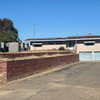
    We were going with one of the basic colors, but it had a greenish tint in the sun. No time to develop a custom color and our brickmason said they could do/had done mortar washes. I did not want to end up with a swirly house, so I headed to two they had done previously. It was the look I wanted. I'm in central Alabama, so not cold very long. We do have winds pushing rain to the house on the backside (live in a valley on a lake) and it's held up well the three years we've been here. I selected a tumbled brick and I like the way it shows through the wash. Not the best picture of house, but shows the mortar wash right after it dried.

    Good luck with your project. Allison

    Here is a link that might be useful:

  • 18 years ago

    Thorocoat will not necessarily look like a mortar wash or "bagged" finish (unless you intended to paint the bagged finish), nor will it seal poorly filled mortar joints. Thorocoat is a somewhat vapor permeable acrylic paint that requires a primer to be successful and will not bridge gaps, cracks, or voids in mortar joints.

    For a water resistant wall you must first repoint the brickwork and then you can add a surface finish if you want to change the appearance or increase the water resistance.

    The best brick joint for weather resistance is flush with the surface, slightly concave, and hard steel tooled.

    The worst case is if the Thoroseal reduces the vapor transfer through the brick but excessive water can still get into the cavity. This could cause the paint to peel. I would first try a sample area and hose it down often.

    Here is a link that might be useful: bagging spec

  • 18 years ago

    I'm confused. Here's a snip from BASF's site: "It waterproofs, protects, and decorates building exteriors while allowing them to breathe. Thorocoat® produces a tough, outer film that maintains its aesthetic and performance properties over time. Thorocoat® is available in smooth, fine, and coarse textures..."

    When I read that, particularly about the coarse texture, I did not envision a paint product. It sounded like just the thing to correct our problem, which is hundreds, if not thousands, of gaps between the brick and mortar. Is there a coating system that can be applied over poorly installed brick that will fill the voids, waterproof (& still let it breathe) and provide a look similar to mortar wash?

    Mightyanvil, I agree with you about the best type of brick joint. When we custom built, we had the masons do just that (after much arguing with both the builder and the masons, because it's not the style here.) However, the home we're now in is not that house. It's a builder's spec that we bought in spite of its flaws because it met other critical needs. We've had the windows recaulked six times in the last year - there are still gaps. I hate to think of how hard it will be to find a brick mason to repoint the brick and do the job right the first time.

  • 18 years ago

    A "Water-based, high-build, 100% acrylic waterproof coating" is paint. Acrylics are thin and the coarse textured version must be sprayed on in two coats to build enough thickness to hide imperfections. If you read all of the product sheets you will find that Thorocoat is not intended for bridging gaps or cracks. BASF recommends that cracks wider than 1/32" be repaired with BSAF Knife Grade or Brush Grade patching compound and that cracks wider than 1/4" be filled with an appropriate BASF sealant.

    BASF or others probably make something that will work, I just don't know what it is. Perhaps one of their elastomeric coatings like Silflex would work. I've been dealing with these kinds of issues for 40 years and would have to call a manufacturer to resolve this issue. Don't try to do it yourself by searching the internet.

    Here is a link that might be useful: elastomeric coatings

  • 18 years ago

    Okay, I think I understand it better now. Thanks. I wish I could rely on the guy who built the house, but he keeps insisting that holes big enough to put a large, phillips head screwdriver through are no problem.

  • 18 years ago

    If the wall was constructed properly gaps in the brickwork should not be a problem unless you live in a hurricane zone.

    Water should be mostly absorbed by the brick and whatever isn't should run down the back of the brick and exit at the weeps. Water intrusion problems are most likely to be the result of improperly installed penetration flashing, weeps, brick ties and weather/air barrier.

    Excessive water in the cavity usually shows up as efflorescence on the face of the brick. You can't inspect the weather barrier but look closely at the weeps.