Software
Houzz Logo Print
hoosierdoc_gw

cold air coming through electrical outlets?

17 years ago

We just built a new home and I'm noticing a cold draft coming in through the electrical outlets. Is this typical? We did geothermal and I was rather particular about asking for good insulation, windows, etc... I've never noticed this in a home.

It's only on the west facing exterior wall outlets.

Comments (20)

  • 17 years ago

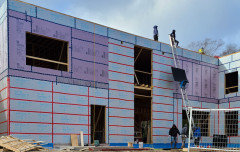
    The air barrier was probably not sealed at all vertical and horizontal joints, penetrations and the sill plate ... pretty typical of modern home construction.

  • 17 years ago

    It could also be coming from holes in the top plates or the sill plates, (if on a stemwall or basement), where they ran wiring or other mechanicals that weren't sealed with "spray in the can" foam. Out here that is typically taken care of by the insulators and is required, but it's always good to double check after they are done. It's something the inspector doesn't always look close at in our area, but should be.

  • 17 years ago

    So what should I do about this? Is there anything to be done? Maybe a friendly call to the builder to complain? It was a $500k custom build.

  • 17 years ago

    Would anything be harmed by opening those up and squirting some of that super sticky expando insulation gunk around the outlet boxes?

  • 17 years ago

    you can spray foam aroudn teh OUTSIDE of teh boxes, but not in them. go to any home inrovement store and in teh aisle with teh door/windows weatherstripping they will have some foam gaskets that go between teh faceplate and the switch/outlet. this will be teh easiest way to fix it.

  • 17 years ago

    You can also purchase pre-cut foam gaskets that sandwich bteween the plates and the box. For light switches where you have multiples, you can either run singles side by side or get some foam gasket material and cut your own.

    You can also caulk around the box, but be sure the caulking has a compatiblity rating for electrical. I would still use the foam gaskets even if you foam or cualk around the boxes because you still get infiltration from where the wiring protrudes into the boxes.

  • 17 years ago

    My husband who is an electrician says that he uses different boxes for the exterior walls and interior walls of a room. You may want to let your contractor know that so he can watch that for his next build if he uses the same electrician all of the time.

  • 17 years ago

    We had wet blown cellulose installed. It makes for a very high level of air-sealing which is especially important should some of the exterior sealing details be missed. Of all the inspection phases it is unfortunate the exterior details are not more closely scrutinized.

  • 17 years ago

    You can also put child safety plugs in unused receptacles.

  • 16 years ago

    I had this in my last house. It was 2x4 exterior walls with fiberglass insulation. Since a 2x4 is only 3.5 inches deep and the electrical box is about 3" deep, that left .5" of fiberglass insulation between the back of the box and the great outdoors. In one place we had an interior and an exterion outlet box in the same stud bay. One time in really cold weather (syracuse, NY) I had ice on the face plate of that outlet. I tried all of the suggestions mentioned earlier and eventually solved the problem ... by moving. New house has 2x6 walls with spray foam insulation.

  • 16 years ago

    Even if the insulators took the time to put the miniscule amount of fiberglass batts behind the box, it still is a problem. Fiberglass batts allow air movement/filtration throughout the product. The solution is to stop the air infiltration. You could have 2x12 walls with fiberglass batts, you will still get air infiltration if it isn't stopped at the source.

  • PRO
    9 years ago

    A great way to seal around outlet boxes is to install Box Shells around them prior to installing the sheetrock or finished wall material. We have been using them with great success at my architecture company. Check them out at www.JBOXSHELL.com They are really fast and seal perfectly.

  • 9 years ago

    I plan to use something like those on my new build.

  • 7 years ago
    last modified: 7 years ago

    We just built a new house. Our walls are 11 1/4" thick. This is how our wall construction was done from the outside looking in: Vinyl siding, 1/2" aspenite, 2x10 studs (which is actually 9/14"), 1/2" blueboard, 1/2" aspenite and 1/2" sheetrock. It is framed 24" on center and the cavity of the studs were sprayed with 7-8 inches of expanding syrofoam. We also put foam insulators between the electrical box and the faceplate. We still have cold air coming through the plug holes. I'm not sure how to fix the problem. Does anyone have any ideas?

  • 7 years ago

    That's pretty wild. What climate do u live in? Around here u can rent an infrared camera at home depot and see where the air is coming from. Maybe from the ceiling above if it's a one story house. Maybe there is a way for air to get in through transition between wall and ceiling up in the attic. Also, is the house depressurived and sucking air in from outside?

  • PRO
    7 years ago
    last modified: 7 years ago

    ...cold air coming through the electrical outlets...

    What you've discovered is that it's always a tug-of-war during construction to see who gets out first on the construction site--the HVAC subcontractor or the electrical subcontractor...

    Sounds like the electrical sub won out here and was first on site...

    Have you tried turning the electrical wall switches to see if you can get cooling or heating...?

    Better check your thermostat to see if it turns on the outside lights...

  • 3 days ago

    Hi hoosierdoc , I am having the same issue on my brand new custom build home. Please share your experience how this electrical outlet draft issue solved by the builder or yourself. I really appreciate your quick reply. Thanks in advance.

  • 3 days ago

    Andy this is a 17 year old thread but here are my thoughts:

    1. You could attempt to seal the pathway(s) that the air is taking to get from outside to inside with caulk and a can of spray foam.

    2. You could buy those little foam gaskets that are made to go over the outlet and under the cover plate to try to keep the cold out.

    3. Depending on how prominent the location of the outlet is and whether you know someone good at sheetrock repair ...you could remove enough sheetrock to access the area around/behind the outlet and insulate better. If you went that route you might use some rigid foam and spray foam to encapsulate the back side of the box so cold and air can't migrate through to the inside.


    That last option is the best of the bunch but it requires finding someone good at sheetrock repair. Good luck.

  • 3 days ago
    last modified: 22 hours ago

    Jeeze, I completely forgot the potential problem.

    But, hopefully, this approach reduces airflow: exterior taped and interlocked 1.5" R-6 XPS on top of OSB, interior rockwool. Brick paper on top of the XPS.


    Also, note sealed areas around outlets and switchplates and vapour barrier caulked/taped to framing.