Software
Houzz Logo Print
oldyman

Wall Paneling Installation

19 years ago

I have a room in my new (old) home that I'm putting paneling in. Lathe & plaster walls now, but we found a paneling that we really love. Never installed paneling before, but what I need is info on how to secure it to the walls. Any thoughts will be greatly appreciated ...

Comments (7)

  • 19 years ago

    I'd go with 1x2 or 1x3 "sleepers" nailed horizontally across the walls right on top of the plaster. Locate the studs and nail right through the plaster into the studs. You may end up wanting to use slightly longer than a common 2 1/2" nail, depending on the overall thickness of the plaster and lath.

    You're going to lose about an inch on each dimension of the room, but the benefit of leaving the plaster in place is that you retain the sound-deadening and fire-resistant qualities inherent in the plaster. The biggest problem may be the trim around windows and doors where you'll have to add jamb extensions to bring the jambs out the extra thickness of the walls.

    I you want a top quality finished job, pay attention the flatness of the nailing surface created by the horizontal sleepers. Use a long (4-8') straighedge to check for flatness, both horizontally and vertically as you install the sleepers. Use shims as necessary to keep a flat nailing surface in all directions. This will insure a perfectly flat wall when you install the paneling and will allow trim to fit tighter for a more pleasing appearance.

    As far as attaching the paneling to the sleepers, that will depend on the type of paneling. If it's 4x8 sheets or hardboard or plywood, probably construction adhesive would be the best bet. If it's actual wood board T&G paneling, nails into the tongue of each board would be appropriate.

  • 19 years ago

    Wow, Brian, that was just an excellent explanation -- so clear even I could understand it. That's a first because in our family, I'm the one who dreams up the projects, but somebody else always has to figure out how to execute them!

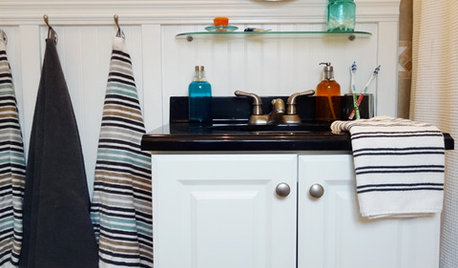
    If we buy the house I just fell in love with, I'm pretty sure we'll put beadboard over part of the plaster walls in one of the bathrooms. (Not the type that comes in sheets. We'd use the 'real' kind in individual slats.) Would we follow the exact method you've outlined above for paneling?

    Thanks for your help.

  • 19 years ago

    Yeah, thanks. I think that explanation just rolled off my keyboard because I've had so much experience with less than flat walls and the detailing challenges they offer.

    If you're covering less than the entire wall surface, such as a beadboard wainscotting, I think you'd do the same thing, though you'd need some kind of trim to cover the transition from the plaster to the slightly protruding beadboard. Plus you'd have a detailing challenge at any window or door openings since you'd have essentially two wall thicknesses - one about 1 to 1 1/2" thicker than the other.

    You know I was thinking after I posted that message the other day that I had ASSUMED that the walls weren't flat. I have seen almost perfectly flat plaster walls, in which case you could probably attach paneling directly with construction adhesive, saving work and mostly eliminating the jamb extension issue. Probably wouldn't work with real board paneling though, since that stuff is stiffer and generally must be nailed to something.

  • 19 years ago

    Thanks again, Brian, for all the detailed info. It's extremely helpful. Very kind of you to take the time to share your expertise!

  • 19 years ago

    Thanks for the info.
    About the wall "sleepers", how close together should they be ? Could I use thinner strips of wood to space out and even up my walls ? The walls are uneven but not too bad.

  • 19 years ago

    NEVER use construction adhesive in an old house. It makes it almost impossible for you or someone else to remove what you have done without a lot of destruction.

    When styles change or you grow tired of it or you need to do some electrical work or plumbing or insulation or whatever, behind that wall, you may want to remove the finish without destroying it and the wall behind it. Nails and screws allow this.

    Consider de-construction any time you do construction.

  • 19 years ago

    I hear what you're saying, sharon sd -- I know I've cursed the stuff on several occasions when trying to demolish something. I have also, however, cursed people who nail things to death, or use oversized nails on something I am taking apart, or, (perhaps worst of all) used screws that have since had their heads stripped or are now inaccessible.

    I think the key is to use judgement and discretion in your fastening methods, giving consideration to the fact that whatever you are doing may be modified at some time down the road. I don't think we've reached the point where buildings are "throwaway" articles that are built to one person's specs, then bulldozed when needs change, so planning for the full life cycle of the building is certainly a laudible objective.

    That said, I think I'll still stick with my suggestion for adhering paneling to old plaster with adhesive if it saves work and the expense of jamb extensions. If that plaster under the paneling is ever going to be revived, it will need at least a new skim coat anyway, so damage caused by the adhesive will not appreciable add to the cost of that (potential, future) renovation.

Sponsored
J.Holderby - Renovations
Average rating: 5 out of 5 stars4 Reviews
Franklin County's Leading General Contractors - 2X Best of Houzz!