Software
Houzz Logo Print
stretchad_gw

Seriously?? Ungrouted tiles around shower causing water leak????

18 years ago

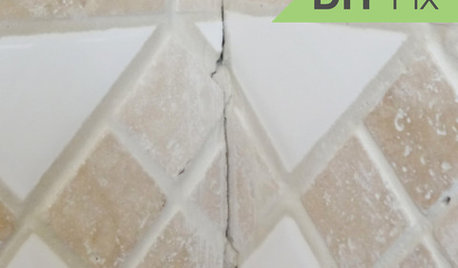
I'm in the process of buying a house. Just had a follow up inspection by a plumber today (I couldn't be there, but my realtor was). She said the plumber claims that the leak is due to the fact that SOME of the tiles in the shower surround have grout that is gone. And therefore, when the shower is run, the water goes behind the tiles, and down into the basement below, which is where we saw the leak.

To me, this soundsd quite odd, because 1) when we had the initial home inspection and discovered the leak, the shower wasn't run all that long (probably 5 mins or less), and 2) even if it was run for a fair amount of time, I STILL don't think that much water would get behind the tiles, down the wall, and through the ceiling in the basement!

Am I crazy? Our inspection contingency expires on the thrid, but I'm thinking about extending it so I can get a second opinion. Thoughts?

Comments (15)

  • 18 years ago

    Yes the morter that the tiles are set in can be pourous. If glued, it is not always spread entirely. Without grout to shed water, it sits in cracks and slowly leaches into walls. The longer this is allowed to happen, the quicker and more water will be allowed to leak.

  • 18 years ago

    i saw Holes on Homes show once where the upstairs tub was leaking into the ceiling. it took alomst 30 minutes after all teh water had drained fromteh tub before it would begin to show the leak on the ceiling below. so even though you saw a leak during inspection, that could just be from them taking a shower/cleaning the shower an hour before you got there.

  • 18 years ago

    This is huge red flag! Water will always get through grout. The sloped shower pan under the tile is supposed to direct the water to the drain. The missing grout is NOT the problem - it is a symptom of a bad shower install. You need to get a reputable tile inspector to look at it. The whole shower might need to be redone.

  • 18 years ago

    davidandkasie - the house is empty and the sellers also claim they never used that particular shower. But your thought backs up my theory that the 30 second run the initial inspector did probably didn't cause the water we saw dripping into the basement ceiling...

  • 18 years ago

    I second aliceinwonderland_id comments.

    Tile and grout are not water PROOF, even when the install has been done correctly. Is is part of the reason WHY the pan under the shower is there.

    If that pan is not catching water leaks, then the issue might be a faulty or just plan old pan that has to be replaced. When this is the case, you have to rip up all the tile on the floor of the shower, replace the pan, and reinstall new tile on the floor.

    This is coming from my experience with my parents house when they had to have the pan replaced when the house was about 20 years old.

  • 18 years ago

    Is this a shower stall or a tub shower? If no one was standing in the shower when it was run then vary little water was on the walls and it is a problem with your base.

    Dan

  • 18 years ago

    When people say shower surround they are usually talking about tub & showers, thus a pan liner doesnt come into play here if my guess is right.

    Note they said grout on wall, not floor.

    Thats why I said yes with out grout it will go in wall and leak.

  • 18 years ago

    Yes, if it's a tub, different story entirely. In that case any significant leak would just about have to be a problem with either the tub drain, or the supply line to the showerhead. In either case a more thorough investigation is warranted. The leak and missing grout may le related or they may not. If grout is missing, however, there is a problem with the installation.

  • 18 years ago

    It is easy to imagine having to replace the walls (if not more), and not just solving the problem by filling with grout.

    If water got behind the tile, it should have found it's way back to the drain, anyway. Since it didn't, it could be that the backerboard wasn't hung over the edge of the pan. Ot it could be that greenboard (drywall with a water-resistant paper.....when intact) was used, and it got damaged by water. (or it could be damaged pan, as also mentioned).

    I just redid a leaking tub/shower, and yes, it leaked almost immediately when water got on the walls, even though to the eye it looked like only a couple spots of grout were missing (I even tried to fill with caulk temporarily, but it hardly did a thing). When I ripped it out I found damaged, saturated greenboard-similar material along the entire lower edge.

  • 18 years ago

    Thinking further, it sounds like a drain leak, since it happens so quickly and the shower isn't normally used.

    Any chance of getting the seller to permit opening up the ceiling? If not, how about getting them to take off a couple grand for anticipated work? After you suggest 3500 or so, they might allow opening the ceiling to peek, since the repair could be much cheaper.

  • 18 years ago

    Believe me, I've had a shower leak due to the tile grouting. It's real easy to test (we did it). You can direct the water into the shower pan directly, or you can do what my wife did and line the walls from about 2' up with plastic and duct tape. It was readily apparent that it was the tiling and not the shower pan or drain.

    Of course the moron builder (thank you Ryland homes) tiled directly over ordinary drywall (not even greenboard which wouldn't have been sufficient either).

    Since the bathroom was avocado green, my wife just took an airchisel to the whole thing and we started over from scratch.

  • 18 years ago

    Wow, ronnatalie, I am surprised that ryland did that! I always thought they were a pretty reputable builder...

  • 18 years ago

    Fairly well built out of the absolute cheapest assed materials on the planet. I could go on and on. They also illegally supported drywall with other drywall.

    At least everything is straight (the rooms are within a 1/16" of being square, a far cry from the Levitt stuff I lived in).

  • 5 years ago
    last modified: 5 years ago

    You should be able to shower with the pan liner in, cement board up(actual cement board), and shower curtain. Build curb, floor mud preslope, install liner(no fasteners), and another 1“ minimum floor mud on top, float curb. Cement board walls, silicon the edges, tape the seams, thinset level, and red guard the curb and walls. There won’t be any leaks at this stage. The tile provides merely aesthetics in the grand scheme of it all. They help shed water but offer very little to the game of waterproofing. It’s an illusion! Red guard is completely unnecessary and I don’t recommend it on every surface. Don’t use it on the bottom 6” or liner height of wall, or the top 3ft of wall, or on the pan floor, and never on drywall. The cement board will be submerged in the pan tile deep so it needs some breathing room. You’re just asking for moisture to accumulate in the wall but wait there’s a moisture barrier behind the cement board. That barrier got screwed up from the durarock install but you siliconed each stud, right? That’s called a hole in the plan. Welcome to the shower install conflict. For the love of grout don’t seal it!


    A 1/16th square. That’s impressive. The line of a dull carpenters pencil. You’d be lucky to buy board that’s within a 1/16”. I’ve worked with all kinds of framing types and they’d throw you off the deck if you were fussing over a 1/16”. Finish guys now that’s a different story. A 1/2“ square per 12ft, 1/4“ plumb average per 8ft, and a 1/16” level per 4ft in all reality is the best workmanship you‘re going to find in any home. Any thing else is an empty promise or a rubber square.