Software
Houzz Logo Print
chulaman

Gunite Crack

17 years ago
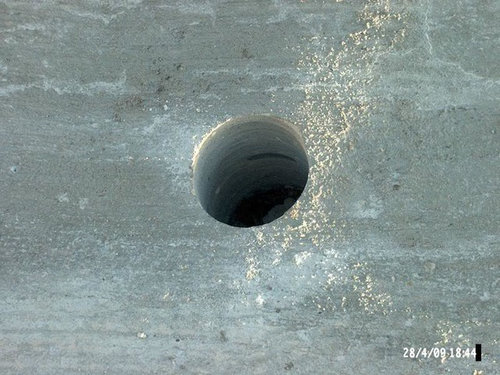
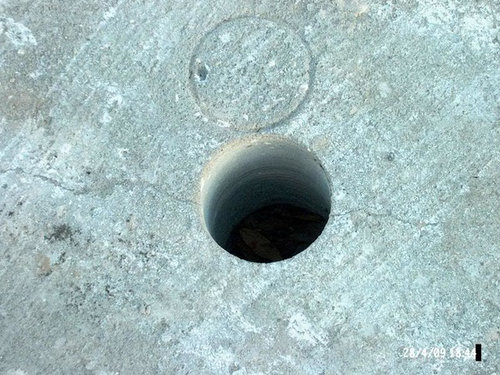
I was all set to start pebble-tec this week but noticed a some cracks in the gunite last week.

The crack runs across the pool about 1/3 of the way from the shallow end and runs from that line partially up one wall and radiates toward the stairs.

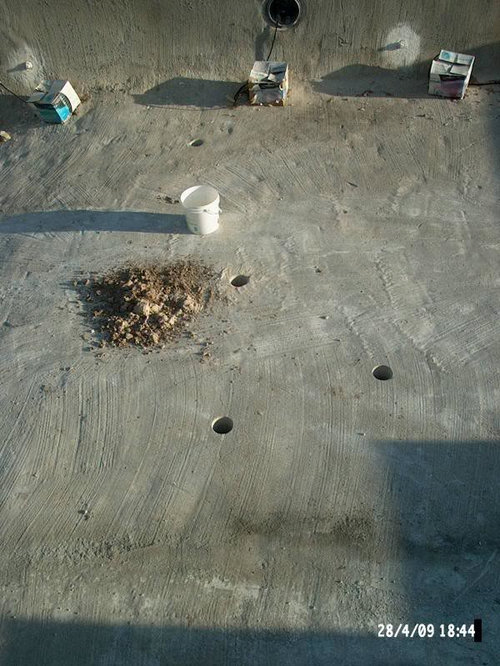
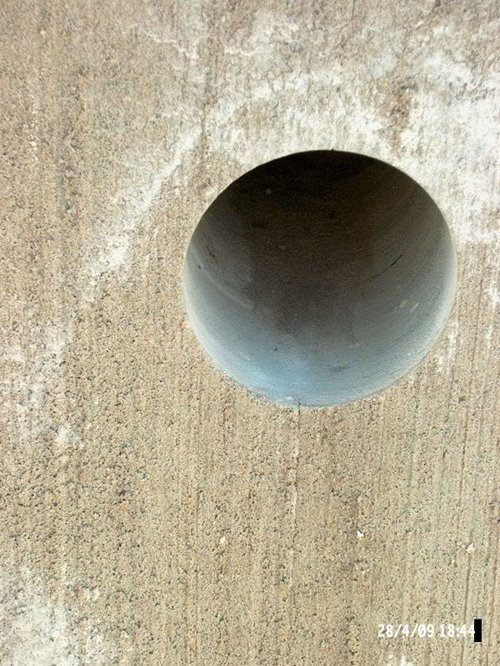
I am an owner-builder but one company did layout, dig, steel, and gunite. They have done about 10 core drills to look at the cracks and check the gunite strength using a crush test. All the results and the final recommendations are not in.

On my own I also had a geotechnical engineer out yesterday to do soil borings through the openings left by the cores. No problematic soil conditions or voids were found.

I am hoping for final options to deal with this situation from the gunite company on Thursday when I am scheduled to have the structural design engineer out to look things over also.

Any thoughts out there?

Any one else experience cracks?

Thanks.

Here are some pictures:

Comments (20)

  • 17 years ago

    chulaman,
    Looks like shrinkage cracks associated with the wet broom finish. Also appears to be a surface crack in the last photo. It's common to see some surface cracking or stretch marks in gunite. Good luck.

  • 17 years ago

    Looks like typical shrinkage cracks. I will be interested to see what the engineers say though. On a different note, do you know what they used to fill around your returns and jets in the shell?

  • 17 years ago

    If you can't stick a sharpened pencil in it it's not a "crack". As golfgeek said, it's just surface shrinkage. Quite common.

  • 17 years ago

    From what I can tell by the pics. that is shrinkage, which is normal, but does need to be prep'ed properly before surfacing. The big holes you put in the pool are as big a problem.

  • 17 years ago

    Hi Chulaman,
    (I know thatÂs not your real name)

    You wondered why I did not get back to you... I was filming two shows for HGTV (see link below). The pool that we did for HGTV that has aired had a large structural crack in the gunite shell that had to be repaired with stitches and epoxy. You can watch the video from the link below and see a REAL gunite crack and the fix. This pool was in Longwood. I know youÂre not too far in Oviedo. A first glance at the photos looks like typical surface shrinkage cracks that are normal. The white stuff thatÂs emphasizing the cracks is calcium bleeding out I have seen this lot here in the Orlando / Central Florida Area.

    After looking at how many core drilled samples were done I am a little more concerned than the previous post since I build pools in the Orlando area where youÂre located. I work with these gunite companies. I am shocked that the gunite company is the ones that did the core drilling. Did they volunteer to do the core drilling after seeing it? ItÂs like pulling teeth sometimes to get them to admit any fault. I think that if they are the ones that did the core drilling and paying for it they may be concerned themselves. Otherwise why did they not just tell you there is no problem and let you get Pebble Tec? I have had similar issues with our wonderful gunite "specialist" and I have had them look at and it has always been minor surface issues like mentioned in the earlier posts the EXCESIVE core drilling worries me. It could be a sign the gunite company is worried! Its easier (and cheaper) for them to fix the problem before you get Pebble Tec.

    Also, did you water the shell twice daily or daily for a week after it was done? It has been a long time since you got gunite. Its been VERY dry here lately when did you first notice the cracks? What gunite company did you use? If you need any other help or advice you can call or email me. Jason@BellaPools.com

    Here is a link that might be useful: Orlando HGTV Pool Show - Pool Makeover with Gunite Crack & Repair

  • 17 years ago

    golfgeek:

    I know it is impossible to see in the pictures, but the crack in the wall does all the way through and a couple of them in the floor goes about 3/4 of the way.

    gregsmy:

    The return fitting were filled in with diamond brite

    mikethepoolguy:

    You say prepped properly...can you be more specific?

    bella-orlando:

    There is one crack across the short dimension of the pool that runs up on wall and two more that radiate toward the shallow end. The 6 initial core drills the gunite company took initially were on the cracks to investigate the material at those locations and gauge the depth of the cracks.

    I asked the gunite company to do crush tests and they wanted a crack free core for that. I also asked for another couple of cores to be taken in the deep end so I could have the geotech check the soils, hence 3 more.

    Yes the gunite company is concerned. It seems to me, they want to do the same as me. Try and determine a cause of the cracks if possible, correct the issue, and finish the pool. I prefer not to identify any players on this forum.

    And yes, I did water the shell extensively after gunite. I first noticed the cracks last week, but then a couple of the subs mentioned they have been there for some time and they thought I knew.

    Thanks for the link. Torque staples have already been suggested as a possible fix, but a potentially excessive was given the crack profiles. The other option mentioned so far is a partial depth saw cut and epoxy. I am still awaiting all of the test results and structural engineers advice but it seems now we are considering filling the pool before pebble just to test things.

    Thanks all and I look forward to your continued advice.

  • 17 years ago

    I would sure hope you would not post the name of the company that is trying to find out what your problem is! I was asking in case you want or need additional help, you can email me.

    I think it sounds like you have enough experts working on this. Whatever the fix is just make sure it lasts as long and is strong as a good solid gunite installation. This is what you paid for. I would rather have the fix be overkill and be save than end up with a patch job on a very expensive pool.

    Please keep us informed of the results of the engineering and core samples.

    I would be interested in seeing comments from other Pb's on this.

  • 17 years ago

    I guess photos can be deceiving. From the pictures you posted I would not have been concerned and would have no reason to suspect that any of the cracks extended beyond the surface. I too would be interested in hearing the results of the compression tests and the repair recommendations you receive. Out of curiosity, what is the thickness of your shell, the basic steel detail (rebar size and spacing), gunite strength spec, and soil type and condition in the excavation? How about a picture of the whole pool with the crack area highlighted?

  • 17 years ago

    Cascade,

    I do not have the actual results of the tests on the cores but none of them showed any problems with the gunite. Soil tests also found no problems.

    Design specs:

    Steel: ASTM 615 grade 40, #3 bars 12" OC each way w/15" lap joints in walls and floors up to 6'. Over 6' use #3 at 6" OC each way in area over 6'. The bond beam had different requirements as did the spillway wall.

    Gunite: 5" thick wall, 6" thick floor; 3,000 psi w/in 28 days. The soil was primarily sandy, not expansive, and with minimal organics. Steeltex backing was used on the walls. There was quite a bit of what they called "overdig" on the side and deep end walls, but none under the floor. Really the overdig was just soft sand earth caving in due to the depth of the excavation as the deep end is designed for 8' of water.

    I measured the depth of all the core drilled areas and all exceeded the thickness requirementsm typically all areas were more like 7". The floor cracks all stopped at the steel, which was 4" below the surface. The wall crack goes all the way through but is a hairline.

    I have a scale drawing of the pool showing the core drills and cracks but have no way to scan that @ home. I will post it Monday.

    As to the repair recommendations. For the moment the gunite company is steering me towards removing gunite where the cracks went through and doing exoxy elsewhere. Today, all the holes were filled, all the cracks were epoxied, I cleaned all the junk out of the pool, put the hyrdostatic relief ports in the MDX drains and filled the pool. We intend to leave it that way a week or so and see what happens and then come up with the final plan of action.

    Thanks again for everyone's advice.

  • 17 years ago

    All the core drill and weep holes in the pool were patched on Friday. After a few false starts due to a roll of 2" tubing bursting from the pressure I got the pool filled to 1/2 way up the tile by noon Saturday with water from the lake.

    There have been no major catastrophes, but by 2PM Sunday, the water has already dropped 8.5".

    I understand that Gunite is not "waterproof", but that is a loss of almost 7,100 gallons which is more than 20% of the volume of the pool. I also know there may be a leak at the drains, the light niches, or some other fitting, but I am concerned.

  • 17 years ago

    I have only ever "flood tested" 1 gunite shell. It held water but I did not necessarily expect it to. There could be a leak at any protrusion through the shell; returns, main drains, light niches etc. Perhaps you can let it leak until it finds it's level, if the leak is at a level higher than your cracks it may stop there.

    Is all your plumbing complete to the mechanical pad? Pad higher than water level? Light conduits run above water level? Overflow pipe installed in auto fill canister? Plugs/hydrostatic valves properly installed in main drains? Spare port in skimmer plugged?

    There are lots of places water could be escaping other than those cracks. BTW, I have seen pools with shell cracks much worse appearing than yours that only lost an inch or so in 24 hours.

  • 17 years ago

    Cascade,

    I understand the leak(s) could be anywhere, and are not definitely related to the cracks, but as all protrusions were shot with the shell or mudded in with diamond brite, it would have been nice not to lose so much water.

    As to your other questions:

    The plumbing is complete to the mechanical pad and the pad is higher than the water level.

    The light conduits do not run above the water level but terminate at the equipment pad above the water level.

    The overfill pipe is installed in the auto fill but it is temporarily terminated above the water level and is dry.

    The hydrostatic valves are properly installed in main drains, and the drains still have the test plugs from the pressure test but you have we wondering now about the secondary drain paths from the MDXs intended for SDXs, which I do not have, as they did not need to be plugged during the pressure tests which may explain things, although they see to actually be capped and are encased in gunite.

    The skimmers are open to the equipment pad, have the equalizer ports connected to the pool, but I can not remember what was done with the drain lines.

    I was not present when the gunite company started filling the pool so I do not know if they looked at the drains or skimmers. I will check both.

    Thank you for your suggestions.

    I have included a diagram of the crack pattern.

  • 17 years ago

    chulaman,
    Most catastophic failures occur shortly after a pool is filled and the true weight of water in the shell is established. You should accomplish this test by filling the shell like you are doing. Empty the pool after 3-4 days and check the shell for cracks.
    While it appears that you have sealed around the piping entering the pool shell, these are probably not the most vulnerable areas to check for leaks. The one photo shows a light niche near the shallow end of the pool. The underside of the niches tend to have voids because material tends to sag and nozzlemen get lazy and don't always shoot up under niches in that location.
    I've plastered pools that have shrinkage cracks more visable than yours. Good luck.

  • 17 years ago

    Golfgeek,

    Thanks. The rep from the gunite company just called and repeated pretty much what Cascade pointed out, i.e., there could be leaks in lots of places. He also pointed out that they were doing what you referenced, i.e., putting the weight of the water in the pool, not seeing if it were watertight. Unfortunately, at the rate the pool is emptying, the full weight was not applied for long.

    They intend to empty it Wednesday, redrill the cores and see if the cracks expended at all, after which they will make final recommendations.

    Thanks.

  • 17 years ago

    Does anyone know how they patch these holes. I was just getting ready for plaster and cleaned out the dry dirt around the main drains and noticed that they must have cut to much material around the drain pipe for the fitting. The shell is 6" thick but when I vacuumed the dirt a section of loose gunite material just vacuumed up leaving an hole (about 3" diameter right next to the pipe). How is this patched. The pool shell looks great everywhere else, not even a surface crack

  • 17 years ago

    hmlinca,
    Most likely a weep hole cut by the gunite contractor. Just hand pack with gunite material or readi-mix. Good luck.

  • 17 years ago

    hey chulaman.... what ever happened???? Hows your pool???? Please update us!

  • 17 years ago

    The cracks in the wall were torque stapled & epoxied. The cracks in the floor were epoxied. The pool had pebble applied the end of May and so far all is well as we have been swimming for 3 weeks. I will post more pictures soon.

  • 9 years ago

    I too have this issue, i know this thread is really old but if you are still around can you tell me the resolution?

  • 9 years ago

    I guess everyone moved on dantran1010...I am in the same boat as you right now...we are looking at epoxy filling the cracks. Hope you were able to get it resolved...