Software
Houzz Logo Print
ghuber_gw

Spot Etching

16 years ago

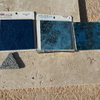
Over the winter, I bought a house with a gunite pool w/ spa. It was built in 2003. I opened it up last week and went through the normal process of cleaning up the water. Now that the water is clear, I've noticed the plaster is worn, but not knowing much about pools I don't know how bad. What do you guys think? Take a look at these pics:

{{!gwi}}
{{!gwi}}
{{!gwi}}

I've concluded that I think my pool is showing obvious signs of spot etching. It seems that there is a lot of debate as to what causes this, but from what I've read many think its caused by an acidic water chemistry. I'm wondering if the plaster experts on here agree with that.

If so, I guess at this point I need to decide what I want to do about it. I see that Jack's Magic makes a product for spot etching -- not sure if it works. I guess the other cheap option I could try is an acid wash, though like the Jack's Magic I doubt that's going to do much.

Ultimately, if I want to rid the pool of this I'm thinking a re-plastering might be necessary. What do you guys think?

Comments (6)

  • 16 years ago

    I think you are right.
    It's toast, 7 years is a decent life for plaster.

  • 16 years ago

    I would recommend the re-plaster and check that vertical crack too. Something pushed against the pool or if there is another on the other side, the pool lost support below and it flexed to create that.

    Scott

  • 16 years ago

    Funny how the life expectancy of a plaster finish declines as pool builders have more and more expensive options. When we bought our house with pool, the owners of the shop doing our pool school said their own pool was 15 or 20 years old with no pitting and they expected it to hit 25 or 30 years without a problem. Now I hear builders saying 10 years is good or even as little as 5 years when they are selling a more expensive product with a 10 year warranty.

    From what I understand, if that is a plaster surface, that etching is caused calcium being leached from the surface into the water. There may be products to help stop it, but the best protection is to have the water properly balanced and that means you have to either learn to test your water for more than pH and chlorine (like alkalinity and calcium hardness) or you have to take it in for testing at least periodically. Doesn't look like your previous owner or their pool service did that.

    Your 7 year old pool looks worse than my 13 year old pool that I am about to replaster (looks like more spots, but not sure how deep they are). I'm not saying that to be critical - you aren't any more responsible for the pitting in your pool than I am for the starting of mine, and I was told that once it starts you can slow it down but not stop it. I'm just saying that plaster can do better if you take care of it by checking all the water chemistry now and then. If your pool is not plaster, all I know about the newer surfaces is that they are "less reactive" so that might mean you water balance has been even worse. I'm not sure that means you need to replaster now (don't know enough to tell you when), but ultimately, yes. That's what we were told about 8 years ago, expecting to get 3-5 years. ;-)

  • 16 years ago

    Plaster was better 20 to 30 years ago. We are not allowed to put Asbestos in it any more. (unless you live near Mexico where you can still get it.)

  • 16 years ago

    Well I guess this news is kinda expected. That is, I need a replaster.

    Here are a couple additional questions:

    1) How long does it take for the spot etching to develop? When I opened the pool last week I found PH, alkalinity and calcium to all be very low. Wondering if the damage happened over the long winter.

    2) Do you *need* to get it replaced asap? How do I know a replacement is necessary rather than a purely cosmetic decision?

    3) Anyone have a ballpark figure as to what it will cost to replaster? My pool is 20,000 gallons and has a spa. I live in NJ.

  • 16 years ago

    My pool is original plaster -- 12-13 years old. My house (20 yrs old) wasn't even built, much less the pool added when asbestos was banned from pool plaster in the 70s. I do think that you can keep plaster much longer than folks are saying if you take some care. And we are not perfect pool keepers -- just trying to do pretty good.

    Ghuber, I do think it is a process that takes time. If everything was low over the winter, I'm sure that didn't help, but the process had probably already started. The cooler weather and water temps probably kept things slowed down over the winter. A I said, mine had started when we were under contract to buy the house and we were told that if we took care of the pool we could probably go 4-5-7 years more. If we didn't watch our chemistry it might be 2-3. Doesn't seem to happen overnight.

    From what I know, it isn't just number of spots, but how rough your plaster is, how thin it is and whether you are getting any flaking, lifting or other problems. If you can't see the gunite anywhere and the plaster is solid, you may be able to get your water balanced and go a few years. If you have chunks out of it or it is thinning, you will be a sooner is better case.

    Pricing is likely to vary by area as well as how they bid the job and what they include. A plastering price may or may not include tile work, toe tile, startup and care after the plaster, and may vary in how they prepare the surface and how much work is involved. Try to get enough info to get apples to apples as well as bottom line. Shape and size of the pool and other factors may come into play, but for my smaller pool (est 13,000 gal) I've heard plain white plaster, no tile starting about $3000 and other surfaces and ways of packaging the work getting up closer to $10,000.

    If you are very industrious and have more time on your hands than most folks I know, you could check out the link below for DIY info. I'm not planning that route. ;-)

    Here is a link that might be useful: DIY plaster