Software
Houzz Logo Print
jasmar_gw

bond beam repair

16 years ago

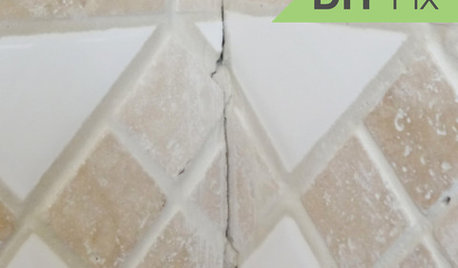
OK, doing some more research before calling in pool professionals to give me some quotes. The cantilevered decking around my pool was poured without any kind of mechanical separation from the bond beam. In one 4-5 foot area the bond beam has cracked. Kind of hard to describe but basically across the middle of the tile line. The crack can be filled in with flexible caulk or better with pool putty but has to be cared for at least once or twice a year due to the expansion of the heavy clay soil in my area. If I have the decking replaced the bond beam will have to be repaired. Currently the crack does not really affect function, rather it is just unsightly, but new decking or coping would require the bond beam to be repaired and eventually when the pool is replastered we plan to get new tile. What is the normal procedure used to repair the top of the bond beam in a gunite pool? Would they just use masonite forms and fill with concrete? Would there need to be some kind of rebar used to bond the repair with the existing bond beam?

Thanks,

Jason

Comments (4)

  • 16 years ago

    If you don't have the deck replaced, the beam cracks will worsen in the pool and/or the deck will also form cracks around the pool.

    I am surprised the beam is cracking. Usually it's the decking around the perimeter that cracks when the separation membrane is omitted.

    I don't know a way to cut an expansion joint around the perimeter of the pool nor do I know how to undercut the deck/beam joint.

    This situation seems to me to be gross negligence on the mason's part. Who ever hired him might be responsible and accountable. That person/company would then have to go to the mason for the costs of the beam repairs and new decking and anything related such as tile, plaster, and legal costs if it gets that far.

    Scott

  • 16 years ago

    Scott, this is on a 20 plus year old pool. Same one that needs the new skimmer. Skimmer replacement means at least partial deck replacement, then might as well do the whole thing, deck replacement means I have to deal with the crack in the top of the bond beam. I have searched this forum and elsewhere on the internet but not turning up too much on what it will take to repair the bond beam once the old decking is out. My guess is that all cracked or loose material would need to come out, forms (masonite) would be placed on both sides and concrete would be poured in between to bring it up to level. Not sure what kind of bond needs to be made between the old gunite and the new. Would pins (rebar) need to be placed? The lowest point the crack goes is 4 inches from the top of the bond beam. Doesn't really affect the water holding ability of the pool although I suppose it is not a good thing for water to get in that crack. I understand it can eventually turn the gunite into sand.

    I am also realizing that once the decking is out I should probably have the 20 year old pvc suction and return lines replaced. I do not plan to replaster at this time so not sure if the can replace up to the bond beam or if they would remove the in wall fittings and then just make plaster repairs there once the new pvc and fittings are placed.

    Jason

  • 16 years ago

    Usually the problem you described is not with the pool shell, it's typically that the tile man placed a thick mud bed above the beam in an effort to get closer to a finished deck level that's more desirable.
    Have you removed an entire tile to expose the 6 and looked at what was behind it?
    Normally the heave and hoe of the unseparated cantilevered concrete pulled the mud bed off of the beam and broke the tile.
    If it's truly the beam you'll definitely want to drill down into the beam, epoxy in some short dowels, and lay a little steel in before the build up. Otherwise you'll risk the same thing happening just from regular expansion and contraction at the cold joint.
    I suggest turning off the breaker, pumping out about 6" of water, removing a few of tiles and peeking in. If your not clear get some close up pics and post them on this thread. You can always thinset them back into place and regrout to get the pool back into service until you perform the repair.

    See ya,
    Kelly

  • 16 years ago

    I see this all the time. We do a lot of reno's on older pools. Sometimes, like Huskyridor says, its a thick layer of mud below the coping. This cold joint begins to separate and the tiles across either crack or fall off. This situation is ugly but, because usually in this case there are coping stones on top of the beam and no cantilevered decks the forces aren't too bad and the installation lasts for a long time before any problems are seen.
    Often, when forms are installed for new cast in place copings/cantilevered decks the desired height for the bottom of the coping is higher than the existing pool beam. When the concrete is placed it essentially puts the concrete down in the tile line, causing a cold joint where you don't want it combined with the forces of the cantilevered deck causing separation. When we have a situation like this, we mud the beam to the bottom of the coping edge. This creates another cold joint but then the cantilevered deck is not attached to the concrete behind your water line tiles.
    Essentially, I'm saying that the repair means removing your existing coping and decks, or you'll be seeing the same troubles again.