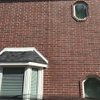
So, we had Direct TV installed yesterday. The guy did a COMPLETE HACK JOB. OMG, it looks like Harry the Incompetent Homeowner got drunk and installed the thing himself. He apparently didn't have a masonry bit (it's a brick house), so he insisted that the cables had to go in the house through the window frames. I tried to convince him to go through the soffits, or the basement windows, but he didnt want to do anything but what he wanted to do. DH says he completely split the cladding on the bedroom window.
He wanted to run the cable across the living room floor (!?!) to the TV. ("Put a throw rug over it.") I insisted it go into the basement and then back up. Of course, he drilled 4 inches away from the wall, right through the carpet! Even I know that's not what you doÂJeez Louise, all the other cables in the house are tucked neatly into the junction of floor and baseboard. When I had to drill through the floor to run my network cable, I went through the baseboard, right at the edge. Plus, it looks like complete crap on the outside. The cable TV lines are so neatly done, I wonder if the former homeowner did them himself (he was in construction and built the house for himself). Or maybe the cable guys actually take their time and do things right.
Since this is not by any means a professional installation, IÂm worried about my roof. He bolted the dish to the roof. I'd had in mind that it would be clamped to the plumbing vent the way the old TV antenna is. But no. I suppose I should have sent him home right there, but I didn't realize how f**ked up this would become. Figured 'he knows what he's doing (ha!).' So I want to put some kind of sealer around the plate to keep water out. We have a shingle roofÂwhat kind of product should I use? IÂm assuming plain old silicone isnÂt heavy-duty enough.
In retrospect, I'm just as glad he didn't touch the brick, as the wood can be repaired. I actually have a set of masonry bits, and am planning to reinstall the wiring now that I know that it's just regular co-ax. (I looked at the box of wire and wrote down the specs) So, hereÂs my plan:
1. Get out the ol masonry bit and drill into the basement.
2. Re-run the wire through the basement and bring it up into the LR through the hole the installer already put there. ItÂs dumb having it in the middle of the floor, but whatÂs done is done so I might as well use it. In the BR, IÂll have to drill a hole into the floor for the cable, but I think itÂs better to do that than leave the cable coming through the windowsill. Obviously that one will go in the baseboard. We have drop ceilings in the basement, so I should be able to conceal the wires without too much hassle.
3. Get a piece of dowel thatÂs about the diameter of the holes in the windowsills. Cut it into pieces. Plug one side of the hole with one of the pieces, shoot in some of that expanding foam insulating stuff, plug the other side. Add spackle/wood filler (inside) or silicone (outside) and paint. This should seal out water and drafts effectively, yes?
Now, about step 1: should I drill through the foundation or through the mortar between the bricks? Looking up from the basement at the windows it looks like thereÂs a wooden beam (probably 2x12?) resting on the foundation, which is cinderblock. So I guess the bricks arenÂt structural? The cinderblocks are pretty bigÂprobably about a foot thick. In any event, if I go through the bricks IÂd have to drill through the mortar until I hit the wood, and then switch bits and drill through the wood. The phone lines and so on mostly seem to go through this area and not the cinderblocks, so IÂm thinking thatÂs what I should do too. No reason to compromise the foundation, right?
I havenÂt drilled through an outside brick wall before, but I have built a pergola and done some minor wiring stuff, so I think I should be able to do this better than the installer did. DHÂs father was in construction so he has some knowledge about how to do stuff.
So, to recap:
1. What should I use to caulk around the plate that attaches the dish to the shingle roof?
2. Which is the better way to run a wire into the basement: drilling through the mortar and wood beams, or through the cinderblock foundation?
3. Will plugging the holes in the wood window surrounds using wooden dowel sections, insulating foam, and silicone effectively keep out water and cold air?
4. Does anyone see any flaws in this plan that IÂm not thinking of?
Any advice would be much appreciated.







lucy
housenewbieOriginal Author
Related Professionals
Columbia Home Remodeling · Plattsburgh Home Remodeling · Murrieta Home Remodeling · Leamington Home Remodeling · Jonesboro General Contractors · Pensacola General Contractors · Knoxville General Contractors · Hempstead General Contractors · Jamestown General Contractors · Concord General Contractors · Fresno General Contractors · Williston General Contractors · Tacoma General Contractors · Eau Claire Bathroom Remodelers · Bronx Bathroom Remodelersdavidandkasie
housenewbieOriginal Author
chris8796
housenewbieOriginal Author
davidandkasie
housenewbieOriginal Author
chris8796
emagineer
oakleif
housenewbieOriginal Author