Software
Houzz Logo Print
tabbaldwin

cracking grout where backsplash meets granite

15 years ago

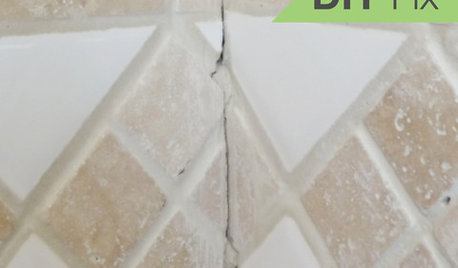
We're been in our new house a couple of months now and I've noticed the grout is cracking where the b/s meets granite. Is this common? Something I should point out to the builder?

Thanks.

Comments (45)

  • 15 years ago

    They should have used caulk, not grout for that joint.

  • 15 years ago

    Yes, you should tell your builder to fix this. It should never have grout there as it will always crack due to very small amounts of movement. It should have a clear caulking instead.

  • 15 years ago

    No, not clear caulk. They can get a caulk that matches the color of your grout from the same manufacturer.

  • 15 years ago

    Yup. Anywhere two different surfaces meet should always be caulked, never grouted. Look around the house. The same tile guy may have been used throughout.

  • 15 years ago

    I just want to make a general comment...Why do I know about this and a professional tile installer doesn't?

    This just bugs me.

    Thanks, just had to share my pet peeve.

  • 15 years ago

    beekeeperswife LOL

    Maybe because we've been hanging here and on the bathroom forum and learned our lessons well from Mongo and Bill Vincent? Ah yes, Grasshoppa.

    If there is one thing that pounded into my widddddow brain when we were redoing our little master bathroom....down to the studs because of mold/mildew from leak under non-sloping shower stall.....it is that:

    Whenever two different plains meet....example: backsplash to countertop.....Never, ever use grout. It is guaranteed to crack and crumble.
    The natural movement (house settling, etc.) of the different plains will guarantee you will have cracking and crumbling in no time.

    Mongo and Mr. Vincent told me about the matching caulks.
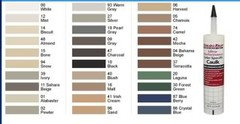
    OMG, this stuff is like magic in a tube!
    It's even slightly textured as if you are looking at grout.

    Several different companies make the colored matching caulks but wouldn't you know, our local home improvement stores only carried three and four shades and none of them matched what we were trying to do.

    So, I went online and ordered the colored caulks.
    I ordered them from Installerstore.com
    The tubes were here in 3 days.
    I couldn't be more pleased with the service, shipping and the color we picked.

    When we found the water (from master bath) that had leaked then wicked up the closet wall and had turned black (mold), in no way were we prepared financially for a major repair, much less a total gut.
    But Mongo and Bill Vincent walked us through it, step by step from beginning to end....via forum and email.
    I owe them both so much!

    Here's an example of colored caulks:

  • 15 years ago

    beekeeperswife-

    because we were smart and went to gardenweb!

    It bugs me too!

  • 15 years ago

    I had no idea there was matching colored caulks, that's great to know.. In all of the homes I have lived in or of the many, many new homes I've seen in the last few years it has all been either just plain bright white or clear.

    To me the bright white looks horrible unless the grout is white. I think the all the white and clear I've seen is do to the fact that it's cheaper and I'm sure easier to just use them for every house then to have the more custom caulks.

    Just want to add the homes I've seen are in all kinds of price ranges includes million + dollar homes.

    I will be requesting the matching caulk in our new build so thank you so much for info. :)

  • 15 years ago

    Word of caution with matching caulk: Sometimes they don't match. Look at the actual caulk as it comes out of the tube--it will darken a little as it dries.

    I found that TEC standard white caulk did not match standard white grout. It was gray. I had to pull it all out and use bright white, which still doesn't exactly match but looks fine with my bath tile. By contrast, the dove gray caulk was pretty much dead on--can barely tell it's caulk.

    Just check out the actual live caulk before they do the whole bead. Also, don't let the installer use masses of water to smooth out the caulk. A wet finger or damp rag is OK if really necessary, but I'm told too much water can darken the color.

  • 15 years ago

    My installer used matching caulk and it looks great. But last winter it cracked in two long spots between backsplash and counter. I razored it out, and ordered another tube of the caulk. Managed to even make it look good! But this winter I discovered a crack in one of the same spots. Any suggestions? It's about 2 feet long.

  • 15 years ago

    Wow, thanks for the replies....and I'm wondering too--how come you all know this and an expert tile installer doesn't? I've never paid attention to that area of the countertop when looking in other homes, so I didn't know if it's something that happens or not. I can just hear my builder now, though--"it's just something that happens; can't do nuthin about it" (to get out of having to fix it).

  • 15 years ago

    People on here know it because they are actively looking for new information.

    I've worked with too many "professionals" that learned everything they figure they needed to know years ago - and haven't tried to learn anything new since.

    Look how often people on here know more about an appliance than the people selling them!

    It's so nice to come across a professional who is staying current with new ideas.

    For the grout/caulk issue, I'd say more often than not, I see grout used, and cracked. Why? because that is what they have with them, it's a lot easier to grout everything than make the effort to keep the grout out of the corner. And they don't have to take the time (or spend the money) to find the color matched caulk.

    And - many people do not have the talent to use caulk without making a mess. Excess grout is wiped off, excess caulk can be a nightmare to deal with if you are not very careful.

  • 15 years ago

    Just be aware that sometimes the caulk will crack as well. I think as stuff "settles" (like the cabs, floor....), there is a chance it will happen (the caulk cracked, or separated along one short wall in our kitchen, and it has between the sink top and backsplash in our recently comepleted hall bath. Tile guy came back and re-caulked that spot in the kitchen when it occurred, and will come by to do the same in the bathroom.

    Not saying not to use caulk rather than grout, just wanted to pass along the FYI/heads-up.

  • 15 years ago

    If your grout is sanded (not likely in a backsplash) you can also get color-matched sanded caulk.

  • 15 years ago

    ok. let me get this straight. ANY place two different materials (stone/tile, bathtub, countertops) meet, they should be caulked vs. grouted? My entire kitchen backsplash is cracking (installed this Septemember) my bathtub-floor grout and my mudroom /baseboard are ALL cracking.. New build new home (as of Janurary '10.

    That is really frustrating, I know my builder like yours tracey will say the same thing.. JUST one of those things that happens. Thanks for all of the info....

  • 15 years ago

    Oh no! Didn't know about this and our backsplash was finished a week ago. Will this cracking also happen with epoxy grout? If the grouting is already done, is there a way to recitfy it or do I just have to live with the cracking when it happens?

  • 15 years ago

    I have same in our apartment kitchen where they used sanded grout. It's not that they don't know they should caulk -- the guys who installed our tile are supposed to be these fabulous experts. It's that the sub or the contractor don't stay on the details and make sure the job is done right.

    Learned this from our previous reno where the contractor came in and did all that stuff so well it's still in good shape. I did need to recaulk the shower where tile meets floor -- twice now in 5 years. Caulk shrinks over time so it needs to be carefully pulled up and redone from time to time.

    I've learned to be pretty good at it. I mask off each side of the seam with blue painters tape as close as possible to the seam. I got a little blue grout tool which looks like a square spatula that has blunt edges. They are various sizes and make a perfect caulk line just the right width (turn it till you find the right corner to use).

    Trick is to try to lay down the caulk evenly, then use the tool to get it evenly into the seam. I let it sit about 30 minutes then remove the tape -- any smears go on the tape and the seam line is excellent. I let it dry overnight before anything wet is used -- also I'm sure that the caulked seam is dry at least overnight or longer before recaulking.

    It sounds more complicated than in is. Do it once and you get the hang of it rather easily.

  • 15 years ago

    Yup, I think of caulk as a temporary thing - every so often it needs to be redone. A tip - if possible, wait a couple of months before putting in a backsplash. Seems like most of the time the counters will settle ever so slightly.

  • 15 years ago

    fyi - if your grout isn't cracking don't bother to replace it with caulk - 8 years ago my tile guy used grout - he insisted it was better than caulk and I didn't know enough at the time to argue with him about it - in any case, the grout hasn't cracked in 8 years - I'm obviously an exception to the rule.

  • 15 years ago

    Why?

    Because a professional moniker is no guarantee of competency. Neither is licensure.

    Same as there are lousy doctors and attorneys, there are poor tile setter and electricians.

    When all else fails return to the industry accepted practices bible. In this case it's the TCNA handbook, and it specifies flexible joints at changes of plane.

  • 14 years ago

    So if my kitchen was done by the builder with grout where the granite counters meet the backsplash (and the same around the tub etc), should I grind out the grout with a grout knife and replace it with caulk or should I put in more grout after cutting out the old stuff?

    Also in the shower where the big tiles on the walls meet the plastic shower pan, it's not grout but it looks too hard to be regular caulk. could they have used something else? Looks to be discoloring and also shrinking a fair amount.
    Thanks,
    Fred

  • 9 years ago

    Hi, Any advice on how to remove the old grout? I have the same problem, and am glad to hear that the sanded, colored caulk will blend more naturally than pure white. I also am dealing with just one line of grout connecting a tile backsplash (grout is in good shape overall) and granite countertop. Helpful ideas are appreciated!

  • PRO
    9 years ago

    You might test a multi-tool in an inconspicuous area. I'd mask the stone, just in case.

  • PRO
    9 years ago

    The reason that the grout cracks at this place between the tile and countertop is do to the opening and closing of the drawers of the cabinets below them. Especially if it is at the end of a run of cabinets. Not to the settling of the house or materials. It usually occurs more when cheaper grades of cabinetry are used, because of the structure of them. Higher grades of cabinetry are more likely to be stronger and built different so this may not occur as much. Quality cabinets also will have a plywood top called dust shield and this will make the cabinet more rigid and less likely to have cracking grout issues above. Caulking is a temporary solution to the problem,because of the movement from daily use. Solution, before installing lower grades of cabinetry, especially at the end of a run when they are bigger then 24 inches have the installer put a piece of 1/2 inch plywood in the top section of the cabinet to make it more rigid. Note! not on top of the cabinet but insert it below the surface of the top of cabinet. This should help with the cabinet not having a lot of the movement occur with the opening and closing of the drawers. Grout is better then caulk

  • 9 years ago

    Dayspring, your ignorance of industry strands is showing. Buy a TCNA manual. They're cheap. Also your lack of education in cabinet basics. Cabinet reps are there to sell their product, not to give you an unbiased education. Branch out.

  • PRO
    9 years ago

    Another solution to help prevent cracking. Request the countertop installer if he would put adhesive or caulk on the back end of the granite or solid surface where it meets the wall before he installs it, not just caulking it to the cabinet top, this might help stop the movement of the countertop at a later date.Reducing the chances of cracking grout.

  • PRO
    9 years ago
    last modified: 9 years ago

    Dayspring, that is more bad advice. You cannot fight building movement, you must accommodate it. You want your tops moving with the cabinets, not the rear wall. Following your suggestion, if the top stayed attached to the wall and the cabinet shrunk away, the top would be unsupported and exposed to higher risks of failure.

    This is why they place control joints in concrete and why it's highly risky to tile over them. You cannot stop building movement; it must be accommodated. Caulk is flexible; grout is not.

  • PRO
    9 years ago
    last modified: 9 years ago

    http://colorriteinc.com/ I keep these good folks on my speed dial . For countertops to backsplash, I order their sanded, silicone caulk. If you give them the manufacturer of the grout used, along with the grout number listed...they will match it perfectly for you. Look no further. They are not cheap, but quality seldom is...

  • 9 years ago

    Joseph, when you say "mask the stone," do you mean using painter's tape to cover the stone around the grout removal, to avoid scratching the surface? I am a novice here, so just want to make sure I understand your suggestion. Thanks!

  • PRO
    9 years ago

    Yes.


  • 8 years ago

    So.....if I have a backsplash crack where the tile meets countertop, is it ok to caulk over the cracked grout or should I remove all the grout and caulk?

  • 8 years ago

    Remove it.


  • PRO
    8 years ago

    best to remove it first.

  • 8 years ago

    Best way to remove the cracking grout where tiled backsplash meets wooden countertop?

  • PRO
    8 years ago

    Depends on how large the gap is, but I'd start with a scraper.

  • 8 years ago

    You can use a manual grout saw. They are a lot of work but are your
    cheapest alternative. If you have a Dremel, they make a grout removal
    bit that works well. It gets into tight spaces but only removes a little
    at a time. If you have an oscillating multi-tool, you can get a grout
    removal blade. This is your quickest option but they are hard to get
    into tight spaces and corners.

  • 8 years ago
    last modified: 8 years ago

    Thank you all for this info! Our kitchen remodel was finished 5 months ago and I’m seeing a thin crack between countertop and backsplash. Does the crack mean it’s definitely grout? If so, is It reasonable to call the contractor to come back and flreplace the grout with caulk on their dime, since they did it wrong?

  • 7 years ago
    Chris I have the same issue. I hired someone who only does tile and he used grout. It’s only been 4 months and it’s all cracked. Very frustrating
  • 7 years ago
    I have had nothing but problems with my CAULKED grout at the base of my backsplash, where it meets the quartz countertop. It repeatedly cracks. I have had the contractor come back in and redo this area multiple times. I will no longer allow the tile company he brought in to do the job because they were so awful. Despite their brag of being in the business for years, their grout guy used regular grout at the backsplash base. Then they sent in another guy to cut it out and replace it with caulk. Despite this, it continually cracks. Every time the base cracks my contractor tells me this is movement in our 30 yr old home. My prior backsplash and counter, which was ALL tile ALL grout never had this issue. I have to pay the contractor to fix the seam every few months.
    Can anyone tell me why this is happening and how to remedy it? It’s really bad. The cracks are the biggest I have seen yet.
  • 7 years ago

    I can't really guess what was used, but in this day and age, caulk has improved by leaps and bounds and should not crack. Sounds like perhaps they are using an incredibly cheap grade caulk?


    Rather than paying your contractor to repeat mistakes made over and over, call a qualified tile guy to remove the old caulk and re-caulk. It's not a difficult job.

  • 7 years ago
    last modified: 7 years ago

    If you're living in a cold/hot climate like Chicago, and your caulk is on an outside wall, it will crack in fall and spring, during times of rapid temperature and humidity changes.

    Silicone in the color of the tile or of the vanity top is the much better bet.

  • 7 years ago
    Thank you both. I will follow up on the silicone and get a qualified tile guy in here. Thanks so much.
  • 5 years ago

    We have this problem now and last winter. it looked great all summer, no cracks at all. Now it’s all cracked. He have a whole house humidifier so humidity level is good. Is there anything we can do?

  • PRO
    5 years ago

    Dig that grout out and replace it with color matched silicone please.