Software
Houzz Logo Print
jeri

Organized Pantries

14 years ago

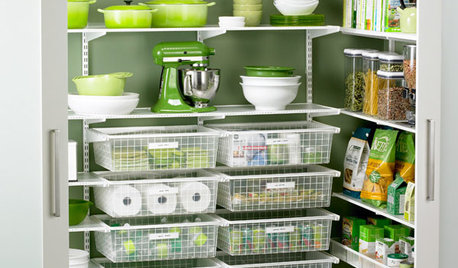
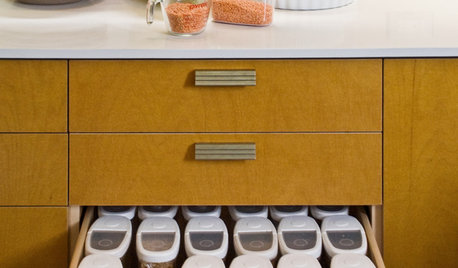
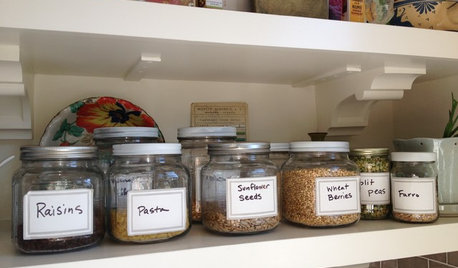
I love the pictures of pantries with jars or ?? holding all the bulk items, but I don't know how to achieve this. I don't know how or what to buy in bulk. (I'm not a great cook - but want to learn).

I've discovered a recipe for pinto beans that I love - so I suppose I could buy that in bulk and store in a nice jar? What else do you buy in bulk? How long do these things last?

Also, even though it may not be a bulk item - do those of you with organized pantries transfer other things to pretty jars? Such as freeze dried cranberries, baking soda, sugar, flour, (nuts I keep in the freezer), and pasta? What else?

How long do things last in jars and other containers?

Thanks!

Comments (8)

  • 14 years ago
    last modified: 11 years ago

    I don't use the pretty jars. I don't have the space. I do put bulk items, like beans and staples, into airtight containers and canisters, though. And my pantry is organized as in there's a particular place for each item, done by theme, but no as in prettified. I'm trying to get better about using the vacuum sealer for things like walnuts, which otherwise go rancid before they're opened. Anything that I have that's sealed, stays in its sealed package. I don't put things in canisters/containers until they're open.

    How long things last depends on how airtight your seals are (most of the kind with the plastic ring aren't as tight as the kind with a pressure seal, whereas ziplock bags are pretty good and vacuum sealed is better). It also matters how much air is in the container, how damp the air is when it's sealed and how many stray molds and bacteria get sealed in. Always make sure your containers/canisters are good and hard dry (as in days after being washed) before you fill them.

    The nutritive value on things like flours is supposed to start degrading immediately, and even by the time you buy it, it has lost half. Exposure to air makes it worse. Flour will keep, however, as opposed to going off, for years if it's in a decent canister. If there's air in the canister and you leave it alone for a year or more, the air itself will smell stale, but the flour will still be flour. I don't recommend it, however. :)

    Sugar lasts forever unless it gets damp. Then it's still sugar, especially after it dries out again, but might not be so crystally, and might change the measurements.

    Walnuts go off almost immediately. Beans, rice, pasta, etc., can get very dry if left too long, but can always be rehydrated. I've given a try to using less dried beans, and found that I like the way the bulk ones cook up better, even if they need to be soaked.

    Rules of thumb: Foodstuffs are best eaten fresh. They last until they're bad (dates have nothing to do with it), though they lose vitamins, etc. It's best not to buy more than you think you can use. Airtight and moisture tight are good things.

  • 14 years ago
    last modified: 11 years ago

    Here's the pantry in our old house, which we just moved out of 6 days ago:

    {{gwi:1988845}}

    Source: Uploaded by user via Jen on Pinterest

    Here's a close up of the plastic containers I bought from Target for my bulk items:

    {{gwi:1990435}}

    Source: Uploaded by user via Jen on Pinterest

    We do most of our shopping at an Amish store, so most everything we buy is in a bulk bag. It's been an ongoing progress as I've worked toward cutting out most processed foods. Now it's just part of the process that we come home and put everything into sealed (and labeled) containers.

    I chose these because they are wide open on top, which makes them super easy to scoop out of. Of course, now I'm wanting to switch to glass containers, but I've yet to find the perfect square or rectangle ones. (More function over form for me).

    Anything that doesn't fit in the bin, gets put in the storage freezer, but I do rotate through my bulk items every two months or so.

  • 14 years ago
    last modified: 11 years ago

    Plllog - It sounds like buying in bulk is not such a good idea then? I do have a food savor - let's take dried cranberries for example. Once the package is open, it sounds like it would be better to use the food savor or a Ziploc instead of a container that would look and stack better? Bummer! :-)

    ICFgreen - Wow - What a great looking pantry! Thank you so much for sharing!

  • 14 years ago
    last modified: 11 years ago

    Jeri, it depends on what you mean by buying in bulk. I buy beans from the bulk bins at Whole Foods, which means getting fewer beans than in a package, and being able to sort through them a bit, and I like the quality. I used to do that with rice, which I don't use much, and I'd never have enough rice when I needed it, so finally bought some packages.

    If buying bulk to you means buying a year's supply at once, no, it's not the most practical way to live. That's giving over a lot of storage space to the cheapest and most available foodstuffs and letting them lose their value unnecessarily. If you live in the country, and can't just run to the store when you run out of something, then laying in sufficient stores that if you miss a trip or two into town you won't be without is very practical. But if you live in the country, you probably have enough space to store the bulk.

    Example: I don't go through enough quinoa to need nearly as big a container as ICFgreen shows. I have canisters about a third that size and have both yellow and red. If I only had one or the other kind, I'd still have enough quinoa.

    Putting a package in a ziplock does the job well, but you can get airtight containers and canisters. Plastic pressure seals (OXO pop or ClickClack with the pinch openers) are better sealed than the plastic ring on glass or ceramic canisters, but if you're keeping the contents for only a few months it doesn't likely matter unless you're in a difficult climate. The rubber seal on bail topped glass jars is a pressure seal and airtight until the rubber gets old and stiff (nowadays, they might use a plastic that doesn't get bad like that).

    That doesn't mean you can't have pretty!! ICFgreen's rectangular bins, btw, probably have slightly better seals than glass, but not quite as good as a pressure seal. With everything turning over every two months, it doesn't really matter. The reasoning behind a smaller opening is to limit air exposure, but that also is passed down from the times before plastic, which is an air barrier and soft and molds to the opening making a better seal than cork or other stoppers.

    Example: Dried cranberries. Do they linger when open? Not so long at my house. When I open a package, I put them either in a pressure seal canister or a ziplock. Ziplocks fit well in my pantry, where there's a whole pile of bags of dried fruit and nuts. If they're for snacking, however, rather than baking/cooking, the canister is more convenient.

    I'm not sure if I'm making this any clearer, but you can have your pretty pantry. Foodstuffs are better when not exposed to light, so if there's any natural light in your pantry, your vessels should be opaque anyway. My mother's are all metal, even though they're in the dark, and often have plastic bags inside, btw, for the best of all worlds. They're also light weight. Just be choosy in obtaining your containers, buy what you think you can use up in a reasonable amount of time (and make sure your containers match your amounts), and make sure you have good seals. Use ziplocks and the foodsaver for supplementing the storage value.

    Another idea: You could get all kinds of beautiful old canisters at yard sales and thrift shops, and put your items, sealed in airtight plastic, into them. Or you could start a collection of Talavera pottery jars and do the same. Or just get the Anchor Hocking glass, and make sure things get used up regularly. Maybe even keep a spreadsheet, or a clipboard in the pantry, or on a piece of masking tape on the bottom, that says when each item was bought.

    I'm babbling. You see, I'd love to do this too. But I don't have room. I'm happy for easy access and organized, which I do have. :)

  • 14 years ago
    last modified: 11 years ago

    I live close to many markets, including Trader Joes - so stocking up is not a necessity. I just see all the great pictures of fabulously organized pantries - like ICFgreen's - and I wanted mine to look the same. Maybe all I need is some open type boxes - like ICFgreen shows on her lower shelf to hold all the little packages that really don't belong in something larger.

    I think I will start by taking everything out of the pantry (goal for January), give it a good cleaning, and go through what is there. Get a better idea of what I have and what I might need. It sounds like buying in bulk (buying more than I currently need) is not a good idea for me, but perhaps storing the rest of the pasta from the newly opened package in a container might be.

    I did buy some tall plastic click type containers from CostCo one time, to put the family's cereal in. I thought the cereal would look nicer and stay fresher in these. Unfortunately, the ones I purchased passed on a nasty plastic taste to the cereal - even after several washings. I ended up throwing them out. :-\

    Thanks plllog! :-)

  • 14 years ago
    last modified: 11 years ago

    I ditch every box I can in my tiny pantry - 18" door and we have 5 people. The labelmaker is my best friend. I label the canisters and put cooking times on them for pastas, grains, rice, etc. I use the hermetically sealed glass gars from the Container Store for flours, sugar, granulated splenda, and other baking items. I like the narrow stacking canisters for pasta, rice, teas, etc. If you read the comments, they are instructive on what size works best. I store cereals in containers I got at Target but don't have a good system for that yet. I hope in my new house with larger pantry I can find something that works. . . ours is so tiny and we have so many boys that it is difficult!

  • 14 years ago
    last modified: 11 years ago

    Excellent, inexpensive containers for bulk or loose food, or even food that's from opened packages (something like raisins, for instance) are glass canning jars.

    They come in sizes from half gallons to quarter pints (1/2 cup), so any quantity of food will work. They have only two sizes of lids so lids will fit many different sized jars. Some can be frozen, as well, all can tolerate being in the fridge. I reheat some leftovers in them in the MW. You can choose between white plastic one-piece lids and two piece yellow metal or silver-toned lids. The metal lids air are extremely air tight (they are the kind in used in processed canning of food).

    You can write on the white lids with a wax pencil, or even a Sharpie. You can also insert a piece of a container label (cooking instructiuons or nutritional info panels) between the pieces of the two-piece lids if you want. Of course you can also write on the two-piece lids for labeling.

    I find wide mouth lids most convenient for most things though on half-pint, straight-sided jars, which I use a lot for small left-overs, the smaller regular mouth works well. I use tons of them in preference to any plastic bags like ziplocks, or vacuum-sealed bags since I'm trying to reduce my plastic consumption. You can also (reportedly, I've never tried it) vacuum seal some canning jars with some vac-sealers and a special attachment. In this case, unlike canning even the lids are resusable. This doesn't substitute for the needed heated processing for food (i.e. canning), but it does add a layer of longevity to dry foods in jars like beans, etc. I've never found it necessary, but it is an option. It does use electricity to make the vacuum seal, which for short term I find is not necessary.

    A couple of notes:

    1) regular sphaghetti it too tall for half-gallon jars (bummer!)

    2) as plllog noted, you have to make sure the jars are dry as a bone, and in the case of the tall half-gallon jars, there are thin vertical channels inside the jar that can stay damp longer than you think. Let 'em dry overnight for safety.

    3) one of the advantages of using canning jars is that they are ubiquitous so breaking a few doesn't ruin a set. You can easily get more.

    4) old style canning jars with glass lids and rubber rings work well, too, but don't come in as many sizes. European ones also work, but are much expensive.

    5) Canning jars rarely cost more than a couple of bucks each, and that's for the large ones.

    6) I can get my hand down into all WM jars, but I keep fat bottle washing brushes at my sink. All jars are DW-safe.

    7) I am on a campaign to extinguish the use of plastic bags in my kitch. These jars go a long way towards that goal.

    8) Sizes I use the most:

    a) Half gallons for all bulk storage that doesn't require dipping into (like my general purpose flour.) Any thing that pours like macaroni, beans, sugars, odd flour-y things like cornmeal, semolina, grains like rice, etc. These are all wide mouth (WM). Jars can be stored in pantry or fridge, occasionally I storage a half-gallon in my upright freezer when I have a windfall of something like nuts. The jars can take freezing (with dry contents) but I regard them as not as tempered against cold than the ones specifically intended for freezing, which don't come in the half-gallon size, alas. Cost is most per jar, usually less than $3.00

    b) WM straight-sided can or freeze quarts for smaller sizes of the same sorts of things, plus for use to store liquids in the fridge, and freezer (stock, for instance), especially useful for leftovers. Cost is a bit more than a buck each.

    c) WM straight-sided can or freeze pints, again for smaller quantities and pantry items like dried fruit, nuts for the fridge (not long term), items you stored in larger containers but are using up, baking items, items like maple sugar that I only buy in small quantities due to cost and lower use, etc.

    d) Regular mouth (RM) straight-sided can or freeze half pints: again for leftovers and little tucked-away items like home-made lemon curd or mayo, meat glace, etc. Endlessly useful things; I have dozens.

    e) Either WM or RM half pints (some with straight sides - most useful, IMO) for even smaller leftovers - half a lemon anyone? And for bulk storage of spices in my spice drawer. Even the regular mouth ones are easily scoopable (or finger-pinch-able) as spice jars. Unless you buy the fancied-up ones, these are cheapest of all, less than ten bucks a dozen, including a lids for each.

    I don't store homestead or year-long quantities of most things, but I do often have multiple half-gallon jars full of the same thing, with the back stock stored in the freezer in glass half-gallons. Things like this might be: my DH's specially-loved thick-cut organic breakfast oats, special flours, or grains that I have go far afield to buy, or nuts that I bought by bulk mail-order, for instance. I live more than half an hour from the nearest grocery-store of any kind and more than an hour away from my preferred markets, so the convenience of having somany things on hand is impoortant. And having stuff well-sealed and stored gives me the sense that I'm able to cook anything I want. I also can and freeze a lot of my home-grown food, and I only buy meats from special providers (for quality and food-safety reasons), which generally requires bulk purchases so my kitchen is more oriented to this type of cooking. If I had to go out and fetch a lot of different ingredients every day or so, I think I would succumb to the dubious allure of processed food.

    I live in a very rural area so that affects what I can get at my nearest market (iceberg lettuce, not romaine for instance) and four brands of hotdogs and pre-formed "meat" patties, none of which we eat.

    So "bulk" storage is not an aesthetic choice, it's a necessary one. And cannng jars are how I do it!

    And glass containers seem safer for food than any type of plastic. But I may be kidding myself on that.

    HTH

    L.

  • 14 years ago
    last modified: 11 years ago

    I too live in a fairly rural area, and this house was unoccupied by humans for a year until we moved in a month ago - so I had to fight the battle of the mouse. In addition to all the usual assaults on the rodent world, I purchased a bunch of these in different sizes:

    http://www.overstock.com/search?keywords=le+parfait&SearchType=Header

    They are lovely. A little pricey, certainly, compared to regular canning jars but I guess I wanted to treat myself nicely for having to deal with the mice. :)

    A few arrived broken, either obliterated completely or with small chips in the lids or rims, and Overstock cheerfully sent replacements without my having to repackage broken glass.

    So far I think the 1l and 2l sizes are the most useful, with a pound of short pasta filling about 3/4 of a 2l jar. I also got a couple of 3l jars which are great for the large sized oatmeal and cheerios that we buy.

    I don't yet have an organized pantry/area in which to store these, but tomorrow I'm going to try to pick out some reclaimed wood floorboards to become open shelving in the kitchen. I'd like to keep the things that we use fairly quickly in glass on the open shelves; things like flour will remain in the stainless canister in a cabinet.

    Here is a link that might be useful: Le Parfait jars