Software
Houzz Logo Print
rabsr

wood chips

11 years ago

Recieved 3 dump truck loads of wood chips from tree trimmers
How would be the fastest way to get this to breakdown and decompose?
Add Fertilizer?
Cover with soil....mmmm could be expensive.....
Etc....???

Comments (34)

  • 11 years ago

    What are you planning on using it for?

    I'd probably spread it on the surface of perennial and shrub beds or put it in areas with temporary paths. It will make great mulch as is and will break down over time to enrich your beds.

  • 11 years ago

    Good point.....some for mulching as you describe in selected areas...and then some for veg. gardens (if I can get it broken down good) and around plants that need the enrichment....

    Thanks for ideas

  • 11 years ago

    Do not turn it into you soil, it takes a LONG time to break down and will turn the pH upside down. Top dress, use on pathways. I have a bunch too, delivered by tree trimmers. It's great as a top dress in the garden. I pull it back when I want to turn the bed or add fertilizer, then spread it out again. I like it best as pathway mulch, keeps the garden from being muddy.

  • 11 years ago

    1 - Use it thickly on paths and in shrub borders where you want long-lasting weed control.

    2 - Use it thickly as a mulch on your veggie beds and let it decompose in place. Just pull back the mulch to plant. I put it over my drip tubing to conserve moisture. (don't worry about nitrogen loss, it's minimal)

    3 - If it was shreddings from green branches with a few leaves, pile it up, moisten each layer, keep it damp, and it will decompose quickly. If you add in some high-nitrogen stuff between the layers (coffee grounds, green lawn clippings, a light sprinkling of ammonium nitrate, chicken coop scrapings ... whatever you have) it decomposes even faster.

    The key is MOISTURE more than anything else.

  • 11 years ago

    As quickly as possible? Add soluble, nitrogen fertilizers to the stuff and keep it wet. Chicken manure, for example.

    If you don't feel the need to go organic, urea works, so long as you use some discretion in how fast you add it. To put it in perspective, 150 grams--about two trader Joe coffee sample cups--is equal to one billygoat's urine output for a week. It's enough ammo to rot 5 or six pounds of stuff. Presumably you give it a good dose to kick things off.If you live in an alkaline soil situation, ammonium sulfate works too, although it doesn't have as much nitrogen.

    As some others have suggested, you also have the option of using it now as a mulch, at the tradeoff of a slower decomposition.

    Yeah, yeah, I know chicken manure would be better. this guy is in a hurry. We don't always have access to the optimal thing.

  • 11 years ago

    Old farm boy never has seen or thought of vegetables "under chips" so to speak....as I do box or square foot gardening that is real interesting....that would keep mositure and weeds to a minimum....
    THANK YOU

  • 11 years ago

    How fast wood chips will be digested by the Soil Food Web depends on the species. Soft woods, generally, are digested faster then hardwoods, even without additional Nitrogen to feed the bacteria that do the digesting. Some planting beds where wood chips were used as mulch needed replenishment a year later while others have a goodly layer of mulch 10 years later, depending on the wood species.
    So, why do you want these wood chips to "break down and decompose" quickly?

  • 11 years ago

    Yes, I routinely plant beans, garlic, potatoes, and onion seeds (sets for onions) under chips. They grow well, and there are no weeds.

  • 11 years ago

    Kimmsr:
    My initial thought was to get it down to good "compost".....I have never used wood chips as a mulch in the garden....only in flower beds.....I think I will break up my soil in the boxes, add fertilizer and put chips on top....then do the openings for plants and onion bulbs...but I have a question about planting seeds.....lettuce, greens radishes etc.....???

  • 11 years ago

    RABSR ... for "row plants", I rake back the wood chips along the row, making a narrow planting area, plant the seeds and leave the row bare until the p,ants are big (if it's something like chard) or until harvest in the case of radishes.

    If you have the space between the rows mulched thickly, it helps conserve moisture.

  • 11 years ago

    Well that seems logical and simple.....I was trying to make it complicated... :(
    Thanks Lazygardens

  • 11 years ago

    RASBR, lettuce and wood chips don't mix. Rotate your beds or containers. Those with wood chips, only large seeds or transplants. Two years later, you can plant carrots and lettuce in those beds, now mostly composted. I note that my weed situation explodes when I let a bed go un-mulched for two years. But it is doable. you have beds for direct seeding and beds for transplants every year, and they change their designation according to the state of the chips.

    I also note a general disregard for fungal flora an vegetables on garden web, but fungi help virtually every vegetable except beta and brassica, specially young plants. Wood chips insure that you have them. I even bury dead branches in beds (those rotten ones that fall off trees). In my orchard, every tree has been planted with 20-40 lbs of wood logs in the hole (hugelkultur).

  • 11 years ago

    RABSR, this video may be of interest to you.

    Here is a link that might be useful: Back to Eden

  • 11 years ago

    I too would suggest using it for mulch, it will break down over time and feed the soil. Since you have such a large amount you could set aside a pile to layer into the compost with your kitchen scraps (you ARE composting kitchen scraps, I assume :-) . Also, if you're adventurous and it's feasible, re the post above about urea: a good source of free nitrogen is pee. Hey, everybody has to go when they're out in the garden, right?

  • 11 years ago

    EVERYBODY, Tox.

  • 11 years ago

    Save the Earth, pee outside!

  • 11 years ago

    aw jeez ....

    MULCH goes on top of soil ... there is no reason to compost it.. as noted above ... it defeats the purpose of such.. MULCH on top of soil ... does not leach the soil of nutrients ... apply at will ... its uses are weed germination suppression.. soil cooling.. and water evaporation reduction .... it uses are not to feed your plants nor soil .... it can NOT be incorporated into the soil ... or it WILL affect nutrients levels ...

    COMPOST is a previously broken down product ... and that is done by composting it ... in any method mentioned ... it CAN be incorporated into the soil ... and it CAN add nutrients ... and humus ....

    back around 2001 ... the power company was clearing lines ... i got about 50 huge loads ....

    when i wanted to make some of the 6 foot piles into compost... i used a 40 or 50 pound bag of 49-0-0 bags of nitro ... probably what the organic peeps would call .. the chem version ... i didnt have this much pee.. lol ...

    and i kept the pile as wet as i could at 500 feet from the house ... which might have been one or two soakings per season ...

    this was pre-digital camera days ... and i had no thought of recording the attempt for posterity ...

    looking back.. i would say... that inside two years... the treated piles... where down to 3 feet.. as compared to untreated piles.. that were still near 6 feet ... i did not have a method of turning the piles ... and thought the surface looked unaffected.. the interior was black gold compost ...

    and frankly ... i considered that pretty fast ... lol ...

    which brings us to the crux of your question ... and that is the definition of fast ... if you are thinking.. that you will make a new dump of fresh wood chips.. into COMPOST by spring planting time... i simply doubt.. you can do it ...

    at best ... if done to perfection.. with no budget constraints ..... and many engine powered tools... you MIGHT be able to accomplish COMPOST by fall ...

    so my best suggestion ... e.g. .... is to use two loads for MULCH .... and start composting the third ...

    and in spring.. get a second load to start composting.. etc ... IMHO .. composting wood.. takes a few years.. done right.. and you start a cycle of compost piles... so that each year ... you have a new pile coming into use .... and that is pretty fast ....

    good luck

    ken

  • 11 years ago

    I haven't bothered to read all the replies but I can speak from experience.

    Pile the chips into a pile, cover the pile with plastic, and allow them to decompose for a while. Freshly chipped branches are HOT decomposers. Even chips that have been sitting a while are still hot.

    I watched a girlfriend, who will tell you she's a 'master gardener', spread wood chips from a nursery under shrubs and vegetable garden plants. At the nursery the piles of chips were visibly releasing water vapor steam as they compose. To me, it was obvious that this stuff needs to sit and mellow for a while before use, but no, it went straight into the garden beds.

    The results were predictable. The leaves on tomato plants yellowed until I pulled the mulch back away from the plant's stem. The lily plants that she planted did not thrive with this fresh mulch.

    Again, if I were picking up wood chips that were fresh, I'd pile them, cover the pile with a sheet of plastic, and allow them to decompose for a while. When it has cooled off, then I'd apply it as a mulch.

  • 11 years ago

    Whether fresh wood chips will generate enough heat to be a problem depends on the volume. A pile of fresh wood chips more than 1 foot in depth can generate enough heat to produce steam even on a hot summer day, but seldom would wood chips with a depth of 3 inches do that even if they had a lot of green leaves mixed in.
    Since very few people that mulch have observed a mulch "robbing" plants of Nitrogen, and since two researchers (Fine Gardening February 2015) at Michigan State University found that plants well mulched had higher levels of Nitrogen then did plants not mulched I would suspect there was some other problem involved, not the mulch.

  • 11 years ago

    Idaho, I'd hate for you to lose out on a very beneficial practice. You should be able to apply two to three inches in ornamental beds and veggie gardens with nothing but benefit for the plants and soil in the short AND long run.

    Mine come to me straight from the back of a chipper truck and are applied within the week to my beds. We divide the chore into two biennial applications....one year the permanent landscape beds and trees receive the mulch and the next year it goes to the vegetable and flower gardens.

    The chips pretty much disappear over two years, slowly decomposing and slowly being taken into deeper soil by the worms.

    No harmful change to the pH, no nitrogen tie-up, no burning. I can appreciate that there would be problems if a very heavy application was made, or if the raw chips were incorporated INTO the soil all at once.

  • 11 years ago

    I
    highly recommend the
    use of wood chippings. They have great ornamental value and require
    little maintenance. I like their added benefit of composing down
    slowly and keeping plants healthy, lush and green. I know about few
    rare cases of introducing poison ivy, which is regarded as the only
    drawback of using wood chips. Here's a detailed source to explain
    better their pros and
    cons:
    http://www.ipernity.com/blog/1599968/890784?t=87235&c=1&s=edit

  • 11 years ago

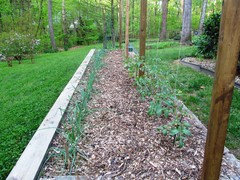
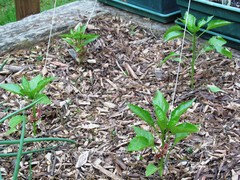
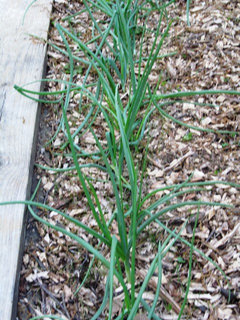
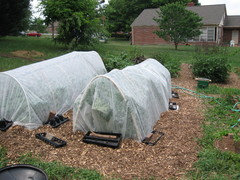
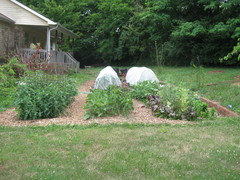
    Thanks to you ALL, I tried wood chips this year....put them in Feb. planted onions and recently pulled some aside to plant tomatos and peppers....I have squash seed planted just not up yet....look how many weeds....VERY FEW...yea!!!


  • 11 years ago

    Wow. VERY nice. I love all that green and the trees.....where are you?

  • 11 years ago

    East Tennesse....25 mi NE of Knoxville in a little town named Dandridge

    https://www.tnvacation.com/east/.......... www. townofdandridge.com/

    Come see us :)

  • 11 years ago

    Dandridge - 2nd oldest town in Tenn. Hey neighbor!


  • 11 years ago

    off 92....off Cline....before the 417

  • 11 years ago

    Hamblen, not far from Cherokee.


  • 11 years ago

    are you using woodchips?

  • 11 years ago
    last modified: 11 years ago

    Mostly on paths. I got an entire truck dumped in the driveway by the powerline trimmers.

    I did use it in the pepper bed to soak up some N, and will add it over the winter to the beds not being put to greens.

    I'm going to use it more extensively as the summer progresses, but I've got too many projects going already.

  • 11 years ago

    Do you work for the tree service?


  • 11 years ago

    No....call Rick & Jackie @ 865-274-2535 or423-291-0996

  • 11 years ago

    Certainly I use wood chips on paths in and around my gardens. The more unique use is the mounded borders I make with wood chips separating garden beds from lawn. At the borders of gardens I make a mound, as much as a foot wide and as tall as possible. I'm able to fill the garden side with ground leaves as mulch, compost, etc., and improving the soil, and it keeps it all contained, while the grass side has trouble creeping into the garden because of the barrier. Someday I may work these borders into the beds, changing over to blocks or stones, but for free I was able to successfully border hundreds of yards of garden beds.


  • 11 years ago

    Rhizo_1, thank you for the kind reply. I agree that use of wood chips is one of the best landscaping and gardening practices around. But I just wanted to alert everybody to its effects on plant health. Anything that is in the process of decomposing will inhibit root growth and seed germination. Aged chips, especially if they are allowed to sit in a pile and decompose partially, are an ideal ground cover, and protecting soil from direct exposure to sun, wind and rain is a very good thing.

    I believe that decomposed wood has some of the most beneficial by-products possible - long lasting lignins and other cellulose/organic matter that feeds fungi. Fungi are very highly beneficial to nearly all growing things, and the condition of the soil after wood has broken down it is ideal for all manner of planting.

    And freshly-chipped wood is quite valuable as a feedstock for compost. I have seen freshly chipped apple tree branches heat up rapidly and start to decompose immediately. I have a black cherry tree stump that has coppiced and I'm looking forward to cutting most of that growth and sending it through my chipper to make some excellent material for the garden. I'll compost it separately and apply it to the garden after harvest together with some of the more typical grass/leaf compost.

    I'm also wanting to get some tree trimmings to use as a weed barrier around my vegetable beds; I'll spread out over some cardboard. It will Kill the grass and eventually be absorbed the the soil and widen my garden for next year.

    I'd also want to use wood chips on a hardy crop like raspberries. Good stuff. I didn't want to imply that there was anything inherently bad about wood chips, just let's be smart about using them.