Software
Houzz Logo Print
cloybaby

Pleating help

11 years ago

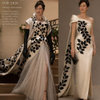
Hello all. It's been a while since I asked a question but I need help again. I am currently working on a period dress and have hit a road block. Attached is a picture of a skirt that has very right pleats. I was wondering how you sewed such thick pleats. Is there a specific technique? Thanks everyone

Comments (18)

  • PRO
    11 years ago

    Here's a tutorial on cartridge pleating that might be helpful to you- but if you need more information, look up cartridge pleating because that's the style of pleating you are doing.

    Here is a link that might be useful: How to sew cartridge pleats

  • 11 years ago

    I would think you would need a walking foot machine to sew that. The only other way (which might be how they did it back then) would be to hand stitch it with an upholstery needle. Maybe someone else has a better trick! :)

    I would call them knife pleats. I'm thinking maybe if you just make smaller pleats, might be easier to get them thru a regular machine.

    This post was edited by shadylady2u on Sun, Feb 8, 15 at 14:49

  • 11 years ago

    Are you sure that's not simply shirring? On a heavy fabric, it may do do that naturally, if the stitches are long enough....

  • 11 years ago
    last modified: 11 years ago

    This new format's going to take a little getting used to.

    Anyways, I found the link to the cartridge pleats interesting. Looks like historic cartridge pleats and drapery cartridge pleats, are two different animals! Looks like they do hand stitch the pleats, which shouldn't be too big a deal, but hand sewing all that cording on, and sewing the top to the bottom looks like a bit of work.

    Do you know anyone with a walking foot machine that you could borrow? Think this would be the easiest and fastest way.

  • 11 years ago

    I don't understand what a walking foot would do here....do you mean a gathering foot or a ruffler? A walking foot to me is used for quilting to keep the top and bottom layers of fabric moving evenly with the batting layer in between....

  • 11 years ago

    Making a period costume, and if the fabric is heavy, I think really the best option would be to bite the bullet and hand sew the cartridge pleats as depicted in the link beesneeds posted.


  • 11 years ago
    last modified: 11 years ago

    I'm not talking about a walking foot "presser foot", I'm talking about an Industrial Walking Foot machine (you can get 3/4" of thickness under the foot and it handles anything) like this one:

    Industrial Walking Foot Machine

  • 11 years ago

    Ah, I see...thanks for the explanation!

  • 11 years ago

    This is historic cartridge pleating that is referred to as "gauging". It is all done by hand and is not for the feint of heart. You will be surprised by the amount of fabric that is forced into one small space.

    It is not sewn to the bodice in a modern manner. Instead, a certain point on the pleats in tacked onto the finished bodice or , in this case, a narrow band that is probably tacked onto a finished bodice. In a way this is more "built" rather than "sewn".

    There is no way to recreate this with modern machines or methods. It must be learned and all done by hand. It would require very specific undergarments, as well.

    This is not a casual costume. It is much more difficult than it seems, although the concept is simple and straight forward. Sure, you can learn to do it. It would be quite a lesson. Go for it! There are many tutorials online. Goggle "gauging". It was used a lot for mid 19th century skirts.

    Good luck! I gave up on it and decided that I really did not need five yards of fabric pulled in around my waist! for any reason--costume, or not. It is a beautiful piece!

  • 11 years ago

    beesneeds already gave a link for that technique and it was already pointed out that hand sewing may be the only option. Just saying.

  • 11 years ago

    Ok, just adding my experience and thoughts. You know, she asked. Just saying...

  • PRO
    11 years ago

    To throw a few more cents in.. here is a nice link on gauging. http://home.earthlink.net/~gchristen/Gauging.html

    That said.. though it is traditional for certain periods for the skirt to be attached to the bodice directly... That is kind of a more advanced technique for a lot of seamstresses-to get it to look good attached to the bodice. Making the waistband separate and attaching it to the bodice is indeed easier. And depending on how accurate or not one wants to be- especially for the sake of getting in and out of the stuff and storing it- doing the separate bodice and skirt can be for the best. Not everyone has the closet space to store a fully attached dress, or able to stuff it in their vehicle to take it to where they want to wear it.

    And don't wear your dress there then put on your non-car suitable undergarments when you get there- those undergarments are put on first for a reason, and your dress and undergarments just won't wear right if you try to travel then undergarment up.

  • PRO
    11 years ago

    Ugh, stupid houzz post limit length.. Anyway.

    As gertie said, it looks simple but is a more complex build than simple sew project. And the amount of fabric used is greater than what one might expect to make that right look. And it really does take evenness and accuracy in the build and sew- otherwise those pleats tattle on you in their shake out and drape.

  • 11 years ago

    beesneeds, do you do some historical interp? What is your interest?

    I did some historical sewing of the mid 19th century for a while and some historical interp. I quickly learned that sewing and constructing a garment on your lap with a needle and thread is a lot different from cutting to shape, pinning, steaming and stitching under a machine needle! What a different experience! It required me to learn skills that I really did not have after many decades of sewing in the modern manner.

    What a learning curve it was! I do respect, however, the fact that many garments of old did make better use of the fabric and created much less waste. Sometimes the waste from my sewing room is an eyeopener. I try to recycle my textile scraps. Of course, they did reuse textiles when they were so precious. But, they wasted little.


  • PRO
    11 years ago

    I do indeed gertie. Mostly I've done Elizabethan era... but now I have moved to an area that is pretty much nill for that, but has a lot more 19th century kind of stuff, so I've started getting into that. I know a lot of people that are into the Victorian stuff too, but I haven't really tinkered with that yet.

    My sister is way more into the construction than I am- she's a tailor and does tons of vintage stuff and drafting and all that. I'm more of an embellisher and prefer to do a lot of detailing stuff. So she's more machine and do some hand sewing, I'm more do stuff by hand and occasionally use machines.

    And you are so right about less waste out of older methods.


  • 11 years ago

    I only had to do this once, and the wearer was not a stitch counter, and she did not want to spend a fortune in having hand work done. She suggested this for a shortcut.

    http://hancockfabrics.com/1%22-clear-straight-pencil-pleat-shirring-tape-3125945.html?gclid=Cj0KEQiA99qnBRDnrYCkt4ClzZABEiQAvqPaLLS1Z6jZJlB5IFiFJqA-iKY-1u1drF1d60mmJxL_atcaApUL8P8HAQ&gdftrk=gdfV210411_a_7c4140_a_7c11528_a_7c3125945


  • 11 years ago

    Oldgeezer, how did that work out for her? Was it passable? I suppose if the intent is theatrical, and not historic, it might do. Did it draw up tightly enough?

  • 11 years ago

    Yes, it did draw up nicely. It still had to be attached by hand, but the pleating was done.

    Funny story: the customer was an attendant in a period wedding, held in one of those living history attractions. The bride was dismayed to learn after booking the site that the attraction was going to be open during her wedding, (It was **her day.** She just assumed they'd close!) with the animals loose and everything.

Sponsored
Whisler Home Improvement
Average rating: 5 out of 5 stars9 Reviews
Franklin County's Committed Home Improvement Professionals