

establishing Liatris punctata in caliche washes
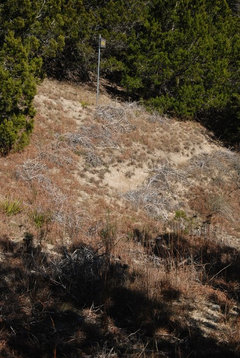
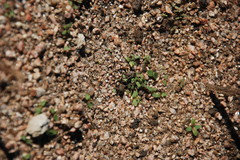
These are seedlings that I started in a caliche wash in a the beginnings of a short grass prairie in a mountain ash juniper break on a uplands area of the Edwards Plateau. The seedlings below are in the picture at the bottom of this thread. Somehow I got things in a jumble. These are growing on the slope..
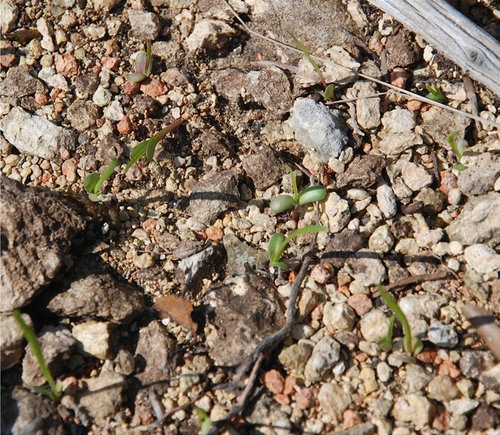
This wet winter in Central Texas has awarded me with success in getting seedlings started in a very difficult area I planted out seeds for liatris, tahoka daisy, Mentzelia decapetela, I sedan hand adze with a heavy claw end to loosen the soil in small areas and raked in handfuls of seed during the winter at different points. I planted in a sloping caliche wash at the base of a steep slope where the downpours come down hard of the upper slope and constantly wash off soil. It then becomes bone dry. It is a white calcarious caliche. No brown here. It is a natural spot for a growing patch damianita ( Chrysactina mexicana) so it is possible to grow things, just hard to start things.
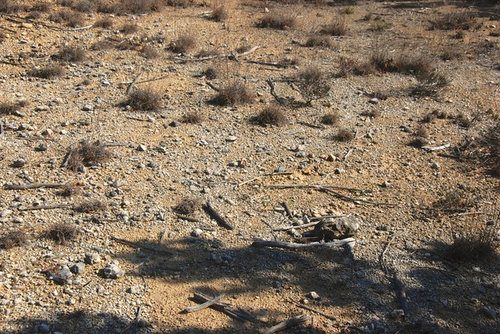
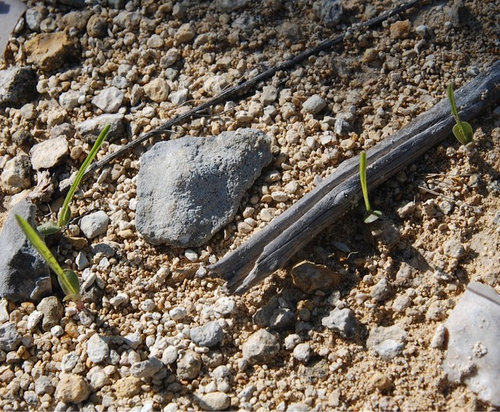
Here you can see a limestone gravel slope that has been overgrazed and slow to recover. I racked in and created some depressions and small rock berms to help hold water and soil. I have had success even here. I see some wine cups, tahoka daisy, and mentzelia up here. The slope here is steeper than it looks. I have a tough time stumbling down it. I am now having to watch for the tiniest sign of little seedlings. I can not tell you how many times I have done this and failed. The heavens were kind to us this year. This is far away from any hose bib so the water has to be from on high.
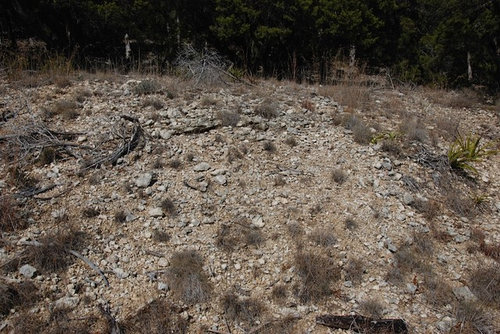
I am also finding Penstemons, Ipomopsis rubra, wine cup and blanket flower with successful starts. I am so excited. Every week I go out and check.
Comments (37)
 11 years ago
Hopefully we'll continue to get rainfall to nurture these babies along! We want pictures of the blooms please!
 11 years agolast modified: 11 years ago
I applaud your persitence of effort! That site does look harsh. Then again, you guys can do a lot of the gray-green and other dryland plants that rot in the fall and winter up here. Good luck and yes, do keep us updated.
+oM
Related Professionals
Ocala Landscape Architects & Landscape Designers · California Landscape Architects & Landscape Designers · Rocky Mount Landscape Architects & Landscape Designers · Middletown Landscape Architects & Landscape Designers · Minneapolis Landscape Architects & Landscape Designers · Hudson Landscape Architects & Landscape Designers · Kissimmee Landscape Contractors · Topeka Landscape Contractors · Charleston Landscape Contractors · Taunton Landscape Contractors · DeRidder Home Builders · Chillicothe Home Builders · Sierra Vista Home Builders · San Jose Home Builders · Temecula Home Builders- 11 years ago
Yeah, this may be the ? one year in ten? that allows new plants to get established...I wish you continued abnormal rainfall (lol). I wish us some summer, so I can start on my new place with my own wildflowering. After a week in the sixties, it's now 14F and not suppossed to get out of the 40s as a high for the ten day forecast.
wantonamara Z8 CenTex
Original Author11 years agolast modified: 11 years agoI have developed a system of marking pockets with little stars of wood so I can find them again, but I only started doing that half way through the project so I have to watch where I walk.. It will be several years before the liatris blooms. The tahoka daisies will bloom this year. I am thinking that maybe I should put some more brush over the seedlings to discourage deer foraging. Txranger supplied the seeds.
- 11 years ago
We got all the way up in the 80's barron after a string of nice days. There is an unclaimed peach tree growing in a secluded spot on our walk we have called our own and I'm hoping that the weather does this cool down enough to keep those buds in check so they don't get zapped with a late freeze such as often happens here, we have plans to make sure the peaches aren't wasted. The folks up north sent us some more real cold to deal with but they're being pretty stingy with the moisture. Thanks a lot guys.
Caliche makes a nice visual background, in my opinion, especially for those grey plants. I like that desert look myself. Lots of plants like alkali conditions which I assume it has. Looks like a great spot for ephedra or the various sages that won't tolerate periods of moisture. I haven't had luck with big sage but the fringed sage and sand sage do OK here. I'm also giving 4 wing salt bush another go, it grows fairly fast and comes up easy from seed. I bet it or any of the other saltbushes would do well. Its one of the 'in the eye of the beholder' plants and in my eye there is no such thing as an undesirable grey plant or having too many for that matter.
By the way, around here the best looking little bluestem are the ones growing out of harsh sandstone outcrops. Don't know how it would do in caliche.
wantonamara Z8 CenTex
Original Author11 years agolast modified: 11 years ago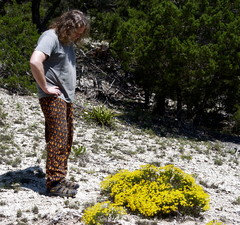
It was wet and grey the day I took the picture. Normally the reflective light is so bad that the pictures come out as total white highlights and not much detail. The soil gets blasted white. Here is a hopeless picture taken at high noon , years ago when digital cameras and photo libraries had bad editing functions. I love that demianita ( that the spell check wants to change to dementia). This patch has expanded since this photo was taken. I am at the Eastern edge of this plant naturally. I love this plant. Bluestem needs more soil normally around here.
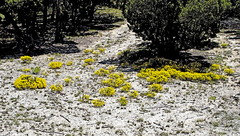
- 11 years ago
Here are pictures of the Mentzelia decapeta (stickleaf) you planted, sorry it was shot on a windy night in that top photo. You have to shoot them at night, the flowers are extremely fragrant. The flower size is quite large and one night I counted 40 of them, each flower is only good for two nights but they do stay open somewhat the next day if its cloudy. Mine was a rosette the first year and bloomed the second then died, so its a biennial.
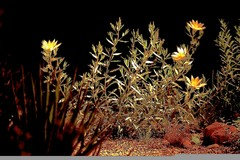
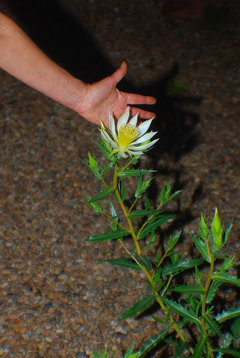
wantonamara Z8 CenTex
Original Author11 years agoThe smell of demianita is the most pronounced after an ice storm. I don't know why but it made me want to roll in it like a female dog in fresh cow poo. I could smell it from a hundred feet away or more. I have more mentzelia to place up a neighboring slope. Usually I stick to natives to the area , but I am, breaking the rules for this plant. I am not going for a "garden" look. The wilder the better. I just need to be able to drive through it with the van and the trailer for clearing.
wantonamara Z8 CenTex
Original Author11 years agolast modified: 11 years agoTEX, Thank you for all the seeds. I won't tell them they are descendants of city plants. They might cop an attitude. The grass that is growing naturally in the spot is the Blue grama grass mostly and some curly mesquite grass (I think) and that un IDed grass that I told you about (and sent seed).
- 11 years ago
This will make you feel better. The guy working out there in the garden area said "Ya mean them weeds" when I asked him what type bluestem it was.
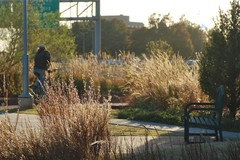
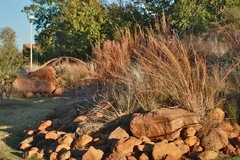
Here's a picture of the CITY native garden. They are springing up ever-where. You can see that real tall bluestem which I assume is a native local genotype and not one with a cute name from a nursery source.
- 11 years agolast modified: 11 years ago
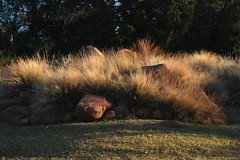
PS so as not to shrink down my photos again by editing, I wanted to point out there are two types of bluestem in the above photos. The real tall one blooms later. Some of the plants came up to my waist. The ones glimmering in the sun in the top photo are shorter plants and thats Indian Grass in the background. Here is my favorite part of the garden. I wish I could build a rock hill like that--its a mix of Sideoats Grama, Blue Grama, Purple 3-Awn, Mulenbergia riverchonii and some of the taller type Little Bluestem against a backdrop of native shrubs and trees including Desert Willow and Three Leaf Sumac (large ones).
wantonamara Z8 CenTex
Original Author11 years agolast modified: 11 years agoYea, I noticed that when one edited. I did have to go in there an change Blue DRAMA grass back to blue grama grass. Auto fill , sheesh! here are some more photos that I am working on. I am seeing some liatris on the white draw. Once, years ago,I scattered grass seed balls on this slope and I caught the cows eating the seed balls.
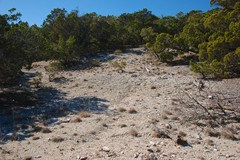
On the slope below , I have Ipomopsis rubra, Liatris punctata. At its foot in the arroyo area, I have some of your blue Oenothera macrocarpa coming up. That excites me.
I have tried and tried with them. They grow in very harsh areas were water flows across them or above gullies. I even have them coming up on a rock ledge above the valley floor but it is an area that water flows across. I think I have a seeding superstition forming. I broke up the many seed pods that you sent me (TX), but I also left many actually in those beautiful but broken seed pods thinking that maybe they would hold moisture and aid in stratification.
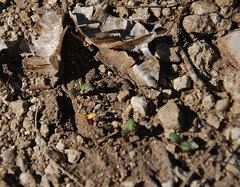
These are just to the right of the brush pile below. AND these are not far from a 5' Madrone tree.Nice prime spot that I am trying to make even more prime..
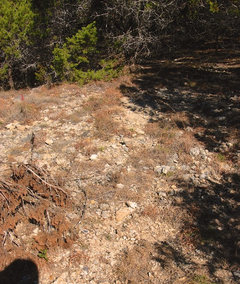
Here is some growing in a dry wash are just down from some red blooming O. eglemanii
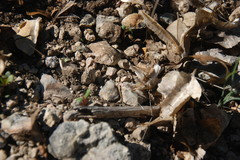
They are below the felled branch near the bottom.

Here are the only penstemon seedlings that I have found. I know that they are other places but I did not mark them, so they will be a surprise if they make it. I am staring at the ground for hours and hours wondering if it is really one of the seeds that I planted or not. LOL.
- 11 years ago
eww-weee--- I like that name--- BLUE DRAMA GRASS. Maybe we can start some from seeds from your property, a # and cute name sometimes makes a product in the nursery bizz (think 'Autumn Glow' muhly grass for example). Slap a $14 price tag on it and we are good to go.
wantonamara Z8 CenTex
Original Author11 years agoBLUE DRAMA GRAMA GRASS. like Anna Banna Danna in SNL
- 11 years agolast modified: 11 years ago
Haha...funny stuff. I think this thread just goes to show-there are no bad places to garden, just different sets of challenges. For my part, growing up in Wisconsin, I was desert-ignorant and actually believed them to be uninteresting places! That lasted precisely until I actually saw the desert, on a very fortuitous work trip to Albuquerque. My mind was blown, as they say, by the different kind of beauty to be found in that environment.
A bit off-topic, but one of my very favorite herbaceous genera is Agastache. Of course, aside form the weedy blue to purple flowering forms, the real nice ones all get hit by cold/wet combination typical of our fall up here, let alone winter. So for me, primarily an annual, albeit one which blooms very late into fall. But I bet where you guys are, a lot of very nice varieties could be grown, and grown well, as actual perennials.
+oM
wantonamara Z8 CenTex
Original Author11 years agoI was in Santa Fe are right after a wet summer during October. What a treat. I loved the "meadows in the valleys. How could you NOT love it.
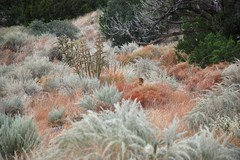
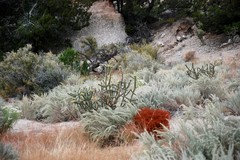
Things happen slowly out here. It is not a desert like New Mexico, but it is arid, especially because it is high and porous . We do not get the grey and silvers as much and the buckwheats don't like the summer heat and humidity. Water does not stick around long. It was overgrazed and the native grasses ( Mulenbergia reverichoni, love grass, curly mesquite, Big Muhly, Blue grama grass) are just starting to really come back. The grasses are much smaller than they are up by Texranger and most likely your way. I bought 5 of the Muhlenbergia reverichoni"undaunted" last year and then I realized that they were talking about was Seep Muhley, and I have tons of it but it stays small and wirey unless it is in a pocket of soil with a seep, then it gets some size. It took awhile for some clumps to get sizable but their roots are starting to hit their pockets of water.. I will see if this special undaunted really is undaunted and is really different. It looks very different. The small short wiry stuff has a nice energy. It is coming up in the part shade of the cedar trees. It is coming up everywhere. Those cows did a lot of damage- 11 years ago
Yes wanto, I corrected myself, perhaps just a little bit late, on my off-characterization of your area, as well as T-Ranger's. But in any case, I did just recently read an article in-I think-Ecological Restoration, or some such mag, which was titled "Texas: A Sea of All The Wrong Grasses" and which I think discusses exactly what you allude to in your post. Now I'm not that expert in grasses period, let alone those species found in your area (excepting the handful of species in-common) but I do appreciate both the beauty and utilitarian benefits of such plants. And oh yeah....New Mexico was a kick. We had a day off to explore too and went to the peak, or at least, the ranger station up on Sandia Peak. As we climbed, the vegetation became more and more northern Wisconsin-like...spruces and firs, along with snowbanks. This was April or May, I forget, so nothing unusual there. About 80 degrees F. down in the valley, I looked the part of the foolish tourist in my shorts and tee, teeth chattering and body shivering! Live and learn (hopefully!).
wantonamara Z8 CenTex
Original Author11 years agolast modified: 11 years agoI spend a lot of effort fighting invasive KR bluestem. They used to say burn it in winter, but then they say that invigorates them, burn it in summer. God that is scary. Now they say that is wrong. poison it. or dig it out (forever and ever and ever). Now I am hearing that it takes repeat dousing with poison. SHEESH. Warring grass is no Dang fun at all.
- 11 years ago
That NM landscape is just wonderful, I could live out the rest of my life there and not even worry about trying to create a garden. Don't the best ideas & color combinations come from nature? Thank you for posting it. KR Bluestem sounds like its as bad as bermuda if not worse. I'm seeing an alarming amount of Dallis Grass taking over entire areas, including roadsides, lawns & parks here. It is one hideously ugly, persistent, invasive, ultra fast growing grass. When a grass displaces bermuda that fast, you know its a bad boy.
We went to Santa Fe some years back. I came home and immediately within a week started ripping out everything here, shrubs, perennials, lawn trees and started over from scratch. Did I love the plants, the overall color & textures? Even the 'weeds' are pretty there. It changed my whole outlook, plant interests and focus.
Wiscon, I really like the name of that article "Texas: A Sea of All the Wrong Grasses". It reminds me of a book I read called "Where Have You Gone Michaelangelo?" which is about the triumph of bad taste, the mundane, bad music and bad art in churches.
wantonamara Z8 CenTex
Original Author11 years agoThat is Tent Rocks between Albuquerque and Santa Fe. Beautiful slot canyon with lots of hoodoos. I went a little hoodoo nuts while I was there.
- 11 years ago
Whoa horsies wantanamara. Just got the latest e-mail from High Country Gardens. Guess what???? They have SAND SAGE for sale. My only one only lonely single seedling that is now a whopping 2" tall that I started last summer may need friends. FYI even though you probably already know, that gor-ge-moso sage in the fabulous photo is SAND SAGE.

- 11 years ago
While I'm lusting and planning to lighten my bank account, here's one for you wiscon. Check out that foliage color will ya. Honestly, I don't do well with agastache, in fact I think it hates me. It grows just fine up the street but rats, it just always dies on me here. Monarchs love it.

- 11 years ago
I think it might like more summer water Tex, it grew well for me in Oklahoma, but then would hate the winter/spring water and I'd lose bout 50% of the time in early spring.
- 11 years ago
What is a good source for Little Bluestem (Schizachyrium scoparium) seed? I want to make sure that I get the real deal and not KR.
I am always amazed at the plants that grow out in West Texas when I visit my in-laws near Midland. Beautiful little plants everywhere that you don't see driving by at 75. What looks like pure sand and scrub at high speed is a treasure box when you stop and let the dog out of the car for a walk. - 11 years agolast modified: 11 years ago
Re Agastache: Well, maybe I feel a little better, knowing I'm not the only one struggling with this genus. And again, I do believe it is factors other than summer conditions that do it in. Even with our fairly truncated growing season, we can get a good bloom period out of them, and it goes way late into fall. Some of the ideas I see in the literature are to use a stone mulch, to not cut the stems during late-fall cleanup (Lets water down into the crown, they say) and to run things dry. None of those options are available to me. We simply can't give prescription treatments like that to each species in our compositions. Even the one about not cutting the stems pre-winter....you'd think a guy could see to it, but I usually am not actually doing this work, and whoever is doing it is apt to rotate from year to year. I could go on and on, but suffice to say, I love those things but they are to forever be annuals up here, I reckon.
I kind of get annoyed by fancy-shmancy outfits like Terra Nova, with their too-confident reports on the hardiness of these and other of their offerings. I'm in Z5 and so too are the hardiness ratings of their new whiz-bang cultivars. None of them are worth a darn up here in terms of winter survival.
+oM
wantonamara Z8 CenTex
Original Author11 years agoKR and bluestem look similar as seedlings but as plants they are very different. I don't think that people would be selling KR as bluestem . One can get the typical Texas bluestem fairly cheaply from places like Native American seed but if one wants the special Ones that TX talks about like "heavenly Blue" and such . I think Jelitto seed has a selection of some of them them for a pretty penny. Paseseed.com has many ornamentals (never ordered from them ) but is strangely lacking in the bluestem. I could go outside and get some seed off of some bluestem right now I think.It might not be too late. They are the normal green ones.Gardenharvest.com has a little blue bluestem .I might have a few left from seed sent fromTX.
SantaRosa gardens has many cultivars but they are plants.- 11 years ago
My neighbor has some that she dig up from a field, with owner permission. It looks identical to the pictures of Schizachyrium scoparium. I'll ask her for seeds, but thanks for the offer.
I am worrying that I'll plant something that will end up being KR bluestem, but I guess the plants really look nothing alike. wantonamara Z8 CenTex
Original Author11 years agolast modified: 11 years agoTheir seed heads are very different.
- 11 years ago
There are several sites online that sell Little Bluestem seed by the pound. The commercially available seeds are:
Aldous (Kansas)
Cimmaron (Kansas, Oklahoma)
Blaze (Nebraska)
Camper (Kansas, Nebraska)
I ordered some grass seed from Pase once. You get a very small amount of seed, I mean really small, like 25 seeds or less depending on the variety. The price is low but you really get what you pay for in this case. The B.S. seed sold from Plants of the SW is one that I can talk about since I planted it one year. The plants are very nice and light blue, classic bluestem with a good upright habit.
The rule on starting grasses is: The first year they sleep, the second year they creep, the third year they leap. Bluestem seed germinates very easily but they really need warm weather. I'm trying some indoors this winter and the plants frankly look pretty dismal & haven't grown much at all in my sunny room with the south exposure. It gets a bit cold at night but I'm talking only 60 degrees. Its all but a failed experiment, I usually do much better in there with other seeds.
I looked up King Ranch Bluestem. I think I've seen that growing on roadsides in waste areas or abandoned farms. The best way to tell if its bluestem at the seedling stage is that the leaves are VERY flat at the base and resemble Iris foliage, they always remind me of tiny iris.
wiscons--agastache always dies on me in summer. It looks fine then up and dies. A woman on the Texas forum said the same thing happens to her every time. Maybe its the humidity? I don't know but last year was definitely my very last try since it was the supposedly 'easier' to grow 'more tolerant' cana type.
wantonamara Z8 CenTex
Original Author11 years agolast modified: 11 years agoKR bluestem has a branched seed head somewhat like bermuda
- 11 years ago
That's weird TR, I have wintered over a few times in NE Oklahoma with tons more water (and probably more humidity) than you. Mine never die in summer...always in earliest spring when we're still getting rains and freezes.
- 11 years ago
wantana, The problem is ID'ing the seedlings, the big stuff always let you know what it is and you said you a while back that you were having trouble distinguishing KR from Little Bluestem where you planted seed. Little Bluestem is one of the easiest grasses to ID as a seedling so I was wondering if the KR bluestem has round stems as a seedling? I did plant one type of grass from seeds you sent me that you'd collected on your trip to NM and it was blue with flat stems, first time I'd seen that in a grass that wasn't Little Bluestem but since I had marked the spot I knew it was a different grass.
barron, the weirder thing is I can grow desert penstemons just fine. They are somewhat short lived, 2 to 3 years only but they reseed so well so I always have them. Palmer's penstemon is only good for a season so I treat it like a biennial. Agastache simply isn't happy here for some reason. I'm stumped, not to mention a bit bummed about it. A blooming plant will just up and croak for what seems like no good reason in mid or early summer.
wantonamara Z8 CenTex
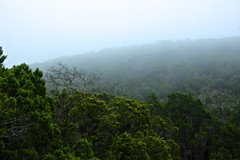
Original Author11 years agoWell, I was just up on that long white slope picking in some seedlings of mentzelia way up on the slope. We are looking at rain chances everyday this week. The weather was so much different from the day that the picture was taken above.. That cold front is here but still not the worst of it. We are in the bottom of a cloud. I love days like this they are rare here, so I went back for some water to water that plants in and my camera. I thought I would share. This is not the prairie part of my land. This is what you see when you stand on the top of the draw and look across the top of the valley. The land drops in a hurry from my land.
Below one will see a just discovered Madrone tree at the base of the big cedar that was protected by the brush pile. I need to get a cage around it. It is deer candy. I adore these trees with their peeling russet bark and red berries. They are an endangered species ( deer) that only grow in very specific and limited places. That discovery made my day.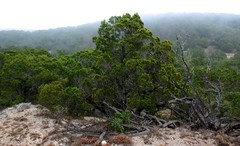
- 11 years ago
Lovely scene, even if half of the greenery in this view is invasive redcedar or what have you. BTW, what do you have there for the most "wrong" species, in terms of say, mankind's fire suppression allowing something that used to be a bit player to explode across the land?
BTW, I'm very sympathetic to the plight of folks who would manage their properties via fire, and who cannot now for some anthropogenic reason. I think especially of the situation in much of Florida, where the formerly vast pine lands burned regularly, and in doing so, were kept healthy and functional. Now of course, that state is just overrun with people, most of who would have a low tolerance of a lot of big fires happening around them.
Then too, there are plant communities for which this pyric management regime is just plain wrong, like where I live...the native plant community was mostly something called northern hardwood forest. That plant community does indeed occasionally catch on fire, but the fire interval is something on the order of 400 years!
+oM
wantonamara Z8 CenTex
Original Author11 years agoControlling this area of my land with fire would be a chance operation and full of possible lawsuits and personal loss. It is a canyon land. We are looking at the beginnings of a gorge between me and the hill across. It gets positively cliff ridden off to the left of the frame. Cameras sometimes flatten out the perspective. There is a house onto of the hill with awful access for firefighting equipment. around the corner above a cliff is a million dollar home. The grassy slop in one of the pictures above is off to the left and opens up into a meadow around an arroyo. I am slowly establishing a mosaic of cedar/grassy areas. Historically, I think areas like this canyon were often rife with Mountain Ash Juniper if historical firsthand observations of pioneers were right. The first pioneers talk about this area being full of impenetrable Cedar thickets. .
Below is an interesting article.
http://www.hillcountryalliance.org/uploads/HCA/News041014.pdf
Tree replacement is 7-10 year cycle of fire here...Not anymore. The front of the property lends itself more to preside burning. It is flat and full of KR bluestem. A darn sea of it.


User