Software
Houzz Logo Print
taylorjonl

Post hole filled with compost for deep soil conditioning

11 years ago

I am trying to find a way to fix my soil as deep and fast as possible. My soil is horrible, I had to dig a 4'x4'x4' hole(a dry well for rain drainage) and it is clay very deep. Another indicator is if I run my sprinkler for >15 min I get so much runoff that my water main vault fills completely.

Last year I tilled compost into the top 6 inches of soil. I am going completely organic, no chemicals or fertilizers. I mulch mow my grass and mow my fall leaves into the grass, I have done this for the 2 years I have owned the house. Last year I bought some earthworms and spread them in my yard(probably useless but I did it).

In the future I plan to have a yearly top dress of 1" of compost along with gathering as many leaves as possible(my neighborhood has a yearly pickup of leaves that I plan to take, then shred and spread).

Recently I came across a forum post suggesting that the person dig a 3"x3"x18" hole with a post hole digger, then fill it with compost, then let nature spread the compost. Will this work? If so I was thinking of digging one of these holes every 3 or 4 feet, then re-evaluating this next year and possibly doing it again, offset from the previous year, rinse, repeat until I have great soil?

Comments (16)

  • 11 years ago

    What I have seen with these holes filled with compost is they are good collectors of water and the water trapped in them cannot drain away. Filling scattered holes with amended soil changes the porosity of that bit of soil and allows water to follow in e3asily but keeps that water from flowing out of the hole, something called the "bathtub effect".

    http://puyallup.wsu.edu/~Linda%20Chalker-Scott/Horticultural%20Myths_files/Myths/Amendments.pdf

    kimmq is kimmsr

  • 11 years ago

    Especially if you make it them fairly deep, they will act like little sumps, and the compost will be a slimy mess down there. Stick to fairly shallow depths, maybe just a few inches below where the soil is already amended, into the native clay. You could do that with a shovel, though.

    Eventually by adding compost, using organic degradable mulches (like the leaves you mentioned), and digging in compost whenever you plant, you'll find that the soil will not only improve farther down through the action of the soil food web, but it will fluff up and you'll start to develop slightly raised beds over the native clay. This also helps with drainage.

  • 11 years ago

    nothing fluffs heavy soil like hugelkultur. but it is a lot of work and a lot of matter, and if you add enough, your soil's grade will change.

  • 11 years ago

    It won't work ... You'd have to drill the entire yard full of holes and then you would have a real mess.

    Where do you live? City, state? It makes a difference in what you can do.

    Why are you trying to "improve" your soil instead of finding ways to work with it - you can do a lot with raised beds, plants that like clay, and selective amendment of some areas. Find some clay-loving deep-rooted annuals and plant them, then slice them off at ground level and leave the roots to decay, repeat for several years.

  • 11 years ago
    last modified: 11 years ago

    I'd combine the two - your continual addition of organic matter on the surface as well as deep-rooted annuals and perennials. Which is why I leave the dandelions and alfalfa in my lawn, and in the fall cleanup in the veggie garden, I cut off plants at the roots and leave them in place. And then let the worms do the digging for you.

  • 11 years ago

    To get earthworms to work the soil you need to have adequate amounts of organic matter in that soil. Plant roots will allow some organic matter in the soil but that may not be enough by itself. Cover, or green manure, crops did add some organic matter to the soil here but usually only in the 2 percent range, just not enough to support an earthworm population.

  • 11 years ago

    I actually do something like this when I'm planting my tomatoes, not just going around digging holes. In my normal processes, I continue to work the soil deeper and deeper through mulching, composting, and mixing, but particularly in the first few years I may only have the first 6 to 8 inches or so well worked. As I rotate tomatoes through an area, I dig holes for them with a post hole digger fairly deep, up to 15 to 18 inches. I'll put unfinished mulch or compost down deep in the hole, covered by a layer of soil, before setting the tomato plants as deep as possible with all side branches and leaves pinched off up to the top growing leaves. Even if water collects there, it is below where the plants are growing, and it will help the overall garden. If there are wells that will hold water, it provides moisture to the soil above when dry, and plants will send their roots down to find it - both good things. I never remember hitting the same holes again when I go around replanting an area in tomatoes again in three or so years, so for me it is all just a part of improving the soil in my garden beds.


  • 11 years ago

    Sorry for the delay in responding, during the work week I stay pretty busy.

    kimmq/kimmsr, I understand the concern of them becoming a "bathtub" and trapping water. My area is pretty dry, I live in Utah, we get little moisture(especially this year). I may try a few holes to see how it works out. How do you feel on aerating(seems the same concept on a smaller scale)?

    I saw lots of comments on using annuals, I am game, if I could I would plant alfalfa for a couple years :) My city would get mad though. Any suggestions on good annuals that grow deep that are appealing?


  • 11 years ago

    Aerating compacted soils, usually clay, should be a one time operation made unnecessary in the future by getting adequate amounts of organic matter into the soil. If adequate amounts of
    OM are worked into the soil then the Soil Food Web will help aerate the soil.

    If by "using annuals" you mean growing cover or green manure crops that is a fairly inexpensive means of getting organic matter into the soil. Which to use depends on what is readily available in your area and the time of year. Your Utah State University Cooperative Extension Service will have information about what will do well in Utah.

    This, from Cornell, may also be of some use.

    http://covercrops.cals.cornell.edu/


    kimmq is kimmsr

  • 11 years ago

    I'm in a similar arid environment in western Colo - aside from leaving the dandelions and feral alfalfa that blows in, I also over-seeded the lawn with both Dutch and strawberry clover, which both have deeper root systems and not only add organic matter, they add some nitrogen as well.

  • 11 years ago

    Utah clay ... Keeping a thick mulch layer over the planted area will help maintain even moisture and prevent it from going brick hard.

    Instead of trying to bring the whole area into "perfect tilth" all at once, which is laborious and expensive, amend smaller areas very thoroughly as you get the time and materials, then plant them with your long-term landscape. Keep the rest of the yard in annuals and mulch until you can get around to it.

    And see if your city has any materials on local water-wise plants you can landscape with.

  • 11 years ago

    I've been thinking of doing this for a different reason in very sandy droughty soil, but with clay and some seasonally perched moisture about six feet down. I am hoping that by a combination of wicking (capillarity) and encouraging vertical (downward) root growth I can make planted woody plants more-reliably watered a few years sooner.

  • 11 years ago

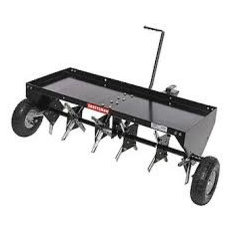
    You should try running a lawn plugger over your lawn you can rent them and pull them with a riding mower or you can hire someone to do it. In short it cuts a thumb size plug of soil about 1-2 inches deep after it's done then spread whatever organic material you chose on the lawn to fill the holes it helps to loosen and add nutrients at the same time . I over seed the area at the same time it should help with the water issue as well but it might take several times, also something to note is that the ground has to be soft/damp so the plugger/drill can penetrate but not to wet that it sticks and clogs a pro will know when its a good time to do it. I did mine my self but had to let the yard dry out as it was to wet the first try I rented the first season but then purchased my own around $200 it was around $20-$30 to rent for 24 hrs I think they also make ones you push in and step on for small areas . Good luck


  • 11 years ago

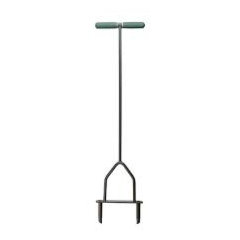
    When I was a wee lad, our obsessive/compulsive neighbor lady used one of those foot-press, two pronged thingies to do her entire lawn, carefully measuring the holes out to 3" apart, then sent her kids out with plastic funnels to fill them up with sand.

  • 11 years ago

    Good grief! Poor lady. Poor kids! :-D

    I rented one once, can confirm that it doesn't work if the clay is too wet. If it's rock hard it won't work either.

Sponsored
Buckeye Basements, Inc.
Average rating: 5 out of 5 stars42 Reviews
Central Ohio's Basement Finishing ExpertsBest Of Houzz '13-'21