Software
Houzz Logo Print
mas_loves_roses1

Roses good for bees

Hi friends,


I'm trying to add more plants that provide food for bees since they are in peril. I was wondering which roses have you noticed that bees like/love?


thanks!

Mas

Comments (32)

  • 11 years ago
    last modified: 11 years ago

    Singles are the best apparently. Double flowers make it hard for them to access the nectar/pollen. Here in Western Australia all my roses seem to attract european honeybees, including the doubles, and the larger leafed teas and Austins attract mason bees which cut the leaves. I have never seen the tiny native bees visiting roses, but they love Thai basil and lemon verbena flowers. I also ecpect they visit the natives out front, but I rarely go out there as I leave it to nature. I have also found that large beetles and weevils are drawn to SdlM and Tipsy Imperial Concubine. I think they like the scent.

    It might be best to find out what bees and other beneficial insects you have in your area and cater to them specifically.

  • 11 years ago

    I was going to ask this question as well. We have been planting butterfly and bee friendly plants for the last few years. I finally saw a Monarch last year on the tropical milkweed after never have seen them here before.

    I even let a crop of weeds grow 5ft tall last year because when dh was going to cut them down, I noticed there were hundreds of Zebra Longwing butterflies swarmed all over the flowers. Good thing they were on the back of the property backed up to woods where no one can see them lol.

    I am thinking bees probably favor the single and looser double type of roses where they can reach the pollen easily. I am interested to hear which varieties in particular that they like :)

  • 11 years ago

    They love my rosa bracteata, with those tufts of stamens in the middle. They sleep on them like pillows! Depending on your zone, check the hardiness, though.

    And she's mean and so thorny you won't want to try to train her or put her where she could snag anyone or anything.


    MasLovesRoses_z8a GA thanked meredith_e Z7b, Piedmont of NC, 1000' elevation
  • 11 years ago

    I have a bee hive and don't notice much activity on the roses. The companion planting is a different story as is the clover I let grow in my lawn and pastures. I would guess a pound or two of clover seed would make a bigger (and less expensive) impact than any rose selection you make! You might want to give your climate/zone/location and ask about bee friendly companion planting.

    Here's one of my "kids" enjoying a clover snack which just happens to be a foot or so from a blooming Belinda's Dream.


    MasLovesRoses_z8a GA thanked subk3
  • 11 years ago
    last modified: 11 years ago

    Find out which roses are native to your area and plant those. Often these have single flowers and they just ring the dinner bell for bees!

  • 11 years ago

    thanks everyone for your input! Subk3, your kid is very cute! :)

    I was just looking up rosa bracteata. I love the photos. Alas, it is not hardy in zone 6a. I also so many photos of 'The Mermaid' swarmed by bees indeed. It will go on my 'wish list' for when I move to a warmer climate (sigh). I doubt it would want to grow in a pot.


  • MasLovesRoses_z8a GA thanked Tessiess, SoCal Inland, 9b, 1272' elev
  • 11 years ago

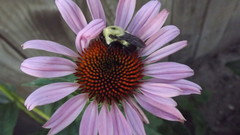
    I agree about the alyssum. While many of my roses mildly attact bees, it's the companion plantings that really do it: Russian sage, salvia, lavender, catmint, echinacea (drives bumblebees wild), hollyhocks (mainly for bumblebees which like to sleep overnight in the centers of the doubles); coreopsis, campanula, boxwood and holly in bloom, pussywillow when the pollen comes out on the catkins goes wild with bees, thyme and basil in bloom, and so on. I think my Ballerina rose probably attracts bees the best of the roses. Diane


  • 11 years ago

    I forgot penstemon...boy, do bees love penstemon of any kind. Diane


    MasLovesRoses_z8a GA thanked nanadollZ7 SWIdaho
  • 11 years ago

    Tantau has a new series of bee friendly roses, called Bienenweide Rosen. There are four varieties so far, red, yellow, apricot and an orangered. All are low and mounded in shape with single flowers. But I think all single roses with visible stamens should attract insects.

    MasLovesRoses_z8a GA thanked mariannese
  • 11 years ago

    R. hugonis is the rose I always see the bees around. Some times you can even hear it hum.

    Since honeybees are an introduced Eurasian species, I wouldn't get too hung up on the idea of native plants.

    MasLovesRoses_z8a GA thanked mad_gallica (z5 Eastern NY)
  • 11 years ago

    I have a couple of large moyesii roses which can be heard from several yards away - literally humming with hundreds of bees. They roll about in the pollen, flopping onto the catnip growing underneath, in a sort of drunken ecstasy. All those huge ramblers with hundreds of flowers (Seagull, Wedding Day, sinowilsonii, longicuspis, soulieana and so forth, send the bees into a frenzy. They then have to loll, glutted, on the convenient flat heads of the numerous umbels - later in the year, there is a similar butterfly frenzy to be seen on the agrimony and hogweeds. We have a new hive coming this month so am busy sowing fast annuals such as legousia, layia, carrot flowers, poppies, flax, hollyhocks and coreopsis.

    MasLovesRoses_z8a GA thanked User
  • 11 years ago

    Thanks everyone! You have all given me great suggestions. I also found this article about David Austin roses that are bee friendly. Any experience with these? link belowDavid Austin roses for bees


  • 11 years ago

    Mad_gallica, how big does R. hugonis get?


  • 11 years ago

    Although not a rose selection. I second that bees love Russian Sage. I can't get enough of this plant . I have five and I keep finding room for more . The bees go crazy over Russian Sage for months. It's also a great companion plant to the roses!

    MasLovesRoses_z8a GA thanked shopshopsz8texas
  • 11 years ago

    All the early Asian yellows get big. Hugonis is relatively short, at about six feet, but wider than tall. Beales says something like 6 x 8, and I do think it could be kept at that size. It holds its foliage quite well during the season, so works well as a backdrop to other plants. Highly recommended.


    MasLovesRoses_z8a GA thanked mad_gallica (z5 Eastern NY)
  • 11 years ago

    All my roses seem to attract them. Though I will admit that my yellow Lady banks seems to attract them most when in bloom. Butterfly bushes do well as well, as does lavender. Vitex(chaste tree), Tx Mtn Laurel, and Wisteria all seem to attract them in hordes as well.

    They also seem to love that dang flowering clover in my yard.


    MasLovesRoses_z8a GA thanked kingcobbtx7b
  • 11 years ago

    Oh, Marianne, more roses from Tantau to long for. If you grow any of these new bee friendly ones, keep us updated on how they do for you.
    To continue my bee attractant list for a short bit: veronica, datura, sweet woodruff, butterfly bush, flax, phlox, plus so many others draw in those bees. Diane

    Shoot...this isn't the one I wanted to post.

    MasLovesRoses_z8a GA thanked nanadollZ7 SWIdaho
  • 11 years ago

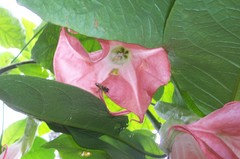
    Brugmansia attract tons of bees, tiny tree frogs, gnats, & Hawk Moths at night. I have to close up my flowers immediately if I pollinate anything or the bees and other critters will get right in.

    MasLovesRoses_z8a GA thanked sultry_jasmine_nights (Florida-9a-ish)
  • 11 years ago

    Remember no insecticide--it will kill the bees just as well as the bad bugs.


    MasLovesRoses_z8a GA thanked hoovb zone 9 sunset 23
  • 11 years ago

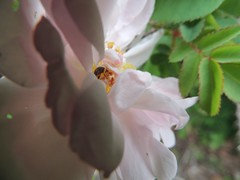
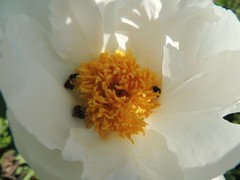
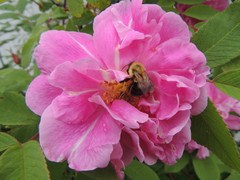
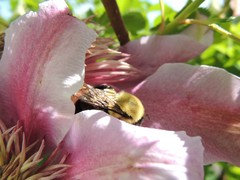
    The bees do like roses. I have often stuck my nose in a bloom to smell and been greeted with some buzzing and a furry behind. LOL I will try to post a few pics.


    That is Stanwell Perpetual.


    One of the white peonies.


    The rose Wasagaming.


    A clematis.


    If you plant them, they will come. So many of the companion plants also attract bees. I do not spray any insecticides in my gardens. All bugs are either hand picked or left to fend with the beneficials, spiders and birds.


    Valerie


    MasLovesRoses_z8a GA thanked onewheeler
  • 11 years ago
    last modified: 11 years ago

    With the roses...plant Walker's Low Catmint and Hidcote lavender. The bees will like both of those :)


    MasLovesRoses_z8a GA thanked Lavender Lass
  • 11 years ago

    I'm very unscientific about it: I just plant lots of plants of all kinds, avoid poisons, underplant all my roses and other shrubs, and let native flowers flourish in the grass and beds as long as they don't get too much in the way. The bees like the veronica, dandelions, and English daisies that are in bloom now just fine, along with the early spring bulbs that are currently in flower. My theory is that manaical neatness limits variety and abundance of bloom and so is bad for bees, butterflies, and wasps. (Pruning hedges before flowering can also cut away a lot of flowers, including the unshowy ones of box and laurel.) I'm all for profusion.

    MasLovesRoses_z8a GA thanked Melissa Northern Italy zone 8
  • 11 years ago

    When my boxwood blooms, I don't even notice the flowers until all the native bees and honeybees go crazy, yep :) The big bumblebees or Carpenter bees prefer other things (catmint, salvias, lamb's ears, sedums) and not the boxwood.

    Some real favorites of my bees that haven't been mentioned are: lamb's ears flowers(!), anise hyssop (!), creeping charlie weed for an early nectar source, sedum flowers (of the Autumn Joy type) for quite late in the year, and caryopteris for a beautiful blue flower that they love.


    MasLovesRoses_z8a GA thanked meredith_e Z7b, Piedmont of NC, 1000' elevation
  • 11 years ago

    R. Rugosa and R. Rugosa Alba stay covered in bee's. Mostly honey and the big black and yellow bumble bees. I have these two roses planted out by my shop out back. I enjoy sitting in the door way and watching them. If I don't move to fast, they'll come over and land on my arm or hand or my lap just to check me out. I think they can sence I mean them no harm.


    MasLovesRoses_z8a GA thanked Ken (N.E.GA.mts) 7a/b
  • 11 years ago

    In Sweden the very first flowering plants are considered the most important for bees, hazel and willow over here. Your winter flowers are probably different. I think there are usually enough nectar rich flowers later, both wild and planted.

    MasLovesRoses_z8a GA thanked mariannese
  • 11 years ago

    I'd suggest a polyantha, since they can cover themselves with small flowers, and do it repeatedly throughout the year.

    MasLovesRoses_z8a GA thanked jill_perry_gw
  • 11 years ago

    Thank you, friends! It is so nice to see so many other people care about bees too! :)

  • 11 years ago

    One non-rose plant that has been fantastic for me is the species form of hydrangea arborens. It came to me mislabeled. I thought I bought an 'Annabelle' hydrangea but this one had lacy blooms instead. No other plant in my yard is more attractive to native bees. They just load the plant when it is in bloom. It has given me the opportunity to view the diversity of native bees around here. Highly recommend it if you can find it.


  • 10 years ago
    last modified: 10 years ago

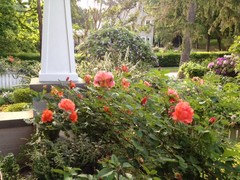
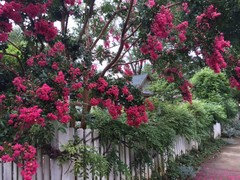
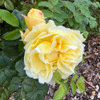
    As others have said, companion plants are key in a rose garden to so many things, including bees, Here's a link to find bee-attractant plants for your area; http://www.pollinator.org/guides.htm I have catmint, Nelly Moser clematis, bee balm, coneflower and others in mass plantings between and around roses. I do notice honey bees on my Westerland climbers, shown here. I wonder if that is the type of bloom? They are fragrant, but so are some of my roses that I don't notice bees coming to. As others have stated, I am all for profusion in the rose garden! Westerland roses are woven with American wisteria and with Nelly Moser on the front fence and side fence— after all those blooms drop, the Crepe Myrtle blooms over them. Photo of roses here is from the porch, so you can just see the other Westerlands on the front fence with wisteria, clematis about to pop on the right fence, and the still bare crepe myrtle on the other side of the wisteria arbor, with Snowbound spirea sticking up between—bees all over that. Point being its a mess of pollinator attractants all season. But still we are not getting as many bees as we used to. I put in more bee balm last spring, but I am worried.

  • 10 years ago

    I get the odd bee floating around the roses,(Golden Holstein, sometimes, its a semi double that opens up quickly) but they mostly make their home around a giant pink flowered Rosemary planted nearby in the herb garden section. Usually theres bees around most of the year, for the sage, oregano thyme and marigolds. Even now in autumn there are some visiting the mint there.