Software
Houzz Logo Print
andy_keels

Problem diagnosis - Please Help!!

11 years ago
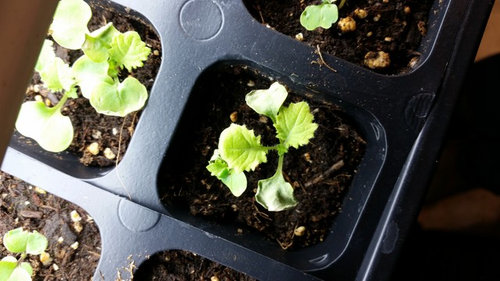
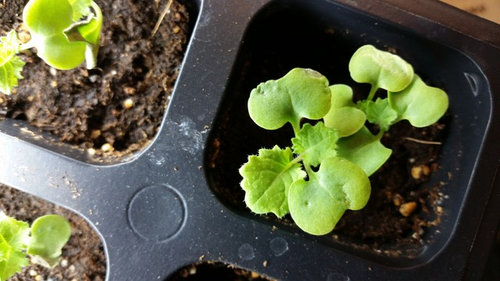
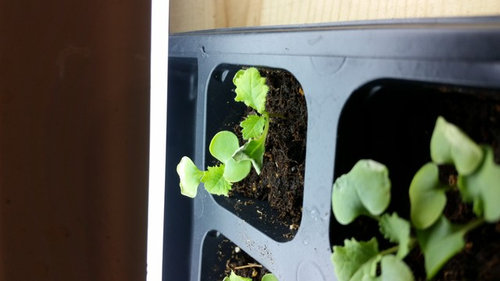
I am having an issue where my seedling's leaves are dying and falling off. I have included some pictures below of the dying leaves. This seems to be eventually affecting all the plants on the shelf. They are all brassicas if that helps.


Seeds are started in commercial seed starting mix under lights. I have a fan circulating air and bottom water only when soil is dry. Temps are in the mid 60s pretty consistently. I have successfully started seeds in this setup and location in previous years so it has me really stumped. Any help would be appreciated!!

Notice the gray and dead cotyledon.

Beginning phases if whatever this is.

Leaves eventually die and fall off. Sometimes this is before the first true leaves form.


Comments (11)

  • 11 years ago

    If the coloring in the photo is accurate then the yellowing at the edge of the leaves in the center photo indicates over-watering. The loss of cotyledons before true leaf appearance is also a result of over-watering. That causes root suffocation and root rot and over-watering is the killer of more seedlings than all else combined. Even when we are sure we are NOT over-watering, we usually are. ;-)

    Don't use the soil surface as an indication that water is needed. Learn to read the turgor of the leaves and stems and the weight of the containers and if all else fails, stick your finger deep into the soil.

    Dave


  • 11 years ago

    I think you are on to something with the white balance of the photos. The dying leaves are actually more like a grayish whitish color. There is no yellow at all.


    It's of course possible that I over-water, but I mainly judge the need for water by the weight of the containers. I said "only when the soil is dry" because I was typing on my phone and trying to be brief, but I meant that when all of the soil is dry, not just the surface.


    However, if water IS the problem, that would be great news! I was more concerned that it was some sort of disease or fungus. Do you know of any that would cause this sort of pattern?

  • 11 years ago
    last modified: 11 years ago

    Indoors under lights. Interesting about the dead cells. I hope it's a water issue. I am using a new starting mix this year (ProMix Ultimate Organic), but the ingredients are similar to what I have used in years past (Peat, Coir, Perlite). Maybe it's not draining well enough or holding water too long? No matter, I will stretch the waterings further and see if that helps.

    Just a little more info on how I'm watering (maybe you'll see something I can improve). I fill an empty flat with lukewarm or room temp water and set the 6 packs in it until the water soaks up through the soil and the soil surface starts to saturate and darken. This takes probably 3-5 minutes. I then remove the 6 packs and place them back into dry trays under the lights.

    One last question, and maybe it's of no consequence, but how do the small bumps on the cotyledons fit into this? You can see one clearly on the second photo. These seem to develop first and then the leaf slowly deteriorates from there.

    I haven't seen any sign of aphids or spider mites but will take a closer look.

    Thanks so much for the help!

  • 11 years ago

    Bump for any other suggestions. Also, does anyone know if these will recover or should I scrap them and start new ones. Oddly enough the cabbage seems fine, its the kales that have a problem.

  • 11 years ago

    So I have an update and I'm looking for some more guidance. The seedlings pictured here ended up dying.


    However, I had some more "on deck" so I decided to test the over watering theory. I tested two separate six packs of Red Russian Kale, which seemed to be the first to have trouble last time. I watered one what at what I would consider my normal intervals, every 3-4 days when relatively dry. The other six pack though, I stretched a couple days longer, only watering when I pulled out my test cell and the soil was completely dry all the way through.


    Unfortunately they both got "sick" at relatively the same time and progressed just like the last batch. However this time I noticed that the trouble starts with wet looking dark spots on some of the leaves, which makes me think bacteria. Because the Red Russian Kale seems to be the first to have problems, is it possible those seeds are contaminated somehow. Seems to be only brassicas that are having issues.


    Any advice would be very helpful!

  • 11 years ago

    Andy - given this new info then my best guess would be some sort of fungal disease issue. But the symptoms just don't look like any of the common ones. More likely than the seeds being contaminated (which is usually viral) I'd look into the environment, the containers, the soil used, tools, surrounding things that might come into contact, even the air circulation (ie: other diseased plants in the area). It is rare indoors but possible given the right conditions for the spores to grow (moist, warm, low levels of air circulation).

    Why I say fungal is that most of the common bacterial diseases don't actually kill the plants, fungal issues do kill. So what sort of ambient temps are you running in the area? Can you make it cooler? Do you have fans running to increase the air circulation and help dry things out? If not can you?

    The saving grace is that all of these things can be direct seeded when the time is right for your location and they usually do much better than when grown as transplants.

    Dave

  • 11 years ago

    I'm having the same EXACT problem on my brassica - 13 varieties. I've lost three flats so far. Each time tweaking my methods a bit. Did you ever figure out the problem? I am disinfecting all containers with bleach soln (and rinsing very thoroughly) and using soil-less seed starting mix. I doubt I am overwatering but cut back anyway and that did not help. I thought maybe it was too much miracle grow fert (24-6-15) so I cut that in half from 1/4 tsp/gal to 1/8 tsp/gal, but that did not help. Is this still too much fert? The only thing I am not doing is not blowing a fan on them, but I will do that on trial 4. I will also isolate the different varieties as much as possible to see if I can identify which one is carrying the pathogen (if any). Or maybe the miracle grow or soil mix has some toxin in it? Please help. I've tried direct seeding around here this time of year but the cutworms, fire ants, heat, fungi, etc make it very difficult.

  • 11 years ago
    last modified: 11 years ago

    I would avoid any fertilizers in the beginning as there's no point - all the resources come from the seed, so you might be burning the seedlings maybe? Or do you mean much later stages?

  • 11 years ago

    vytautas49,

    You are probably right that they are being burned by fertilizer. I
    fertilized when all the plants had a least one fully formed true leaf - some
    had two at that point. I thought that is how most commercial transplant
    production is done. My understanding was that the seed had enough to take them
    to that point but not much further, but I could be mistaken. My figuring says
    that 1/8 tsp/gal of miracle grow provides around 50 ppm N, but again my
    figuring could be wrong. I'm pretty sure fertilizing seedlings with 50 ppm N at
    first true leaf is consistent with published literature on the subject.
    The season is pretty much lost at this point so I'll seed some more using
    several different fert methods to see what happens then I'll report back in a
    few weeks.

  • 10 years ago

    Did you notice any small insects (Gnats, Thrips, etc...) flying around when seedlings are touched or moved? The second picture shows a clear "fractal" white spot on the cotyledons of the plant on the right.

Sponsored
Haus Studio
Average rating: 4.8 out of 5 stars28 Reviews
Franklin County's Preferred Custom Cabinetry & Design Studio