Software
Houzz Logo Print
jager1

shrub cover to overwinter hydrangeas in zone 5?

10 years ago

anyone use Nue Vue shrub covers filled with leaves to cover hydrangeas through the winter? might look better than burlap or chicken wire and be easier.

Comments (10)

  • 10 years ago

    I'm not some Hydrangea expert, but the few I have make it through the winter just fine with no protection. This in a colder Z5 location in Wisconsin.

    +oM

  • 10 years ago

    i do not cut mine back.. and leave all the tree leaves that fall into it... all winter ..

    and still .. usually .. have die back to snow cover ...

    but regardless of that.. i always .. cut back hard.. to 2 live buds ... so there is no real need to protect very high on the plant ....

    do you do fall clean up .. necessitating a second job of installing winter protection???? .. if so ..... you might want to think about how many plants actually self mulch.. if you leave the old plant parts there.. over winter ...

    be nice to know.. where you are.. and what specific H you are talking about .... zone might matter ...

    ken


  • 10 years ago

    i see on hitting enter.. you snuck it in the title ... k


  • 10 years ago

    I'm actually new to hydrangeas and plan on planting some oak leaf variety as well as some endless summer variety. I've read that the oak leaf only flower on old growth so I'd need to protect some of the old wood. The ES flower on new and old but would be nice to protect them so they get larger and flower earlier. I'm actually 5b close to 6a. I was thinking of piling oak leaves on the plant in fall and use the covers to hold the leaves on and further protect from wind burn.

  • 10 years ago

    Yes, that's a good point regarding the oakleafs. My fall cleanup is much as Ken described above. I'm far more likely to be adding leaves to my landscape than to be removing them! And relaly, if you've got trees around, so many leaves are going to pack in around the plants, you may not even have to do much. But I see where you're coming from. I guess the only Hydrangea I've got in my yard right now is the original "Endless Summer", whatever that thing is really called. But that flowers on new and old wood so that doesn't really count. We've got lots of the 'Annabelle'-style out in our municipal landscape, but those are iron-clad plants. so again, not much help.

    +oM

  • 10 years ago
    last modified: 10 years ago

    There was a thread on shrub covers late last fall/early winter in the New England Gardening forum here on GW. You could ask there to see how they worked, though it may be a bit early yet to know. Two folks mentioned that they were trying them for the first time. You could also ask on the hydrarangea forum to see if anyone there has tried them. I plant fully hardy Hydrangeas (H. arborescens, H. paniculata, and a few kinds of reblooming H. macrophyllas) and we usually have deep snow, so I don't worry. I don't really want to have to look at the covers.

  • 10 years ago

    Thanks for pointing out that thread. After doing some more research it sounds like the oak leaf's old wood should make it through most of our winters here. I also looked more into the more hardy ones you mentioned and I'm going to plant mostly the more hardy ones. I'm still going to do some of the macs and experiment with protecting them so they get larger. If it doesn't work at least they'll flower on new wood. These will all be planted in my back yard on the other side of a pond so I'm not super worried about the looks of bags on a few over the winter.

  • 10 years ago
    last modified: 10 years ago

    Here is my experience with various types:

    H. arborescens 'Annabelle' is a bit floppy (mine leans on nearby shrubs) and spreads slowly outward through suckering. (I've been saying for about 4 years I need to divide and move her.) After getting established, she hasn't been slowed by winter damage by voles and heavy snow loads. Some years broken branches make hard pruning necessary (mine is where snow dumps off the eaves) but some years she gets no pruning and she blooms well regardless. With too much sun, she wilts, so I have her where there is morning sun and afternoon shade.

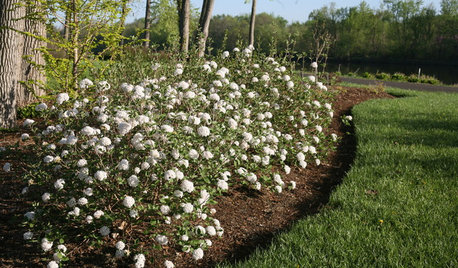
    I grow a couple of H. paniculata varieties, and my favorite is 'Quickfire'. I love the early bloom (starting in late June) as well as the rounder panicle shape (many are longer and more cone-shaped.) The bright pinkish-red fall color really stands out. This is close to the longest-blooming plant in my garden and is rock-hardy and without any damage, even after temperatures that get below -20 F. 'Pinky Winky' has a much shorter bloom period due the later starting bloom (late July) and has the panicle shape I like less.

    two photos taken the same day - in these photos, Quickfire has been blooming about a month and PW is just starting.


    The photos just above and below are the same two in mid-September.

    I also grow several H. macrophyllas, but only a few have been in the ground for more than just a couple of years. These do best with shade from the most intense sun, so are situated in morning sun and afternoon shade. 'All Summer Beauty' has whitish blooms with some blushes of bluish, purplish, and pinkish, even in my quite acid soil. It seems to bloom best alternate years.

    The first 'Endless Summer' blooms blue, and only one year hasn't produced well. This photo of ES just starting is the only one I could find.

    Both of these die back most of the way to the ground most years here. 'Lady in Red' and 'Blue Billow' (I think) haven't been hardy enough most winters to produce bloom.

    If you have voles where you plan to put your Hydrangeas, you will want to think about how to prevent the voles from moving into the leaf-filled tents for a lovely winter B&B, warm, dry, and with food on-site. On all of them I leave the dried flower heads for early winter ornament and then prune off the old flower heads while the ground is still frozen in early spring, or after the ground has dried out.

  • 10 years ago

    Likewise with 'Endless summer' here-you may think it time to prune back to a bud in early spring, like right now, but better to just wait-more die-back is going to occur.

    Just a side note about that cultivar: Where I live, the soil tends to be circumneutral. As such, if you don't acidify, this cultivar will not be the blue, but rather pink. Now this is just opinion, but I never treat mine. I immediately found that particular blue extremely garish and unnatural looking. The normal pink shade is far more pleasing to my eyes. I like blue flowers just fine, but not that particular blue!

    +oM

  • 10 years ago

    Thanks for all the responses. Wow those are some great pictures! I'll have to remember how big some of these spread when I'm spacing them.