Software
Houzz Logo Print
hudson___wy

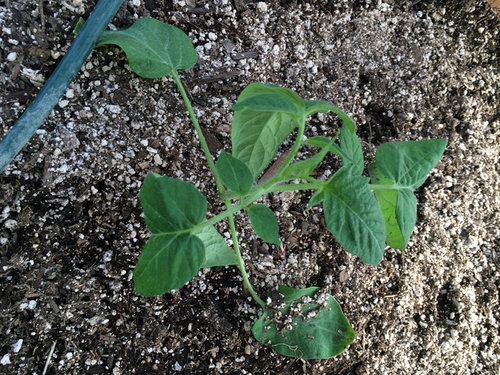
Pruning lower tomato branches

11 years ago
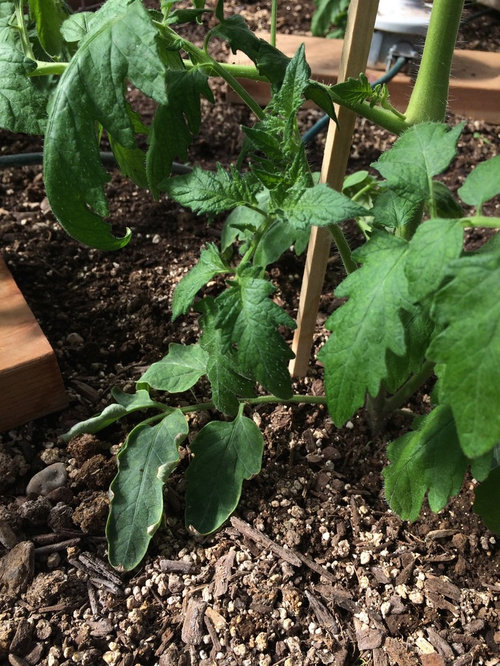
When the seedlings are established - we prune the lower branches as soon as they hit the soil. This pruning helps prevent diseases picked up in the soil and helps keeps the plant ventilated.


Comments (9)

  • 11 years ago
    last modified: 11 years ago

    When the seedlings are established - we prune the lower branches as soon as they hit the soil. This pruning helps prevent diseases picked up in the soil and helps keeps the plant ventilated.
    &&&&&&&&&&&&&&
    Agree, Hudson. Any leaves that touch the soil or get splash on them, are sending out possible open invitation for some kind of soil borne disease. I would prune all such leave branches too.

    Seysonn

  • 11 years ago

    Generally, lightening up the foliage (not just the lower leaves ) can be beneficial in preventing fungal/bacteria diseases. Most of those micro beings can thrive in stagnant and moist conditions.

    Seysonn


  • 11 years ago

    Nice photos & good comments. I do the same thing as illustrated and commented, but if the plant is set very deeply or angled any toward horizontally, I don't pinch off more than one leaf-branch at a time. When one or more still touch, I just put a piece of plastic under them and if necessary use a stick to hold it in place. The plastic tends to accelerate the drying out, but the plant usually handles it better.

    PC

  • 11 years ago

    PC, .. Probably in you hot climate leaf branches can shade the soil and the fruits . That is wanted. But in my wet cool climate mold is a problem. So lightening up the foliage can help to better ventilate .

    Seysonn


  • 11 years ago
    last modified: 11 years ago

    Seysonn,

    I'm refering to the mold when the seedlings are established like Hudson was showing in the pictures, not the overall mold management strategy. I don't like to shock the plants double during transplant like others that remove all the leaves that touch the ground at the time of transplant. I remove one branch at most every other day, starting with the most critical, when they are transplanted. It seems to help, and the plastic is placed under the leaves, plus soil always starts then as fresh mulch to give the new transplants a leg up. I always have a gap from the soil to the first leaves, as when leaves are looking bad they are pretty useless to the plant anyway. Generally I try to have no leaves up to the height of the first cluster.

    Coastal FL humidity is much higher than yours year round but as you say the cool temperatures make a difference for the worse as that's the situation here for Fall, so we may have a somewhat easier time only in March-April when transplants are established because it hits higher temps in the day.

    From April through October though LOL, we have 2.7 times the rainfall as you and humidity that is about 95% every night with perfect mold incubation temperatures, and uncomfortable throughout every day. Leaf mold is by far the single biggest problem I have. It made me destroy my whole fall-winter crop and drench the growing area in hydrogen peroxide.` It is not uncommon in the summer here to rain every day for weeks or basically the entire season. The sun will come out the same day, but things never dry very well with humidity between 90%-100% every night, without break. It could be managed better if I had a vegetation free, tree-free yard, but that is not a typical here :-)

    PC

  • 11 years ago

    PC, so why you cal it SUNNY FLORIDA ? LOL.
    We get a lot of drizzles , NO heavy rain and RH in the spring and summer is mostly low. but it is worst from September on. I am going to try H2O2 this year for sure, as you have suggested before.

    Seysonn.


  • 11 years ago

    PC, I got grey mold for the first time last year on some of my plants. Have all new pots and soil, but wondering if the spores over winter on cages? I should probably spray those just to be safe. Is hydrogen peroxide effective?

    Jennie

  • 11 years ago
    last modified: 11 years ago

    Seysonn, LOL,

    "We[Florida] ought to call ourselves the Partly Cloudy State instead
    of the Sunshine State," Miami-based meteorologist Jim Lushine said. "But it
    probably wouldn't get the Chamber of Commerce's vote."


    Florida has more days where between 20 to 70% of the sun is
    blocked by clouds than anywhere else in the continental United States, weather
    officials said. Weather experts said warm water surrounding the state, high
    humidity and a long rainy season make for cloudy skies.

    ref:The Sunshine State

    The "Sunshine State" means a lot of things to a lot of people. Due to our latitude (not mine, but those further to the south) we are the "Ultraviolet State", but definitely not the Sunshine State. New Mexico puts the Sun on their flag and South Dakota was "The Sunshine State" before it changed to "The Mt. Rushmore State". Arizona has over twice the annual Solar radiant energy in a year than Florida (Solar energy isn't that popular here). Washington (Seattle) has 16:00 hours of daylight on the First Day of Summer, and Miami only 13:45.

    Good luck with the peroxide!

    PC

  • 11 years ago
    last modified: 11 years ago

    Jennie,

    Yes the mold can persist for a year and it isn't cold that kills it, but dry conditions that are key. That's something many of us just can't get. As far as the hydrogen peroxide, I've been on a kick to use it. My understanding is that it will work if you can soak the surfaces where it might be, but putting it into the soil is probably not going to be effective beyond the very top. This is because the hydrogen peroxide is not like a fungicide/moldicide in that it is an oxidant like bleach that just destroys any organic substance it contacts, so if you have an organic soil which all are, it will react and dissipate almost instantly. If you put it on cages, pots, etc., within 30 minutes it will be gone. That's actually a benefit since the only residue is water. Bleach leaves salt residue, but if you are just doing cages that might work well.

    Hydrogen Peroxide works great on surfaces though and I ended up using it diluted 50:1 and thoroughly soaking everything before planting. I am very satisfied that it worked well and is effective for me in my conditions. It has been about a month now and I've got no mold so far, even though one month ago I cleaned my growing area out after a bad mold winter mold storm in there when I pulled the plants (around the first week in March --- they were bad). If you spray it, be extra careful not to breath peroxide in, since as mentioned it is reactive and will hurt your lungs just as quickly ... they are organic too ;-)

    Other home remedies for mold I've played with are milk and cinnamon oil. Seysonn uses neem oil, which is probably best for the plants if necessary and you aren't depending on copper or Daconil which are both more effective fungicides especially when used preventatively. Be sure to diagnose whether you have gray mold or tomato leaf mold when researching what you might do.

    PC

Sponsored
AIS Renovations
Average rating: 4.5 out of 5 stars15 Reviews
Custom Craftsmanship & Construction Solutions in Franklin County, Ohio