My builder uses Houzz Pro to plan the timeline and give detailed estimates and daily updates with photos of progress, and provide invoices at pre-agreed key points in the build. This made the whole experience much more efficient and stress-free.
hi, i am playing with the idea to plant one in the garden. i digitally dug around a bit and it seems many web-sites list a height of about 0.6- 1 m.... the thing is i saw that sucker a few days ago down in a nursery at the sea-side (asturias, spain) at least 2 m tall... and the owner told me he planted it about 7 years ago and it grows like nuts.... so, ... i am confused ... like always, haha. cheers for any possible feedback.
no shrub.. tree.. conifer.. ever stops growing ...
many height estimates are at ten years... if not totally useless ...
you prune or renovate shrubs ... to keep them at a height that pleases you ...
but with flowering shrubs.. let me suggest.. that is not as simple.. as a haircut ... and timing.. i usually an issue.. so you dont cut off the next seasons buds ...
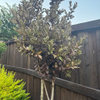
There are many, many Hebes and I think the 2 metre one was possibly a different species or cultivar. They vary from tiny dwarf types to small trees. Hebe Wiri Mist
Hebes are in flower almost all year round in mild maritime climates. They don't take well to pruning. They tend to die back and are short lived.
Lawrie Metcalf's 2006 Timber Press hebe book says 60cm and that it is distinctively compact and spreading. He also says the flower-heads are also noticeably "dumpy". If the tall one wasn't a chubbins then it probably was something else.
The Hebe Society (NZ) - my go-to source for all hebe info - confirms the other comments that this is a dense, compact shrub of about 20"x30". Since its parents, H. alblicans and H. diosmifolia, are both pretty compact growing varieties, doubling the listed size would be out of character to say the least.
There are some species of hebe that do grow fast and large. Hebe odora (aka Hebe buxifolia) is one that will put on considerable size in a relatively short period of time. 2m would not be out of line for that selection. And it also has white flowers.
I have had good success in pruning back unruly or winter damaged hebes. You just can't prune too hard.
There are certainly other, older examples of "dwarf" or slow-growing shrubs around that have been in place long enough to get bigger than generally depicted. As mentioned none of them "top out" without entering a decline or dying, as long as they are making new growth every year they are getting bigger. And if a shrub isn't growing it's dying back or dying - annual production of new shoots is a basic function.
laxerra - define 'looked like'. If it was 2 metres tall it didn't look like Wiri Mist, even if the flowers and leaves appeared similar. Certainly a picture of the big one would help.
The link I gave you was to the Hebe Society which Gardengal also mentioned. You may be able to id the tall plant that way. Anther source of info. http://www.delsueve.com/cat/D00196.pdf
Although some references indicate typical heights for 10 years, 20 years and even beyond for woody plants Metcalf doesn't say how old they are supposed to be when at the sizes he gives for each hebe. And time is always a factor - any shrub that lives long enough can end up being a lot bigger than more frequently seen younger examples of the same kind. My area has Japanese hollies 20' tall and common camellias 30' tall.
Since on the whole, hebes tend not to be very long lived outside of their native environment (10-15 years), one present in the garden for the extended length of time needed to achieve significantly larger than typical sizes is unlikely.
I don't know this particular Hebe but many are practically sub-shrubs. However old they get, and for Hebes this will not be very long, before declining and dying, they will stay small.
Haven't seen anyone indicate a time frame for the "typical" sizes being given for this cultivar. If it is for propagules merely, say, 5 years old then much taller specimens may be possible - without long periods of time being involved. And the planting site of the specific specimen being asked about sounds like a more favorable situation than usual in temperate climates, where performance (including fast growth and longevity) beyond what is generally seen farther north could occur. And 2 m is only twice 1 m.
But you do have to wonder about 2 m in 7 years for a plant expected to be a low and broad "ground-cover".
The only way for the discussion to move ahead is for confirming photos of the supposed example in Spain to be shown.



ken_adrian Adrian MI cold Z5
floral_uk z.8/9 SW UK
Related Professionals
Washington Landscape Architects & Landscape Designers · Springfield Landscape Architects & Landscape Designers · Gloucester Landscape Architects & Landscape Designers · Montrose Landscape Architects & Landscape Designers · Davenport Landscape Contractors · Erie Landscape Contractors · Bismarck Landscape Contractors · Spanish Fork Landscape Contractors · Chatham Landscape Contractors · Meridian Home Builders · Asheville Home Builders · Vineland Home Builders · Aiken Home Builders · Kingman Home Builders · Hobbs Home BuildersEmbothrium
gardengal48 (PNW Z8/9)
laxerraOriginal Author
Embothrium
floral_uk z.8/9 SW UK
Embothrium
gardengal48 (PNW Z8/9)
floral_uk z.8/9 SW UK
Embothrium