Software
Houzz Logo Print
kfrinkle

Voles.... Already...

11 years ago

So the voles are out really in force this year, they mowed down the roots on 1/2 of a row of my loose leaf lettuce already. I have scoured the internet looking for solutions, but I would appreciate any advice from you guys. I do have a couple of outdoor cats, they catch the occasional mole and bird, but I have never seen them with a vole. I have tried flooding out the tunnel runs, stomping down the tunnels, shoving cat fur down into the tunnels, using sonic steaks, spring loaded mole traps.... I can't seem to catch them....


Comments (2)

  • 11 years ago
    last modified: 11 years ago

    Traps were the only thing that really worked for us. We had to try two different kinds before we found one that did the job. The neighbors had some success with smoke bombs they found at Atwoods. For the most part the ones we had stayed out in the middle of our lawn, so aside from the nuisance of the ugly dirt mounds to stomp down I let them be. It wasn't until they started digging under our sidewalks and foundation that we decided they had to go.


    EDIT: I should probably note that the mound builders at our old house were in fact moles. At our new place we have voles. The traps worked about equally well on both.

  • 11 years ago

    We moved here in 1999 and had moles, voles and gophers from day one. We knew they were here as we observes their tunnels, holes and mounds when we visited this place with our real estate agent while searching for a piece of land to buy. At the time we built our house and moved here we had a great hunting cat named Moose who killed rodents with extreme prejudice all day every day. He wiped out the moles and gophers in no time and took out a lot of voles, but we are surrounded by many acres of woodland on three sides and grassland on the fourth side, so we're always going to have pine voles and meadow voles. Moose died in 2001 and no cat we've had since then has been nearly as good of a hunter. When you have their natural habitat all around you, you'll never wipe out all of them and more will just keep coming. About the best you can hope for is to be able to exclude them from the garden or repel them. So far, what I have found is that nothing works well for long. I have had limited success with the castor oil-based repellents but you have to reapply them often and if it is a rainy year, you have to reapply them really, really, really often. Even then, if a vole is determined to eat your plants, nothing much will stop it. At our house, I have found that the hotter and drier it gets, the hungrier they get and the more they eat. So, in July and August they are pretty much unstoppable here.

    What has worked best for me is exclusion, but it is a lot of work and a lot of expense and there's a limit to how much I'm willing to spend to exclude voles.

    For root crops, I only grow them in either raised beds lined (sides and bottom) with 1/4" hardware cloth. So far, I haven't lost anything grown in the hardware-cloth lined beds, but I've only got two of them so am limited in what I can grow there. For other crops they like, I raise those only in very large containers (I use molasses feed tubs which are roughly the same size as a whiskey half-barrel) which have hardware cloth across the bottom to keep the voles from coming up through the drainage holes we've drilled into the bottom of the molasses feed tubs.

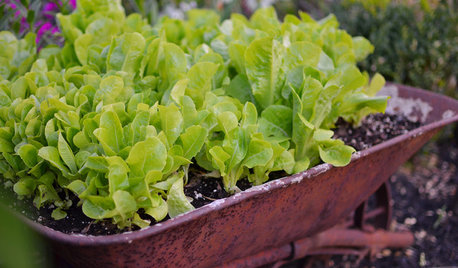
    For lettuce and other greens, I now grow them only in flat black concrete mixing trays (sold on the concrete aisle at Lowe's and Home Depot) sitting on tables about 3' above ground, or in my cattle feed trough, which has legs that hold the trough a couple of feet above ground. So far, the voles haven't eaten anything (including flowers grown from bulbs) that I have been growing in molasses feed tubs or in the cattle trough.

    With in-ground plants, I now plant fruit trees, blackberries and ornamental plants in root cages made of quarter-inch hardware cloth. Is it a PITA to make these root cages? Heck yes. However, they work.

    I intend to continue retrofitting raised beds with hardware cloth as the years go on. I'd like to do one or two per year, but it involves a lot of digging so we'll see if I stay enthusiastic over the years and keep retrofitting the beds. I've been trying to dig out and retrofit a third bed in the garden so I'll have room to plant sweet potatoes as I've already filled the two existing raised beds with Irish potatoes, but may not get it done this year. The third planned wire-lined raised bed is at the bottom of the garden which has been too wet to dig for most of the year.

    You could try trapping with vole traps or mouse traps. It is a long, slow process and, if you have acres of their habitat surrounding you, the drawback is that more will just keep coming to fill the void left after you remove some. That's why I don't waste my time trapping. Woodland sets 5' from my north garden fence so voles are always going to be here.

    Some people have limited success with purchased predator urine (expensive) or poison baits (not recommended if you have pets or have neighbors close by with pets) and not a choice I'd make.....I think. Maybe someday the voles will drive me to the point that I'll use the vole poison baits, but it hasn't happened yet. We have cats and dogs and some of the cats do hang out in the garden a lot and hunt voles during the daytime, so I'd rather not use a poisonous bait. The problem is voles are more active at night.

    I gardened from 1999 to 2011 with little to no vole issues even though we had voles. It is sort of hard to figure out what changed. Obviously, in 2011 it was incredibly dry and many of the undergrowth types of plants in the woodlands died, clearly driving the voles out of the woods and into our still-green (at that point) veggie garden. I also think that we unwittingly contributed to our own vole issues when we changed the garden fence (we had a double 3' fence with 3' between the two fences to serve as a deer moat and changed to a single 8' tall fence). The taller fence keeps the deer out, but also keeps out the bobcats and foxes that once were common garden visitors. It used to be those predators just jumped the garden fence and sat there among the plants waiting for voles to show up. They mostly visited the garden at night, but also sometimes in the afternoon if they were really hungry. Apparently the bobcats and foxes really were doing a great job of controlling the voles, because without them the vole population apparently soared.

    As much as I hate snakes in the garden, they probably do go into the garden at night and get some of the voles. At least I hope that they are doing that.

    When planting this winter I found new vole tunnels and holes in the garden that I wasn't even aware of last year so possibly they were dug over the winter. I haven't lost any plants to voles yet, but it is early still.

    One method of vole control involves putting a layer of gravel-type rock all around the garden perimeter, and it has to be at least 6" deep and probably as wide. If I was starting a new garden from scratch now, I'd likely do that. It would be very hard to do now since the whole garden has underground tunnels running everywhere, and the tunnels I find often are a foot or more below the soil surface. Some people, when fencing a new garden, put either sheet metal or quarter-inch hardware cloth underground, around the entire perimeter at a depth of 18" below soil and at least 6" above grade level. I'd love to do that, but the expense involved in putting that around a large garden would be huge.

    If I ever make a new garden plot, I'll put down gravel 6" thick and then build raised beds right on top of the gravel. I'd still line the beds with hardware cloth too.

    Last year the voles started eating the roots of southern peas, probably in July. They ate the roots of roughly one plant per night. I'm just going to plant more southern peas this year in the hope I'll get a large enough harvest before the voles start eating the plants.

    In my garden, the voles are much more of an issue in the areas with sandier soil, and much less of an issue in the areas with clay. However, as the clay is repeatedly amended over the years and becomes loose and fluffier, the voles then move into it. I'm not going to stop improving the soil just to keep the voles out, but it is aggravating that improving the soil increases the vole problem.

    You also could try sprinkling paprika powder on the ground around plants you want to protect (keep it off the plant part you eat unless you like paprika-flavored lettuce, for example) but you'll have to reapply it after rain. In a year when it seems like it rains several times a week, that would be difficult.

    All the stuff you've tried that failed, I've tried as well and it didn't work well for me either. It is hard to almost impossible to stop hungry rodents other than by killing them or excluding them so they cannot gain access to your plants.

    Good luck with the voles.