Software
Houzz Logo Print
pembroke_gw

epson salts

11 years ago

has anyone heard of using Epson salts on/around roses? What does it do and how much do you use? This is new to me. Pembroke

Comments (20)

  • 11 years ago

    I've used it sometimes. It's supposed to encourage basal breaks. Truthfully I can't say for sure that it made any difference but I don't think it hurt them.

  • 11 years ago

    Is this the same Epson salt that you can find in drugstore for bath use?

  • 11 years ago

    Yes, it's the same magnesium sulfate. But I advise against using it unless you have a soil test or recognize the particular symptoms.

  • 11 years ago

    Thanks Michaelg. I won't apply it until I start to see yellowing of the leaves. My roses hasn't even come out of dormancy yet, and it is almost May.

  • 11 years ago

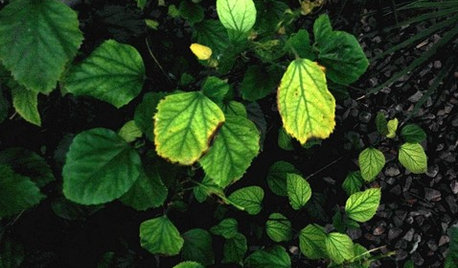
    Not just yellowing but a particular pattern of yellowing, and on the lowest leaves. Mg deficiency is uncommon.


    http://3.bp.blogspot.com/_X6RrPS1ylj8/SejGYa27dWI/AAAAAAAAATg/vNX-fUrIoZI/s200/Rose-+Magnesium+deficiency-+UF+photo.jpg

  • 11 years ago

    Mg deficiency in plants is quite common in some types of soils (mainly calcareous). Roses are not affected as seriously as other plants ( like citrus). Also mild Mg deficiency symptoms often occur on a seasonal basis and go away as the season progresses. Like any type of fertlizer and/or soil ammendment Epsom salts should be applied only when and if required because too much of anything can have nutritional sideffects with regards to other nutrients and affect the quality of the soil itself. If a general type of rose fertilizer containing micronutrients is used, this should provide more than adequate Mg in most cases. Severe magnesium deficiency is hard to correct through soil applications and foliar applications are more effective. Best thing is to know your soil (via soil tests) and your plants (via reading). It is Epsom btw named after the English town; nothing to do with japanese printers.

  • 11 years ago

    It seems to make my bloom color more vibrant.

  • 11 years ago

    thanks for all the info. Pembroke

  • 11 years ago

    I ditto what Pembroke said. Thanks for the info. Much appreciated.

  • 11 years ago

    When I bought my first ever rose bush from the man who bred it (the rose was Sue Hipkin), he told me that roses in our area (British Columbia) need epsom salt because it makes iron more available in the soil. Don't have any other information, that's what he told me and I sprinkle it religiously around all my roses every year. Don't ever see yellow leaves on the bottom.


  • 11 years ago

    I suspect it's the sulphur not the magnesium that may help with iron availability. Are your soils alkaline? There are cheaper and/or more efficient ways for helping with iron availability than Epsom salts.


  • 11 years ago

    Our soils are just slightly over 7.0, something like 7.2 or 7.3 in my front bed.

  • 11 years ago

    Roses shouldn't have any serious iron problems with that sort of pH.


  • PRO
    11 years ago

    Hey Pembroke, FWIW when I lived in the East End of Louisville, I'd throw a teaspoon of Epsom salts on each plant right when growth started, then another around mid-May or Memorial Day if the weather had been cold. Not to dispute the science of above posters but it never seemed to hurt anything.


  • 11 years ago

    Neither magnesium nor sulfate will affect soil pH or iron availability. Only sulfur compound containing chemically reduced sulfur will lower soil pH. These include elemental sulfur, pyrite (iron sulfide), etc. Sulfates do not lower soil pH.

  • 11 years ago
    last modified: 11 years ago

    Sulfates do not directly lower pH due to the sulfate component, correct. But this statement does not take into account that bacterial sulfate reduction happening in the soil can potentially lower the pH. This activity is low in common soils but it can increase significantly in wet soils with high organic content. Various sulfates can of course directly (and temporarily) lower the pH due to different reaction not involving the sulfate component (e.g. ammonium sulfate, aluminum sulfate).

  • 11 years ago

    Nick, sulfate reduction does not occur in aerobic soils (as you suggest), nor does it result in lowered pH. It is OXIDATION of reduced sulfur (sulfides or elemental sulfur) that produces acid. Ammonium sulfate WILL reduce soil pH because the ammonium gets oxidized (as will other ammonium fertilizers). Aluminum sulfate lowers pH because the aluminum hydrolyzes, splitting water molecules, and releasing acidity. The sulfate does not take part in this reaction and it will happen with any aluminum salt (aluminum chloride, for example).

  • 11 years ago

    Did I say any differently? Sulfate reduction during boggy conditions results in lowered pH when the soil dries up because, as you mention, the reduced sulphur gets oxidized. Indicative of boggy conditions is the rotten egg smell of hydrogen sulfide. Also, did I say any differently with regards to the ammonium or aluminum reactions?


  • 11 years ago

    Just trying to clarify for those interested in understanding soil reactions...