Software
Houzz Logo Print
ssabb

Leaf disease? Something else?

11 years ago
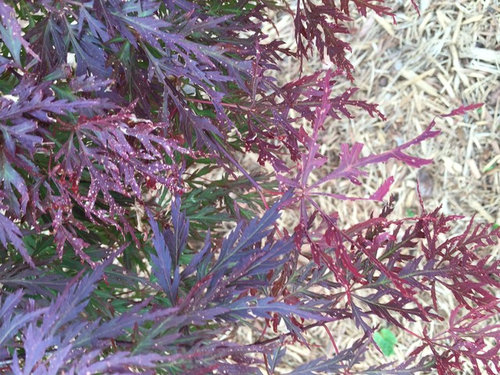
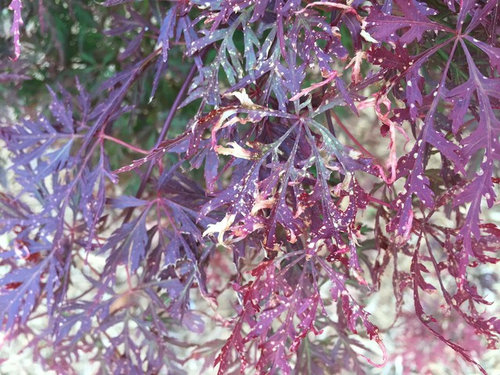
I got my sweet little Orangeola exactly a month ago and planted it right in the ground. I planted it in a sunny spot b/c I read that Orangeola's get their best colors with more sun. It was doing so well until about a week ago. I noticed some tan spots on some of the leaves, and since then it's gotten so much worse! I looked all around the internet but can't find something exactly like what I'm seeing, and I'm so concerned that I'm going to treat it for the wrong thing and end up hurting it.

Some of the spots have turned into holes, and some leaves have much more of the tan coloring and are shriveled. SOME leaves look like they've disintegrated - see the leaf reaching toward the upper right corner of this photo:


I watered it a couple times when I first planted it but we've been getting sooooo much spring rain that I haven't felt that I needed to do anything extra. Could this be phyllosticta leaf spot or something else? What can I do to help my poor little tree?


These two photos show the worst of it, but I'm afraid that at the rate it's spreading, my whole tree will look like these photos soon!! Help me, greenthumbs/maple-lovers!!

Comments (4)

  • 11 years ago

    Spotting of leaves on JM's like your photos indicate is usually attributed to watering issues - too much or too little. But no disease :-))

    Can you explain how you planted it - soil type, any amendments, etc., and exactly how much water it's received?


    ssabb thanked gardengal48 (PNW Z8/9)
  • 11 years ago

    Yikes. Hopefully that won't be harder to solve for this black thumb than just spraying it with something!! I planted it a couple inches above the soil. I amended our native clay dirt with some garden soil made for trees. And then I put about 3 inches of mulch over it but not around the trunk.

    I watered it twice the first week I had it. The following week we had about .75 inches of rain. We probably had a little more than a half of inch of rain the next week, 1.5 inches the next week, and almost 3 inches the next week (with lots of flash flooding). This last week we had some light showers, but I don't think it amounted to too much. Less than a half an inch - maybe less than a quarter. Still, I was afraid to water it because of all the flash flooding from the week before!

    I don't know how you gardeners do it - keeping your plants healthy with such unmanageable things like the weather! :) Sometimes I wish I could stick a little umbrella in the ground to shield my plants.

    So, what do you think? Did I mess it up by not watering this week? Or is this a result of the flash flooding?

  • 11 years ago
    last modified: 11 years ago

    OK - I'm going to make some general observations and then you can interpret them to fit your specific situation.

    1) Planting in clay soils involves a bit of finess. Because clay tends to drain slowly, it is recommended that one dig a wide but quite shallow planting hole, something resembling a big saucer. Site the plant in the hole with the top of the rootball 1-2" (at least) above the existing grade. Backfill with the removed soil only, making a small mound to just the top edge of the rootball. Water in well and use any amendments as a mulch or topdressing only but just around the rootball, not covering the top.

    Amending individual planting holes is an outdated practice and has been found to be detrimental to the proper establishment of trees and shrubs. This is even more the case when dealing with clay soils. Amending a planting hole in slowly draining clay soil can lead to what's known as the 'bathtub effect' or a pocket of enriched, moisture retentive soil immediately around the rootball and enclosed by the poorly draining clay. In essence, you've planted your tree or shrub in a bathtub full of soggy soil, in which it is not going to be very happy. It can even lead to root rots and death.

    2) It is really difficult to rely on plants getting enough water from just rainfall. It depends on how far that rainfall penetrates into the soil profile. When rain comes down fast and hard, it can just sheet off before soaking in.....resulting in things like flash flooding. OTOH, 5+ inches of rain in one month may have left the soil overly saturated and waterlogged. The more you garden, the more you will learn about your soils and how often you need to water.

    Japanese maples like really well drained soil. If soil stays too wet for too long, it will lead to problems, leaf spotting being just an incidental one. I am concerned about how deeply it was planted in clay and with amended soil and the amount of rainfall you've received since. Factoring in what I've stated above, maybe you should consider replanting?

  • 11 years ago

    This is all such fantastic information - thank you so much. I tried to follow the instructions to a "T" but I think that you're right - replanting sounds like it is in order. Hopefully I can do so without stressing the tree too much - I do love it very much!! Good thoughts about the flash flooding having the ability to sheet off without soaking in - never thought about it that way.

    Thank you thank you!! I don't think I ever would have figured out the problem by googling.

Sponsored